The Public Private Partnership (PPP) Directorate of the National Treasury has made the first approval of the project proposal to introduce toll services on the Mombasa Southern bypass road, progressing plans that could see it become the second pay-for-use highway facility in Kenya.
The PPP Directorate disclosed that it approved the plan to proceed with the feasibility study to toll the bypass, which was built for 40.15 billion Japanese Yen (Sh32.12 billion).
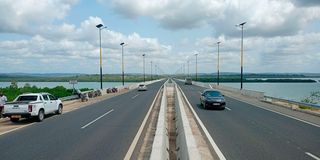
Motorists drive along the Mteza Bridge on the Dongo Kundu Bypass in Mombasa on August 7, 2025.
Photo credit: Kevin Odit | Nation
“To sustain the asset and mobilise resources for further infrastructure development, the government plans to procure a toll operator to install tolling infrastructure and operate and maintain the asset,” the PPP Directorate says in fresh disclosures.
“The project proposal was approved in September 2025 for the project to progress to a feasibility study.”
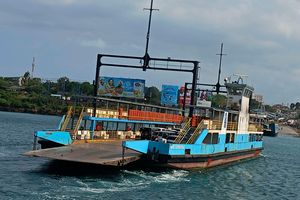
The road, commonly known as Dongo Kundu Bypass, connects Mombasa Mainland to the South Coast, allowing motorists to escape the heavy traffic at the Likoni Ferry.
The bypass was completed in 2024 and could now become the second key road in Kenya where motorists pay toll fees, after the Nairobi Expressway, where toll charges range from Sh170 to Sh500, depending on the distance and type of vehicle.
Kenya is keen on tolling several key highways in a bid to pay off investors who funded the projects, maintain the highways, and also raise cash to build new roads.
The toll fees will allow the Treasury to repay the loan that funded the project without further constraining its already thin fiscal space.
The Dongo Kundu bridge.
Photo credit: File | Nation
Japan International Cooperation Agency (JICA) funded 80 percent of the project with additional support from the Government of Kenya.
Dongo Kundu Bypass has established a seamless connectivity between the Northern Corridor—linking Nairobi and inland markets such as Uganda, Rwanda, Congo DR, and South Sudan—and the southern corridor to Tanzania.
Motorists have since 2022 been paying toll fees to use the 27-kilometre Nairobi Expressway, which runs from Mlolongo to the James Gichuru Junction in Westlands. The express has significantly eased traffic snarl-ups along Mombasa Road.
Besides the Nairobi Expressway and the Dongo Kundu Bypass, the government is keen to toll the yet to be constructed 243-kilometre (km) Nairobi-Nakuru-Mau Summit Highway and the 473-km Nairobi-Mombasa Highway (Usahihi Highway).
Others primed to be converted to toll are the Thika Superhighway, the Southern Bypass in Nairobi, and the Kenol-Sagana-Marua Road.
The 1.44km Mteza Bridge on the Dongo Kundu Bypass in Mombasa in this photo taken on March 12, 2025.
Photo credit: Nation
Kenya introduced toll fees in the late 1980s but dropped them less than 10 years later in favour of the Roads Maintenance Levy Fund (RMLF).
The rod fund, currently charged at the rate of Sh25 for every litre of petrol and diesel, funds the construction and maintenance of roads across the country.
The government published a draft tolling policy in March this year, in a bid to guide the plan on how to raise additional funds directly from motorists and help plug the funding gap in the development, maintenance, and rehabilitation of roads. The policy estimates the funding deficit at Sh1.5 trillion for the next five years and Sh4 trillion for the next decade.