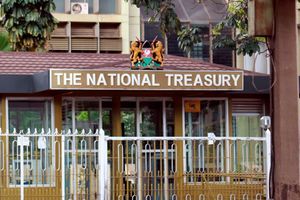
The National Treasury has one month to release Sh68.5 billion to county governments before the close of the current financial year, piling fresh pressure on its cash flows amid competing spending demands and a widening budget deficit.
Official Treasury data shows that the national government had disbursed Sh346.53 billion in equitable share allocations by the end of May, representing 83.5 per cent of the Sh415 billion earmarked for counties in the current fiscal year.
The outstanding amount means the Treasury must release the equivalent of nearly two months’ worth of county allocations in June alone to fully meet its constitutional obligations before the financial year ends.
County governments rely heavily on exchequer disbursements to finance essential services, including healthcare, road maintenance, water projects and salaries for devolved staff.
The disbursement framework is designed to ensure a predictable monthly flow of funds to counties, enabling them to plan expenditure and implement development projects without interruption.
John Mbadi the Cabinet Secretary for National Treasury and Economic Planning.
Photo credit: File | Nation Media Group
Delays in the release of funds often result in stalled projects, accumulation of pending bills and salary arrears, and can trigger disputes between county governments and the national government.
Meet disbursement timelines
In recent years, the Treasury has struggled to meet county disbursement timelines, with some transfers spilling into subsequent financial periods beyond the June deadline.
Council of Governors Chairman and Wajir Governor Ahmed Abdullahi (centre) with fellow governors during a press briefing in Nairobi on September 1, 2025.
Photo credit: Dennis Onsongo | Nation Media Group
The Council of Governors (CoG) has repeatedly raised concern over the delays, warning that irregular releases undermine the effectiveness of devolution and disrupt service delivery at the county level. The challenge is often attributed to national-level cash flow constraints, as competing expenditure demands limit the Treasury’s ability to disburse funds consistently and on schedule. Kenya’s rising public debt has further tightened fiscal space, with a significant share of revenue now going towards debt servicing, often ahead of other government obligations.
Latest Treasury data shows debt servicing costs stood at Sh1.71 trillion in the 11 months to May, accounting for 78.8 per cent of the country’s Sh2.17 trillion total tax revenue over the period.
The National Treasury data underscores the heavy fiscal burden of debt servicing, which continues to constrain public spending and budget flexibility. The Controller of Budget has in previous reports flagged delays in exchequer releases as a key risk to county operations and fiscal discipline. It further warns that large end-year disbursements strain absorption capacity, as counties have limited time to utilise funds before the financial year closes in June.