The High Court has shut the door on a 51-year dispute over an expansive prime farmland owned by former Mau Mau freedom fighter and Nyandarua North MP, Josiah Mwangi (JM) Kariuki, dealing a blow to a group of squatters claiming ownership of 300 acres from his estate.
The Environment and Land Court ruled that the claim by Nyakinyua Ndorua Kanini Kega Farmers Company and its alleged 580 members could not stand, bringing to a close decades of litigation over the land in Ol Kalou, Nyandarua County.
The disputed parcels—L.R. No. 3777/115, 3777/207 and 3777/279—span about 808 acres. The claimants sought to be declared owners of at least 300 acres, saying they had occupied the land since 1973 and that JM had given them the parcels before his assassination in 1975.
The legal dispute started in Nakuru soon after JM's death, though the case subject of this judgement was filed in 2002.
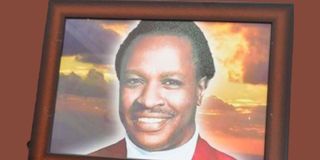
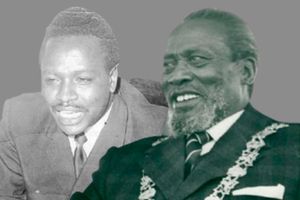
At the heart of the dispute was the legacy of JM Kariuki, a populist politician of independence Kenya who rose to prominence in the 1970s.
Known for his criticism of inequality in society, corruption in government and his rallying cry against a Kenya of “ten millionaires and ten million beggars,” he was assassinated in 1975, leaving behind a vast estate and a trail of unresolved land claims.
He was elected to Parliament during the 1969 general election to represent Nyandarua North Constituency and served until his assassination in March 1975.
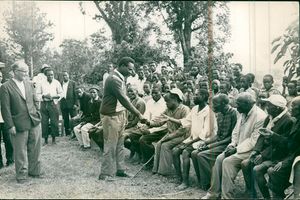
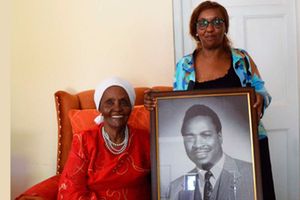
The court heard that members of the Nyakinyua group, largely elderly women, claimed the late politician had gifted them the land before his death. They said they entered the property in the early 1970s and remained there for decades, building homes and farming.
Some of the squatters living on a land belonging to former Nyandarua politician JM Kariuki. They now face eviction by the late Kariuki's family. PHOTO | WAIKWA MAINA | NATION MEDIA GROUP
They also argued that even if the gift was incomplete, their long occupation entitled them to ownership through adverse possession as they had lived on the land without interruption since the 1970s.
But the court rejected both arguments, finding that the dispute over ownership had already been conclusively determined in earlier suits dating back to the 1980s and 1990s, making the fresh claims legally barred.
Justice Kamau stressed that litigation must come to an end and parties should not be allowed to relitigate the same issues in different forms.
Even if the case were to proceed, the court said, the claim would still fail on merit.
On the alleged gift, the court found that while there may have been an intention by JM Kariuki to allocate land to the group, the process was never completed.
The judge stated that an intention to give land without a proper transfer or clearance of loans was void and unenforceable.
The land remained registered in JM Kariuki’s name and later formed part of his estate. It noted the claims of gift had been dismissed in the earlier litigation filed in 1989.
"The plaintiffs should have either sought stay of execution and appealed and in the absence of such a stay of execution, the Plaintiffs became trespassers," the court said.
On adverse possession, the court found that the claimants had entered the land with the owner’s permission, which defeats such a claim.
It noted that witnesses admitted that it was JM who allowed them onto the land. The court stated that a claim for adverse possession cannot succeed if the land occupation is with the owner’s consent.
"A claim for adverse possession cannot succeed if the person asserting the claim is in possession with the permission of the owner," said the court
There had been repeated eviction attempts, court cases and even eviction orders over the years.
"Where the period of 12 years is not continuous or is interrupted, the period of adverse possession is broken and must start all over again," the court ruled.
The judge said time cannot run in favour of a claimant where possession is interrupted or contested.
It found that the Nyakinyua group was registered as a business name with only ten partners, all of whom are now deceased.
The claim of 580 members was unsupported. No list of members was produced, and no authority was shown for anyone to act on their behalf.
"The court would have expected the names of the 580 persons to be listed but nothing prevented them from being named and they remain unknown," stated Justice Kamau.
The judge said the entity had no legal personality to own land or sue. He added that technically, there were no proper plaintiffs before the court.
The ruling also exposed deep internal divisions among the claimants. Different factions disputed who the genuine members were, with some insisting the group was exclusively for women while others included male descendants.
The court found these contradictions undermined the credibility of the case. A site visit confirmed that only a small portion of the land was occupied.
Most of the 808 acres remained under the control of the Kariuki family or were unused. The occupied sections were sparsely settled with largely temporary structures.
In contrast, JM's family maintained that the land belonged to the estate and that any occupation was limited and permissive.
They said only a small number of people occupied portions of the land and accused some of attempting to sell land they did not own.
The court ultimately upheld the property rights of the estate. It issued a permanent injunction barring the claimants from trespassing, selling, leasing or interfering with the land.
The judge emphasised the constitutional protection of property rights, stating that ownership cannot be taken without a lawful process.
He noted that landowners cannot be compelled to surrender property except through legal mechanisms such as compulsory acquisition with compensation.
The court, however, pointed to a possible policy solution. It referenced a recommendation by land officials that the government could acquire the land and resettle squatters through a formal settlement scheme.
That option, the judge observed, had not been pursued. "The landless Plaintiffs should have been considered under settlement schemes to provide access to land rather than remain on private land," he said.
The ruling now leaves the claimants without legal claim to the land they have occupied for decades, marking a decisive end to one of the longest-running land disputes.