Parliament has rejected a proposal by the National Treasury to strip locally assembled electric motorcycles and buses of their zero-rated value-added-tax (VAT) status, shielding consumers from potential price increases of up to 16 percent.
The National Assembly’s Finance Committee recommended retaining the zero-rated VAT status for electric motorcycles, electric bicycles, electric buses, solar batteries and lithium-ion batteries in its report on the 2026 Finance Bill.
Zero-rated goods are taxed at 0 percent VAT rate, meaning no tax is charged on their sale. These goods are often essential items, and are designated as such to make them more affordable for consumers.
The committee said the products were only recently granted zero-rated status under the Finance Act, 2023 to support local manufacturing, thus withdrawing it would cripple the nascent electric vehicle (EV) sector.
“Reversing this position would increase production costs, discourage investment and undermine predictability in the tax system.”
Increase in production costs
Spiro CEO Kaushik Burman poses with one of the company's products.
Photo credit: Bonface Bogita | Nation Media Group
While both categories do not attract VAT on the final vehicles, the change would have prevented assemblers like BasiGo, Roam, Spiro and Arc Ride from claiming refunds for VAT paid on components and raw material used to make the vehicles.
Under the current regime, EV firms can recover input VAT from the Kenya Revenue Authority (KRA), which helps lower the cost of local assembly, compared with importing the vehicles fully built.
Industry players warned that removing the refunds would increase production costs and force manufacturers to pass this to consumers through higher vehicle prices.
According to EV firms, the change could have increased the cost of an electric motorcycle by as much as Sh46,000, raised the price of electric minivans by about Sh1.1 million and pushed the cost of electric buses up by more than Sh2.5 million.
The proposal drew opposition from e-mobility companies, which argued that it would undermine Kenya’s efforts to become a regional hub for electric mobility.
They warned that the impact could ripple through Kenya’s growing local manufacturing ecosystem, where EV firms source metal motorcycle parts and fabricated components.
“It is a shocking proposal given the support we have had from the government,” Moses Nderitu, BasiGo Kenya managing director and vice president of the E-Mobility Alliance of Kenya, previously told the Business Daily.
“In other words, what the government is now telling us is, why bother buying from locals?”
In its report on the Bill, the National Assembly Finance Committee agreed that the proposal would increase production costs by denying businesses the ability to recover input VAT.
“The Committee acknowledged the concerns… and agreed that transferring selected goods and services from VAT zero-rated status to VAT exempt status would increase production costs by denying businesses the ability to recover input VAT, costs that are likely to be passed on to consumers through higher prices,” the report says.
“It also noted that retaining the zero-rated status would promote predictability and stability in the tax system, enabling businesses and investors to make long-term investment decisions with confidence.”
Leader in electric mobility
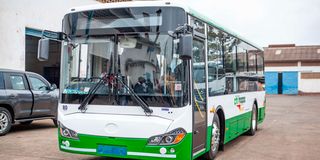
A BasiGo charging station attendant charges EV batteries on an electric bus in Nairobi.
Photo credit: Reuters
Kenya has positioned itself as a leading electric mobility market in East Africa, attracting billions of shillings in investment from EV firms that have set up assembly plants locally to serve the East African market.
But industry executives say frequent tax and policy changes make long-term investment planning difficult in a sector that requires heavy upfront capital.
The lawmakers’ decision preserves tax incentives that have helped drive investment in local EV assembly for the next financial year.
The National Assembly passed the 2026 Finance Bill on Thursday with all amendments adopted by the Finance Committee. It now awaits President William Ruto’s assent before it becomes law.