Hello

Your subscription is almost coming to an end. Don’t miss out on the great content on Nation.Africa

Ready to continue your informative journey with us?

Hello

Your premium access has ended, but the best of Nation.Africa is still within reach. Renew now to unlock exclusive stories and in-depth features.

Reclaim your full access. Click below to renew.

Climate disasters cost world Sh15.47 trillion in 2025, study reveals

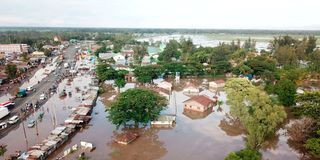
A section of Ahero town, Nyando Sub-County, submerged in flash floods from the River Nyando on November 29, 2024. 

Photo credit: Alex Odhiambo I Nation Media Group

What you need to know:

  • Climate change, states a new report published by Christian Aid, carries both a human and financial cost, whether through immediate, catastrophic events or long-term impacts

A whopping Sh15.47 trillion is the hefty price paid by nations for climatic disasters globally in 2025, cited as one of the most costly years in human-caused climate change, according to a new report.

Climate change, states a new report published by Christian Aid, carries both a human and financial cost, whether through immediate, catastrophic events or long-term impacts. To identify the most expensive climate disasters in 2025, researchers scrutinised data on loss estimates published regularly by the Aon insurance company, and other sources in the analysis titled Counting the Cost 2025: A year of climate breakdown.


“In 2025, the intensity of extreme weather reached new heights: heatwaves pushing the limits of human adaptation, record-breaking hurricanes and typhoons overwhelming disaster response systems, and a brutal combination of extreme rainfall and severe droughts,” read the report published in December.


“This year has been marked by climate breakdown on an alarming scale, resulting in 2025 being one of the costliest years.” While human-caused climate change does not necessarily create extreme weather events, it tends to make climate disasters more intense once they strike, scientists explain.


Even though rich countries with higher property rates ordinarily incur greater costs resulting from climate catastrophes, data indicate that poor nations were the worst affected by the climate disasters last year.


Low-income countries, particularly in Africa, with minimal contribution to greenhouse emissions, continue to bear the brunt despite overwhelming scientific evidence attributing catastrophic repercussions on populations and the planet to burning fossil fuels, typical in developed countries, stated Christian Aid CEO, Patrick Watt.


“The data continues to show that climate change is increasing both the likelihood and intensity of extreme weather events, including floods, heatwaves and tropical cyclones,” explained Watt.


The report has faulted large and small fossil fuel companies for being complicit in the deaths and suffering caused by the disasters they help fuel.


“The burning of coal, oil and gas cuts global GDP, and although estimates vary depending on methodology, one thing is certain: the damage caused by the fossil fuel industry is severe, increasing, and could reach trillions yearly if left unchecked,” states the report.
Terming the climate crisis “a political choice,” the CEO held that the suffering is driven by decisions to continue burning fossil fuels, to allow emissions to rise, and to break promises on climate finance.


“In 2026, world leaders must act - supporting communities already adapting at a local level, and providing the resources urgently needed to protect lives, land and livelihoods.”
The report notes that the transition to clean energy is gathering pace across nations as renewables remain the cheapest form of new electricity, and the rollout of solar power continues to exceed expectations.


 However, although the transition to an economy powered by renewables is inevitable, the report highlights as a critical challenge the question of whether it will move fast enough, and fairly enough, to protect the poorest people.


The report cautions that the financial toll could be higher as the figures mainly constituted insured losses, excluding those that are difficult to quantify, like damages to livelihoods, lost income, long-term damage to the environment, and permanent displacement of residents.


To address the limitations, the researchers also factored in other extreme weather events with significant ramifications despite relatively low financial costs.


