Electricity and clean cooking: Kenya’s two big asks at COP31

Principal Secretary, State Department for Environment & Climate Change, Ministry of Environment & Forestry, Dr. Festus K. Ng’eno, appears before the National Assembly Public Accounts Committee at Bunge Tower, Nairobi, on Tuesday, October 6, 2026, to respond to audit queries.

In Antalya, Turkey
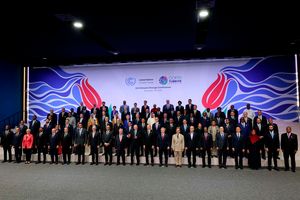
Wednesday is expected to be one of the busiest days of COP31, as the leaders’ summit opens in Antalya, Türkiye. Over two days, 102 heads of state are due to take part in high-level sessions aimed at charting a way out of the climate crisis.
The leaders arrive at a time when extreme weather is hitting hard everywhere, from destructive floods to punishing dry spells.


Kenya will be there, but not at the top. President William Ruto is not attending this year’s climate summit and will be represented by a delegation led by the Cabinet Secretary for Environment, Climate Change and Forestry.
Nairobi arrives with a number of priorities, Kenya's Special Envoy for Climate Change, Ambassador Ali Mohamed, told Nation.
“One of the main focuses is energy. Energy security is increasingly becoming a priority because of what is happening geopolitically around the world, and the cost and affordability of energy are causing significant social tensions around the world. So that is a big discussion,” he said.
The joint hosts of the summit, Türkiye and Australia, are pushing an agenda called 35 by 35, which aims to achieve 35 per cent electrification by 2035 by encouraging countries and businesses around the world to electrify transport, buildings and industry using renewable energy to accelerate the shift away from fossil fuels.
Currently, the global average is 23 per cent, while electricity use in Africa stands at 10 per cent.
President Ruto endorsed the 35 by 35 goal during the United Nations General Assembly in New York in September this year.
“And so there’s a push towards that. In the mobility sector, for instance, even Kenya is evolving. Between January and October this year, more than 35,000 new electric two-wheelers have been registered compared to 24,000 last year,” he said.
However, critics have termed the electrification push a distraction from developing countries' urgent energy demands and their quest for climate finance to address the energy crisis.
“For most parts of the developed world, it's about transitioning away from fossil fuels. For Africa, it is about starting afresh, investing in energy systems for growth, for industrialisation, for enterprises, for mobility, for all households that don't have access to electricity as yet. So it is really building afresh and so forth.”
Kenya will also use this platform to continue pushing the clean cooking agenda.
“We are also saying that we must not leave behind the whole agenda of clean cooking, which is important for Africa and a few other developing countries. Also, the issue of how climate financing can be integrated into the whole development planning,” he said.
Dr Festus Ng'eno, Principal Secretary in the State Department for Environment and Climate Change, called clean cooking the bridge to a just transition.
“Across Africa, indoor air pollution causes the death of over 500,000 people every year. This COP should prioritise this matter and join Kenya and other co-chairs of the 2nd Africa Clean Cooking Summit to mobilise the resources needed to overcome this sad situation.”
Ambassador Ali said the annual COP summits had done what they were meant to do: send a signal to governments, investors and innovators, and bend the warming curve downwards.
“Kenya has had significant access to financing under the Climate Convention, including the Green Climate Fund, the Global Environment Facility and the newly created Loss and Damage Response Fund. It also draws on the Adaptation Fund,” he said.
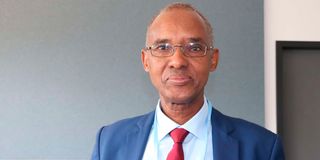
Ambassador Ali Mohamed, the chair - Africa Group of Negotiators - in Bonn, Germany during the SB60 conference.
In 2015, countries entered into a treaty called the Paris Agreement to hold the increase in the global average temperature to well below 2 degrees Celsius above pre-industrial levels.
Prior to the treaty, all indications were that global warming was going to hit 3.6 to 4 degrees Celsius above pre-industrial levels.
“That path has since come down, even though the world is overshooting the 1.5 degrees Celsius target. That trajectory has come down significantly to a maximum of probably 2.6 degrees Celsius, but still there is enough investment and direction happening to reduce that even further, thanks to the COPs. So it is important that the global community continues to congregate together, to work together on this existential challenge of the world,” he said. “It cannot be done by a single country.”
Meanwhile, Kenya is among the countries that endorsed a voluntary, non-binding call for governments to make rooftop solar and storage easier, more affordable and more widely accessible.
Follow our WhatsApp channel for breaking news updates and more stories like this.