Plastic waste along Kenya’s coastline is now being traced into deeper systems, including marine ecosystems, food chains and emerging public health concerns linked to microplastics and toxic chemicals, shifting it from what was previously treated mainly as a surface-level environmental issue.
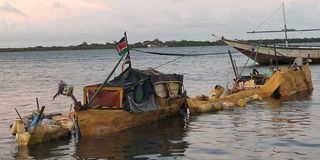
At landing beaches in coastal counties including Mombasa, Kwale and Kilifi, as well as smaller coastal settlements, there is a gradual change in what the ocean yields. Nets increasingly bring in more debris alongside catches, and in some cases marine life is visibly entangled in fragments of plastic.
Scientists and environmental groups say what is visible on the surface is only part of the problem, with greater concern lying in what cannot be easily seen: plastics breaking down into microscopic particles that move through marine food webs and into human consumption.
Environmental organisations warn that plastic pollution now accounts for an estimated 80 per cent of marine litter globally, much of it originating far from the ocean itself.
The Kenya Coalition to End Plastic Pollution says the crisis begins on land, where waste systems remain inconsistent, under-resourced or poorly enforced. Once released into the environment, plastic waste is transported through drainage channels, rivers, and stormwater systems into the Indian Ocean.
“Around 80 per cent of marine plastic pollution originates on land, largely from mismanaged waste that is carried through rivers, waterways and drainage systems into the ocean,” Frederick Njau, Programme Coordinator for Sustainable Development at the Heinrich Böll Foundation said. “This underscores the urgent need to strengthen waste management systems if we are to tackle plastic pollution before it reaches our coastlines and oceans.”
This movement from land to sea has become a defining feature of Kenya’s pollution landscape, with urban runoff, informal dumping and weak segregation systems ensuring that plastic waste rarely remains contained.
Once in marine environments, scientists explain, plastics persist and gradually break down into smaller particles. Microplastics are increasingly being identified as one of the most persistent and concerning forms of ocean pollution. These tiny fragments, formed when larger plastic waste degrades over time, are easily ingested by marine organisms such as fish and shellfish, allowing them to move through the food chain.
Scientists warn that this creates a pathway for plastics and associated chemicals to accumulate in ecosystems and potentially reach humans through seafood consumption.
Beyond physical harm such as internal injuries and reduced feeding in marine life, microplastics can carry toxic additives and absorbed pollutants, raising concerns about long-term ecological damage and potential health risks.
As a result, plastic discarded into the ocean is increasingly returning through food systems, highlighting the hidden and continuing impact of marine plastic pollution.
The Cabinet Secretary for Mining, Blue Economy and Maritime Affairs, Hassan Joho said that marine ecosystems are increasingly under pressure from pollution and unsustainable exploitation during the 11th Our Ocean Conference in Mombasa.
“Unfortunately, today the ocean faces unprecedented pressure from climate change, marine pollution, biodiversity loss, habitat degradation, unsustainable exploitation of marine resources and illegal unreported and unregulated fishing,” he said.
The shift from visible pollution to microscopic contamination has become a central concern for scientists studying marine ecosystems along the Indian Ocean coastline.
“Studies by CEJAD and partners have confirmed that many recycled and everyday consumer plastics currently on the Kenyan market contain toxic chemicals capable of leaching into the environment,” Griffins Ochieng’, the Executive Director at the Centre for Environment Justice and Development (CEJAD) explained.
The Kenya Coalition to End Plastic Pollution links these findings to broader concerns about public health exposure pathways, including endocrine disruption and other chronic health impacts associated with chemical compounds found in plastics.
“Coastal communities are on the frontline of the plastic pollution crisis,” said Hellen Dena, Pan-African Plastic Project Lead at Greenpeace Africa. “They are the first to witness polluted beaches, declining fish catches impacting their earnings, marine creatures harmed by plastic waste, and contaminated food systems.”
These communities also remain central to informal waste recovery systems, where waste pickers recover large volumes of plastic before it reaches waterways, often without formal recognition or stable compensation.
Kenya’s main policy framework for addressing plastic waste is the Extended Producer Responsibility (EPR), which requires producers of plastic packaging and synthetic materials to finance and manage the environmental impacts of their products.
Under regulations enacted in 2024, companies are required to operate through Producer Responsibility Organisations (PROs), which coordinate collection, recycling, and payments across the waste value chain.
“The producers are supposed to take care of their waste,” Dr Ayub Macharia, Director of Enforcement at the National Environment Management Authority (NEMA) told Climate Action. “They are required to form a PRO, registered by the registrar of companies to manage collection and recycling.”
The system is intended to ensure that funds collected from producers are distributed across waste pickers, aggregators, transporters and recyclers, creating a functioning circular economy.
The Kenya Coalition to End Plastic Pollution is calling for full implementation and stricter enforcement of Kenya’s Sustainable Waste Management Act and Extended Producer Responsibility (EPR) regulations, arguing that producers must be held accountable for the waste they generate while ensuring communities have access to effective systems for segregation, collection, recovery and recycling.
Despite national policy frameworks, implementation varies significantly across Kenya’s counties, where responsibility for waste management infrastructure lies. Many others lack infrastructure to properly sort or process waste.