Prisons brace for El Niño as repairs target flood-prone facilities

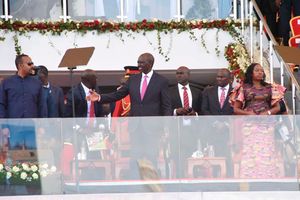
Correctional Services Principal Secretary Dr. Salome Beacco during the Correctional Service Week Gala dinner event at the Edge Convention Centre in South C, Nairobi, on October 15, 2026.

Correctional facilities located in low-lying areas along the Coast and around Lake Victoria face heightened risks as Kenya braces for El Niño-related weather extremes.
Heavy rains threaten to flood prison compounds, damage buildings and disrupt essential services, including drainage and sewerage systems.
The State Department for Correctional Services has previously dealt with such damage.


In an interview with the Nation, Dr Salome Beacco, the Principal Secretary at the department, recalled the impact of the 2024 floods, which affected several correctional facilities, including Kiambu Prison, where a perimeter wall collapsed.
“In some places, there was a bit of flooding,” she recalled. “The roofs were blown away. We were able to repair them.”
The department also undertook drainage work and installed cabro paving at a correctional facility in Eldoret to improve conditions. Repairs to affected facilities were supported by funds released through the El Niño Mitigation Fund.
“The government allocated us funds through the El Niño Mitigation Fund, which helped us repair several correctional facilities,” PS Beacco said.
She said no lives were lost in the affected facilities and that the timely release of funds enabled officers to undertake the necessary repairs.
According to the UN Office for the Coordination of Humanitarian Affairs (OCHA), the death toll from the 2023/2024 heavy rain associated with the El Niño event had risen to at least 174 by December 20, 2023.
More than half a million people were displaced, while riverine floods, flash floods and landslides affected 38 of Kenya's 47 counties.
About 90 percent of those affected were in Mandera, Garissa, Tana River, Wajir, Isiolo and Meru.
A March 2024 humanitarian brief reported that more than 17,000 acres of farmland had been destroyed and over 13,400 livestock had died.
The damage sustained during previous rains has prompted the department to assess vulnerable correctional facilities and identify repairs needed ahead of further heavy rainfall.
“We have already set up a committee that is looking into El Niño preparedness and disaster preparedness in general,” PS Beacco said.
The committee has mapped vulnerable facilities, particularly those in low-lying areas along the Coast and near Lake Victoria.
“We have assessed their needs and are repairing roofs, sewer systems and other facilities to ensure they are prepared,” she explained.
The department is relying on reports from officers stationed across the country to monitor repairs and identify facilities requiring further attention, particularly those with sewerage and building maintenance needs.
“We have adopted continuous maintenance in our correctional facilities instead of waiting for problems to arise,” PS Beacco said.
Among the people expected to contribute to that work are inmates, many of whom are being trained in carpentry, metalwork and other vocational skills that can be applied to repairs and maintenance.
According to PS Beacco, inmates have ideas and practical skills that could help correctional facilities undertake repairs while also supporting their rehabilitation and preparation for life after release.
“Our clients are instrumental in finding solutions,” she emphasised, “because they contribute ideas, skills and other resources.”
The department's rehabilitation mandate required inmates to acquire skills that could support their reintegration into society after serving their sentences.
“You cannot be able to resettle them and reintegrate them into society if you first don't train them,” she explained. “And so many of them have fantastic skills.”
The training includes carpentry, welding, bakery and textiles, among other vocational courses.
These skills are used in institutional workshops and to carry out repairs when facilities require maintenance, particularly in preparation for heavy rains associated with El Niño events.
“When we need to do repairs,” PS Beacco said, “we actually just use the inmates.”
The arrangement allows inmates to practise what they learn while correctional facilities draw on skills available within their own institutions.
“Some former inmates who acquired skills and certificates have secured jobs after release,” Dr Beacco noted.
The recognition is said to provide a way for skills gained during incarceration to be acknowledged beyond prison workshops, potentially improving the prospects of finding employment after release.
Correctional facilities are also being urged to integrate green solutions into institutional management as part of efforts to improve resilience to climate-related risks, including heavy rainfall associated with El Niño.
Speaking during Correctional Services Week 2026, Cabinet Secretary for Tourism and Wildlife Rebecca Miano called for green initiatives to be prioritised in the planning and management of correctional institutions.
“Green solutions deserve an equally prominent place in the planning and management of our institutions,” Ms Miano urged.
She further added that the initiatives tend to lower operating costs, improve service delivery and protect the environment.
“The lower operating costs improve service delivery and the environment,” she explained, “and equip the offenders with skills for the emerging green economy.”
Follow our WhatsApp channel for breaking news updates and more stories like this.