In Yerevan, Armenia
Indigenous communities in northern Kenya are pushing for their traditional knowledge to be recognised in global biodiversity conservation decisions, arguing that those who have protected nature for generations must have a voice in shaping its future.
At COP17 in Yerevan, Armenia, communities from Northern Kenya are championing a community-based monitoring system to document their knowledge and demonstrate their contribution to protecting Kenya’s biodiversity.
For generations, Indigenous communities in these regions have relied on indigenous knowledge to manage grazing lands, protect water sources, monitor wildlife and sustain the ecosystems on which their livelihoods depend.
Yet much of this knowledge remains undocumented, limiting its visibility in formal conservation planning and national biodiversity reporting.
Bridging traditional knowledge and digital technology
The Community-Based Monitoring and Information System (CBMIS) seeks to bridge that gap by combining Indigenous knowledge with digital technology to help communities monitor environmental changes, document conservation practices and generate evidence to inform decision-making.
The initiative, being developed with communities across northern Kenya supported by IMPACT an indigenous organisation and its partners, aims to place Indigenous people at the centre of monitoring their territories, using tools that reflect their cultures, livelihoods and everyday experiences.
Speaking at the 17th Conference of the Parties to the Convention on Biological Diversity (COP17), Larpei Joseph, the Monitoring, Evaluation and Learning (MEL) Coordinator at IMPACT Kenya, says the system is designed to help communities document their activities and demonstrate their contribution to conservation.
“We are developing a system within the community that is suited to their lives, their activities and their cultures. It is a system they can use to monitor their situation, document their actions and demonstrate their contribution,” said Joseph.
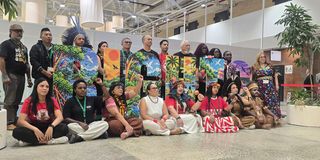
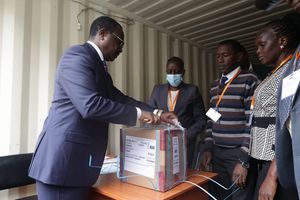
Indigenous community representatives from different parts of the world gather at COP17 in Yerevan, Armenia, to demand recognition of their rights, protection of their lands and meaningful participation in decisions affecting biodiversity conservation.
Photo credit: Fatuma Bugu|Nation Media Group
The CBMIS is designed to capture a range of indicators, including rangeland health, biodiversity and ecosystem conditions, cultural practices, community health and wellbeing, gender equity, safety, governance and rights.
Turning local observations into conservation evidence
Through mobile-based data collection, community maps and digital dashboards, observations can be documented and tracked over time. The information can help communities identify environmental changes, monitor restoration activities and present evidence of their conservation efforts to government agencies and conservation organisations.
For pastoralist communities in northern Kenya, healthy rangelands are essential to livestock production, food security and livelihoods.
Changes in vegetation, water availability and wildlife populations can have far-reaching consequences for communities whose lives are closely connected to the natural environment.
By documenting these changes using locally defined indicators, communities could strengthen natural resource management and demonstrate how their traditional practices contribute to ecosystem conservation.
Building a system communities can own
However, developing the system has required more than building a digital application. It has involved establishing monitoring frameworks, identifying relevant indicators, training communities and strengthening the systems needed to ensure that Indigenous people retain control over their knowledge.
Joseph from IMPACT says in partnership with THE ENGINE ROOM, the groundwork has taken several years, with the digital application itself under development for approximately the past year, building on earlier efforts to strengthen community capacity, support land-tenure rights and establish the foundations for effective monitoring.
“The development of this application did not happen in one day. There are frameworks and tools that must be in place, including community management plans, maps and calendars. These are essential for communities to monitor what is happening in their territories,” added Joseph.
Indigenous community representatives from different parts of the world gather at COP17 in Yerevan, Armenia, to demand recognition of their rights, protection of their lands and meaningful participation in decisions affecting biodiversity conservation.
Photo credit: Fatuma Bugu|Nation Media Group
The platform has three main components, which include a data collection layer, a centralised data management and governance layer, and a visualisation and reporting layer.
The first enables communities to collect information using mobile tools, with options for areas with limited connectivity. The second focuses on secure data management, access permissions and community-defined rules governing the ownership and sharing of information. The third translates the collected data into maps, indicators, dashboards and reports that communities can use to track changes and inform decisions.
Together, these components are intended to transform Indigenous knowledge into accessible evidence while safeguarding information that Indigenous people consider culturally or territorially sensitive.
Linking community monitoring to global biodiversity targets
The initiative comes as countries at COP17 discuss how to monitor progress towards the Kunming-Montreal Global Biodiversity Framework, the international agreement aimed at halting and reversing biodiversity loss.
The framework recognises the contributions and rights of Indigenous peoples and local communities in biodiversity conservation and sustainable use. However, Indigenous representatives continue to call for stronger recognition of traditional knowledge indicators and more meaningful participation in monitoring and reporting processes.
For Kenya, community-generated evidence could support the implementation of its National Biodiversity Strategy and Action Plan and contribute to national reporting under the Convention on Biological Diversity.
It could also help document ecosystem restoration, inform participatory land-use planning and demonstrate community contributions to conservation, in line with relevant targets of the global biodiversity framework.
But Indigenous representatives argue that the value of Indigenous knowledge should extend beyond providing information for government reports.
Communities also need to participate meaningfully in decisions affecting their territories and determine how their knowledge is documented, accessed and shared.
The CBMIS approach therefore places emphasis on community-defined data ownership and sharing protocols, particularly where information concerns sacred sites, traditional practices, culturally significant species or sensitive ecological and territorial knowledge.
Without adequate safeguards, documenting such knowledge could expose information that communities would prefer to retain under their own control. The system seeks to ensure that technology supports Indigenous knowledge holders rather than displacing their authority over it.