When a religious leader steps to the pulpit, the message can reach far beyond the walls of places of worship. At a time when forests are disappearing, oceans are under pressure and communities are losing vital natural resources, conservation advocates say that their influence could become a powerful weapon in the fight to protect biodiversity.
At the recently concluded United Nations Biodiversity Conference, COP17, in Yerevan, Armenia, faith leaders and conservation advocates called for religious teachings to move beyond words and inspire practical environmental action from planting trees and reducing plastic waste to protecting sacred forests and holding decision makers accountable.
Their argument is that saving nature is not just a scientific or political responsibility. It is also a moral obligation.
Sheikh Omar Buya, a Muslim scholar from Mombasa, believes religious leaders have a unique opportunity to influence how people interact with the environment.
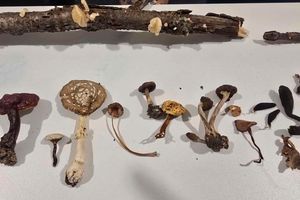
Different species of fungi on display at The Fungi Hub: A United Voice for Fungal Conservation during COP17 in Yerevan, Armenia, highlighting the remarkable diversity of fungi and the growing call for their conservation.
Photo credit: Fatuma Bugu | Nation
“We are trustees of this world and the environment in which we live and we can use our pulpits to remind believers of their responsibility to protect nature, encourage tree planting, discourage indiscriminate tree cutting and promote proper waste disposal,” said Buya.
For him, environmental conservation begins with changing everyday behaviour. Religious teachings, he argues, can encourage communities to protect natural resources, keep their surroundings clean and safeguard the environment for future generations.
But the role of faith leaders extends beyond environmental awareness. In coastal communities, where livelihoods depend heavily on natural resources, they can also help address tensions between communities and authorities.
Buya says religious leaders can use their influence to promote peace and help resolve disputes, including conflicts involving fishermen and government agencies. His participation in tree planting initiatives and discussions at Pwani University on peace, diversity and environmental conservation reflects his belief that protecting nature must go hand in hand with building peaceful communities.
However, raising awareness alone may not be enough. Zubeir Noor Hussein, vice chairman of the Mombasa County Council of Elders, said the destruction of forests demands stronger enforcement of environmental laws.
“There must be laws that allow people who cut trees indiscriminately to be arrested and prosecuted,” Said Zubeir.
He warns that trees are essential not only to ecological balance but also to human survival, providing resources used in traditional medicine, construction and other aspects of daily life.
He wants environmental protection to become a consistent message in religious gatherings, particularly Friday sermons, rather than an issue addressed only when government agencies or conservation organisations launch campaigns.
Sacred Kaya forests along Kenya's Coast are among the ecosystems he believes deserve greater attention. These forests hold cultural and spiritual significance for local communities while also supporting biodiversity.
Zubeir says that their importance should not be reduced to their traditional or spiritual functions but for their ecological value must also be recognised and protected.
“Every citizen has a responsibility to plant trees and contribute to the country's tree planting efforts,” he added.
Some residents in Kenya say it is very rare to hear imams speak about environmental conservation in their sermons unless they have been invited to events organised by the government or NGOs. While some touch on hygiene, cleanliness and keeping our surroundings clean, they believe environmental conservation should be a regular message in our places of worship.
“Protecting the environment is not just the responsibility of the government or NGOs and the government , it is our responsibility as individuals and as a community, “ said a resident.
At the heart of the conversation is the global 30×30 target, which commits countries to conserve at least 30 percent of the world’s land, freshwater and ocean by 2030 under the Kunming-Montreal Global Biodiversity Framework, adopted in December 2022.
But the scale of the task remains daunting. A May 2025 primer, The 30×30 Target on Why Protecting 30 per cent of Our Oceans Aligns With Spiritual Values, reports that only 8.3 per cent of the global ocean had some form of protection, with just 2.8 per cent under effective protection that meaningfully benefits biodiversity.
While governments negotiate policies and funding, faith based organisations argue that the success of these commitments will depend partly on whether communities understand them, support them and translate them into action.
Kamran Shahzad of the Bahu Trust says religious leaders need a better understanding of global biodiversity commitments if they are to help communities respond effectively.
“Faith leaders need training on biodiversity targets so they can understand what governments have committed to and explain what those commitments mean for their communities,” said Shahzad.
He notes that religious leaders are already responding to challenges such as poverty, conflict and mental health. Yet their influence can extend into environmental education, particularly through trusted community networks.
That influence is not limited to imams, priests or other established religious leaders. Women, young people, teachers and madrasa educators can also play important roles in mobilising communities around conservation.
Places of worship, Shahzad argues, can become platforms where people learn about environmental challenges, organise practical responses and demand accountability from leaders without turning conservation into partisan politics.
The challenge is ensuring that these efforts receive the support and knowledge needed to make a lasting difference.
For coastal communities, the environmental debate extends from forests to the ocean.
Vijah Ramjattan, founder and president of the United Madrassi Association, says international environmental agreements cannot succeed unless their objectives are reflected in the daily lives of local communities.
“International treaties and agreements can only make a difference when communities understand them and take action and there is a need to turn our faith into action,” said Vijah.
That action, he explains, can include reducing plastic pollution, making responsible seafood choices, educating congregations and advocating for policies that protect marine ecosystems, which are particularly important for coastal communities whose food security and livelihoods depend on healthy oceans. Pollution, habitat destruction and declining marine resources can threaten both biodiversity and the people who rely on it.
For Elise d’Epenoux, Communications Lead for Faiths for Oceans, one of the challenges is bringing together people who care about the ocean but describe its importance in different ways.
Scientists may speak about ecosystems and biodiversity, while faith communities may emphasise creation, stewardship and humanity's moral responsibility. Indigenous communities may draw on generations of knowledge about their natural surroundings.
D’Epenoux says connecting these perspectives can help people find common ground and build a stronger case for protecting the ocean.
“The words we use shape what we notice and we notice shapes what we value, same as what we value shapes what we are willing to protect,” said Elise.
Her message is that conservation is not only about scientific evidence or international targets but it is also about helping people understand what nature means to them and why its protection matters.
The discussions at COP17 were held at a time countries are pursuing the global target of conserving at least 30 percent of the world's land, inland waters and oceans by 2030.
Achieving that ambition requires government action, adequate resources, scientific expertise and the participation of communities whose lives are closely connected to nature.
Faith leaders may not negotiate biodiversity treaties, but their influence can help bridge the gap between international commitments and local action.
In Kenya, that could mean sermons that encourage congregations to plant and protect trees, community initiatives to reduce waste, stronger support for coastal conservation and greater awareness of the ecological importance of sacred forests.
It could also mean using the moral authority of religious institutions to challenge destructive practices and demand that environmental laws are enforced.
A case study highlighted in the May 2025 report Sacred Ocean: Shared Responsibility, Faith Based Approaches to Ocean Action illustrates how religious values can be linked to practical conservation.
On Misali Island, off Pemba in Zanzibar, Islamic teachings were incorporated into efforts to protect coral reefs and marine resources. The initiative drew on the Islamic concept of hima, a traditional approach to protecting areas for the common good.
The report reveals conservation organisations worked with local communities and Zanzibar’s religious leadership to connect environmental protection with Islamic ethics. According to the report, a decree by Zanzibar’s Mufti in 2001 helped integrate the conservation approach with state law.
The report states that coral cover in the area increased from 31 per cent in 2001 to 45 per cent in 2023. However, it records a decline in destructive fishing practices, with many fishers viewing methods such as dynamite fishing and the use of nets that catch juvenile fish as contrary to Islamic teachings.
The experience illustrates how conservation messages can become more meaningful when they connect with values and traditions people already recognise.
“It’s very easy for faith leaders to engage with policymakers and contribute to policy discussions rather than remain on the sidelines,” said Amy Echeverria, a international director for justice, peace and ecology.