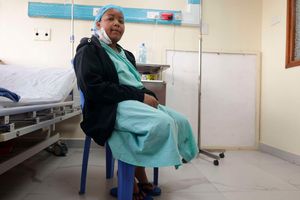
When Mary Cheyech's five-year-old son developed a high fever suspected to be malaria, she did not rush him to the nearby dispensary.
Although the facility was built by the Baringo County government in 2014 at a cost of Sh5.6 million, it has never opened its doors. Instead, the desperate mother waited for the weekly Friday open air market, where traders sell medicines under trees to villagers with nowhere else to turn.
“I had no money to take my son to the private clinic. I only had enough to buy medicine from the people selling drugs during the Friday market. I don't even know whether they are trained health workers, but we have no other choice. Fortunately, his condition improved,” Ms Cheyech told the Nation , oblivious of the dangers.
In many villages in Baringo County, residents said that access to healthcare has become a daily struggle shaped by distance, poverty and neglect.
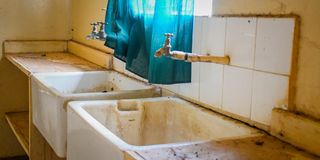
Abandoned equipment at the neglected Kimalel Health Center in Baringo South on April 14, 2026.
Photo credit: Florah Koech | Nation
For many families, the nearest functioning health facility is several kilometres away, and the journey there is often made on foot across rough terrain.
In villages where roads are poor and transport is scarce, even a simple fever can become a crisis as mothers carry sick children on their backs for hours.
Elderly people with chronic illnesses miss appointments because they cannot afford transport, while expectant women are often forced to rely on traditional birth attendants, exposing themselves and their babies to life-threatening complications whenever emergencies arise.
In the absence of reliable public health services, informal medicine sellers have filled the gap in Nasorot village.
Every market day, hawkers set up under trees, selling tablets, syrups and injections to desperate villagers who have little choice but to trust them, even though many do not know whether the traders are qualified health workers.
A few kilometres away in Akule village, Josephine Chepanga faces another painful reality. Her five children, aged between one and 12 years, have not received routine immunisation since birth because Akwichatis Dispensary, the nearest operational health facility, is more than 20kms away.
“I pray every day that my children remain healthy because walking all the way to Akwichatis for vaccinations is almost impossible. If one falls seriously sick here, we can only pray,” said Ms Chepanga.
For the mother of five and many others, the problem is not only the distance but also the cost of reaching care because hiring a motorcycle is beyond the reach of many families who depend on livestock and small-scale trade for survival.
Millions spent, little to show
As a result, some parents delay seeking treatment until a child's condition worsens, while others rely on herbs or advice from neighbours, hoping the illness will pass.
Despite the suffering, there is little to show for the millions of shillings the devolved unit has spent on health infrastructure since the advent of devolution in 2013.
More than 45 dispensaries and health centres were constructed between 2013 and 2017 in remote parts of the county’s six sub-counties to bring healthcare closer to underserved communities.
Most of the facilities were completed but have never served their intended purpose because they lack health workers, medical equipment and essential drug supplies.
Among them are Nasorot Dispensary, constructed in 2014 at a cost of Sh5.6 million, Toplen Health Centre, built for Sh6.7 million and completed in 2015, and Keriwok Dispensary, constructed in 2014 at a cost of Sh5.7 million.
Other facilities completed during the early years of devolution but are non-operational include Korelach, Sugut, Ng'aina, Chewara, Cheptaran, Mbechot, Sagasagik, Kokwototo, Orus, Loyeya, Kadokoi, Donge, Nasur, Akoreyan, Seretion, Maregut, Kipkaren, Terik, Longewan, Katikit, Root, Kimugul, Ngeiwan and Kiptaiwa.
The stalled facilities have condemned thousands of residents to long walks in search of treatment, while others rely on herbs and medicines bought from hawkers during weekly market days.
Children continue to miss routine immunisation because nearby dispensaries remain closed, and expectant women are forced to seek the services of traditional birth attendants, exposing both mothers and newborns to preventable complications that would ordinarily be managed in properly equipped health facilities.
Residents say the abandoned buildings stand as painful reminders of promises that were never fulfilled.
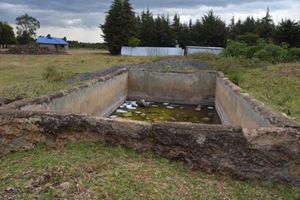
In some places, the structures have deteriorated from years of disuse, while others have been taken over by shrubs, livestock or squatters instead of serving patients.
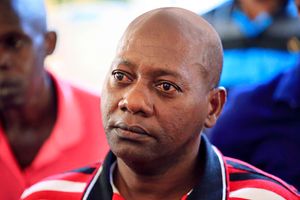
Kamama Akodoreng, a local from Silale village argued that the county government concentrated on constructing buildings without ensuring they were staffed, equipped and supplied with medicines.
“A dispensary without nurses, drugs, water or equipment is nothing more than an empty shell. A child suffering from severe malaria may not survive the long journey to the nearest functioning health facility. A woman in labour may deliver on the roadside before reaching skilled care,” said Mr Akodoreng.
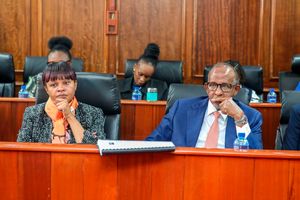
Baringo Deputy Governor Felix Maiyo acknowledged that several health facilities constructed across the county, some dating back to the early years of devolution, remain non-operational despite being complete.
He attributed the situation to a shortage of healthcare workers, saying the county has been unable to recruit enough staff because its wage bill already exceeds the recommended 35 per cent threshold.
“These facilities were constructed to bring healthcare services closer to the people, but some are yet to become operational because of inadequate human resources. Our wage bill is already above the recommended 35 per cent, limiting our ability to employ more staff,” said Mr Maiyo.
He said the county government is exploring partnerships with development agencies and setting aside funds in the current financial year to operationalise more of the idle facilities.
“We are engaging partners who can support us in making these facilities operational, while also looking for budgetary allocations this financial year to ensure a number of them begin offering services as intended,” he said.
To bridge the gap in the meantime, the deputy governor said the county has deployed Community Health Promoters in remote villages to provide basic healthcare services, monitor patients and link them to health facilities whenever necessary.
He added that the county has ambulance services to evacuate emergency cases to operational hospitals and continues to conduct monthly outreach clinics to provide childhood immunisation and other essential services in hard-to-reach areas.