For families of the Chesongoch landslide victims in Elgeyo Marakwet County, the tragedy has extended beyond the loss of loved ones to a heartbreaking dilemma: where to bury them.
With their lands and homesteads swept away or buried under boulders and mud, many families have no choice but to agree to a mass burial to ensure their loved ones are honoured with a proper resting place.
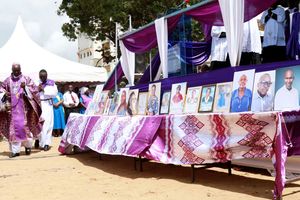
The burial service for 31 victims of the October 31 landslide in Kerio Valley Sub-County is scheduled for Friday at St Benedict Christ the King Catholic Church in Chesongoch.
The disaster which struck Kasegei, Kwenoi, Kaptul and Kipkirwon villages claimed more than 39 lives, left nine people missing, 32 injured and rendered over 600 families homeless.
While four of the victims, from two families, will be buried in Endo and Lower Sambirir areas where the families had land, the remaining victims will be interred near the church.
Elgeyo Marakwet County Chief Officer in charge of disaster management, Lawrence Mutwol, said a requiem mass will be held at the church followed by the burial at the precincts.
“All affected families agreed to a mass burial at St Benedict Christ the King Catholic Church. This decision helps relieve them from the burden of finding alternative burial land given that their homes and plots were swept downstream or buried under rocks,” Mr Mutwol said.
He added that the State would cover burial expenses. Eight other victims have already been laid to rest in Sambirir and Embolot villages within the sub-county. Mr Mutwol also confirmed that a monument will be erected at the burial site as a lasting memorial to the deceased.
The search and recovery team continues to look for the nine missing persons. Should their bodies be found, they will also be interred at the mausoleum site, allowing families to grieve in one unified place.
The decision to have a mass burial has brought some relief to grieving families. John Kurha from Kwenoi village, who lost nine relatives, said the arrangement spared him the impossible task of finding multiple burial sites in a landscape devastated by mud and rocks.
“We have unanimously agreed as a community to bury all the dead in a mausoleum near the Catholic church. It has eased the burden, especially for families like mine who lost many people and had no land for burial,” said Mr Kurha.
Salina Kaino from Kipkirwon, who lost her university-going son, expressed relief at having a designated burial site for her child, giving her a sense of closure amid the tragedy.
The Kenya Red Cross, North Rift region, continues to provide psychosocial support, food and non-food items to displaced families.
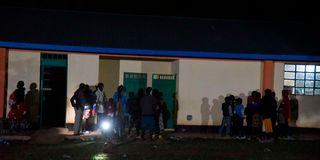
Oscar Okumu, regional head, highlighted the challenges faced at the temporary Chesongoch Primary School camp which is now hosting over 850 people. He cited malnutrition among children, expectant mothers and the elderly, as well as a shortage of medical supplies.
“We are coordinating with local millers to provide special cereals to address these nutritional gaps,” he added.
Governor Wisley Rotich confirmed that funds raised during a recent Nairobi fundraiser, alongside State support, will assist affected families in rebuilding their lives.
“The government had promised to support burial expenses, and we have opened an account to manage contributions for recovery and reconstruction,” said Governor Rotich.
Mr Mutwol appealed to the government to relocate the displaced families to safer areas to prevent future tragedies.
“The families cannot continue living on lands prone to landslides. A permanent resettlement plan is necessary to safeguard lives and prevent recurrence,” he said.
Religious leaders are also playing a key role in supporting the displaced. Rev Reagan Akaliche from Parklands Baptist Church urged fellow clergy to continue providing spiritual guidance and material assistance even after the burials.
“Our support must go beyond the funeral. The families need long-term counseling and practical help to recover from this trauma,” he said.
The October 31 landslide left an indelible mark on Chesongoch. With more than 50 people missing, over 20 injured, and hundreds displaced, families are struggling to grieve, rebuild, and find closure amid the overwhelming devastation.
“Each family will be allowed to conduct individual burial rites at their graves within the mausoleum after the requiem mass,” said Mr. Mutwol. “We are ensuring that while the burials are centralised, the families’ religious and cultural rites are respected.”
As search and recovery operations continue, the hope remains that the missing will be found and given proper burial. Meanwhile, the community and authorities are focused on relief, reconstruction, and establishing a safer future for the displaced families of Chesongoch.