The Office of the Director of Public Prosecutions (ODPP) acted irregularly and unconstitutionally when it reversed its decision to prosecute former Kakamega Governor and current Cabinet Secretary Wycliffe Oparanya over alleged corruption involving Sh56.7 million, the High Court has ruled.
Justice Benjamin Musyoki said that the ODPP improperly reviewed the decision to charge Mr Oparanya without sending alleged fresh evidence back to investigators at the Ethics and Anti-Corruption Commission (EACC).
“Only after the EACC investigated the alleged fresh evidence would the ODPP be constitutionally mandated to make a decision based on the same,” Justice Musyoki said, declaring the ODPP’s July 8, 2024 decision null and void. He also issued an order quashing the decision to review the intended criminal charges against Mr Oparanya.
The court, however, declined to nullify Mr Oparanya’s nomination and appointment as Cabinet Secretary, finding that Parliament had vetted and approved him and that there was no evidence before the court that the constitutional process had been breached.
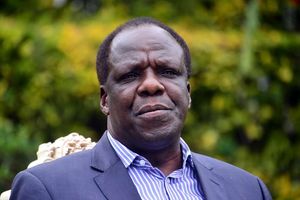
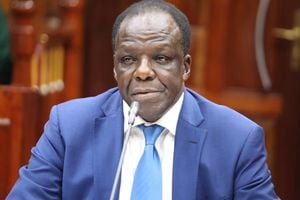
Cooperatives and Micro, Small and Medium Enterprises Cabinet Secretary Wycliffe Oparanya.
Photo credit: Fiie| Nation Media Group
The dispute arose from an EACC investigation into allegations that Mr Oparanya received Sh56.74 million from directors of companies that secured contracts from the Kakamega County government during his tenure as governor between 2013 and 2022.
EACC investigated the allegations and recommended charges of conspiracy to commit corruption, conflict of interest, abuse of office and money laundering.
The ODPP initially concurred with EACC’s recommendation in December 2023, but reversed that decision in July 2024, weeks before Parliament vetted and approved his nomination as Cabinet Secretary. The EACC had notified Parliament of the intended prosecution before his vetting.
The review followed a request by Mr Oparanya’s lawyers. They wrote to the ODPP on July 3, 2024 seeking a review. Five days later, the ODPP directed that the matter be closed for lack of sufficient evidence to sustain a conviction, unless further evidence emerged.
A rights advocate, Fredrick Mulaa, challenged the ODPP’s decision in court. He sought to have it quashed, arguing that the ODPP had unlawfully interfered with EACC’s investigative mandate and that the withdrawal of the intended charges raised public-interest and accountability concerns.
The petitioner maintained that the DPP had acted outside its legal mandate by reviewing the case without involving EACC.
EACC supported the petition and maintained that its investigation had established grounds to prosecute Mr Oparanya. Its representative, Wako Jattani, stated that the commission investigated Mr Oparanya for receiving kickbacks from companies awarded tenders by the County Government and the award of contracts to companies associated with him in the financial years 2013/2014 to 2021/2022.
It was alleged that upon receipt of the benefits and kickbacks, he used part of the money to purchase a property in Karen, Nairobi.
The commission told the court that the ODPP had initially concurred with its recommendation on December 18, 2023, but later directed the file to be closed without consulting EACC.
EACC said it rejected the ODPP’s July 2024 reversal and, on July 31, reiterated its recommendation to prosecute, saying it had not been involved in the circumstances surrounding the review.
Integrity Centre in Nairobi which houses the Ethics and Anti Corruption Commission offices.
Photo credit: Pool I Nation Media Group
The court heard that EACC told Parliament before Mr Oparanya’s vetting that it was pursuing his prosecution and had obtained orders preserving Sh28.9 million suspected to be proceeds of corruption.
In the judgment, Justice Musyoki said though the ODPP had power to decide whether to prosecute, this power did not allow the prosecution agency to take over EACC’s investigative role.
“A constitutional or statutory body should not exercise its powers or discretion whimsically or capriciously and without regard to interests of the other players or actors in the matter involved,” the judge said, faulting the process through which the ODPP abandoned its earlier decision to prosecute him.
The court noted that the ODPP’s own 2019 Guidelines on Decision to Charge require consultation with an investigating officer where a prosecutor decides not to charge.
“It is indisputable that the ODPP’s letter dated July 8, 2024 was written without consulting the EACC,” Justice Musyoki said. “The inevitable conclusion is that the ODPP usurped the powers of the EACC when it received alleged fresh evidence and unilaterally decided to review its decision to charge without reference to the EACC,” he added.
The judge said the problem was not that the ODPP reviewed its decision. It was that the agency considered information presented as fresh evidence without involving the institution that had investigated the allegations.
The court rejected the argument that prosecutorial independence shielded the ODPP’s decision from judicial scrutiny.
“The powers donated to the ODPP by the Constitution belong to the people and the ODPP exercises those powers on behalf of the people of Kenya,” the judge said. He added that the exercise of such powers was subject to accountability and transparency.
EACC’s investigation covered 60 contracts awarded to six companies by Kakamega County, with the contracts valued at more than Sh2.2 billion, according to the commission’s 2024 quarterly report.
The commission said it had recommended prosecution after investigating alleged benefits totalling Sh56.7 million, including money allegedly channeled through companies and linked to property in Karen.
Declining to overturn Mr Oparanya’s appointment, Justice Musyoki said the National Assembly had vetted and approved the nomination and that the court had not been supplied with the proceedings or report from the vetting process.
The judge said the court could not substitute itself for Parliament in determining whether Mr Oparanya was suitable for appointment.
The judgment followed an earlier ruling that reopened the case after Mr Oparanya successfully challenged service of the original petition.