The Environment and Land Court in Bungoma has halted the construction of more than 2,000 affordable housing units at Kanduyi Airstrip, dealing a blow to the government’s plan to develop a Sh5 billion Smart City on public land.
The court ruled that the Ministry of Housing failed to comply with key constitutional and legal requirements, including public participation, stakeholder engagement, land-use planning and environmental laws, before initiating the project.
Justice Kossy Bor said that the decision to approve and undertake the Kanduyi Airstrip (Smart City) affordable housing project was made without meeting various requirements in violation of the Constitution.
“The Respondents’ actions in approving, authorising or permitting the construction of the Kanduyi Airstrip (Smart City) affordable housing project on the Kanduyi Airstrip land without undertaking public participation, stakeholder engagement and without compliance with the legal requirements on land use planning and environmental laws violates Articles 10, 42, 62 and 69 of the Constitution,” Justice Bor ruled.
The court ordered the government to restore the land to its original state before the commencement of the project within 45 days of the judgment.
Justice Bor also directed the National Land Commission (NLC) to secure, protect and manage the land in accordance with the Constitution and relevant land laws.
“A declaration is issued that the land known as Bungoma Township/345 is public land reserved for aviation purposes as the Kanduyi Airstrip and any use of this land without lawful change of user is illegal and void,” the judge said.
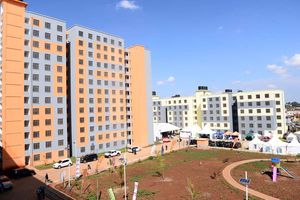
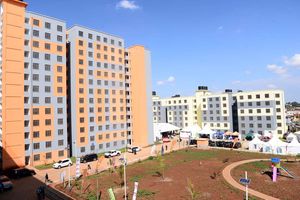
Bungoma court stops Sh5bn Kanduyi Airstrip land housing project over violations.
Photo credit: Shutterstock
The court further directed the Kenya Airports Authority (KAA) and the NLC to establish within 14 days whether various parcels in Bungoma Municipality formed part of the land reserved for Kanduyi Airstrip.
If the parcels are found to be part of the airstrip land, the court said, the orders issued in the three consolidated petitions would apply to them.
Justice Bor faulted the government for failing to demonstrate that the land had been lawfully surrendered or transferred from KAA for the proposed Smart City project.
Although the Attorney-General represented KAA in the consolidated petitions, the court noted that no surrender or transfer document had been presented to demonstrate compliance with Section 13 of the Kenya Airports Authority Act.
Further, there was no instrument showing how KAA conveyed the land to the government for the housing project.
The court said it was reasonable to conclude that no such instrument existed to support the transfer or surrender of the disputed land.
The legal dispute arose after the government embarked on plans to develop the Kanduyi Airstrip site into a Smart City comprising 2,034 housing units and associated social amenities and infrastructure.
The project was reportedly premised on the relocation of the airstrip to another site, where a larger airport was planned.
However, the court proceedings raised questions about whether the original airstrip land had been formally decommissioned and its designated use lawfully changed.
The matter had also been raised in Parliament by the Kanduyi MP John Makali, who sought clarification on the status of the land, whether the airstrip had been decommissioned, measures taken to prevent encroachment and whether the public had been consulted before its proposed change of use.
The court held that public participation was a mandatory constitutional requirement that could not be bypassed when making decisions affecting public land and the use of public resources.
Justice Bor observed that public participation, anchored in Articles 1 and 10 of the Constitution, allows citizens to participate in governance at both national and county levels.
The petitioners argued that the Ministry of Housing initiated the tender for the 2,034-unit Smart City on land of significant public infrastructure value without holding a single public forum or conducting consultations with stakeholders.
They maintained that residents had a legitimate expectation that the land would remain dedicated to aviation purposes unless its use was changed through a lawful, transparent and participatory process.
The judge questioned whether the proposed Smart City adequately reflected Bungoma residents’ housing priorities and wider development needs.
She observed that the project had not sufficiently considered the prevailing circumstances in the county, where mud houses remain common and many residents face challenges accessing adequate housing and basic services.
For residents, the judge said, access to clean drinking water, electricity, proper sanitation and affordable construction materials could be more pressing priorities than a Smart City development.
The court held that only through meaningful public participation and by listening to the intended beneficiaries of the affordable housing programme could the State make an informed decision on fulfilling its obligations under Article 43 of the Constitution, which guarantees the right to accessible and adequate housing and reasonable standards of sanitation.
Justice Bor also questioned the rationale for inviting bids for a project valued at Sh5.02 billion, noting that the Affordable Housing Fund was intended to finance the design, development and maintenance of affordable housing and promote home ownership.
The judgment further raised concerns over the conversion of public land into a development whose intended beneficiaries would include private homeowners.
The court noted that the project would therefore convert public land, in this case Bungoma Township/345, for a development intended to benefit private homeowners.
Housing Principal Secretary Charles Hinga defended the project, saying the Ministry had been mandated to construct social infrastructure, including markets and affordable housing, to improve livelihoods at the grassroots level under the Bottom-Up Economic Transformation Agenda (BETA).
He told the court that the State Department for Housing had advertised the Kanduyi Smart City project through an open tendering process.
According to the PS, the tender process was concluded without any objection and the contract was awarded to Shyam General Merchants Limited.
Mr Hinga further stated that the State Department for Housing and Shyam General Merchants Limited signed a contract on September 12, 2025, for the proposed construction and financing of the Kanduyi Airstrip (Smart City) affordable housing project, together with associated social amenities and infrastructure.
The government argued that stopping the project would interfere with a public housing initiative undertaken in fulfilment of the State’s obligations under Article 43(1)(b) of the Constitution.
It further contended that the orders sought by the petitioners would interfere with a policy and resource-allocation decision lawfully made by a State organ, contrary to the constitutional provisions governing such decisions.
The government also warned that halting the project could expose the public to substantial financial prejudice because high costs had already been incurred.
The PS warned that the suspension could increase the risk of contractual disputes and claims, undermining prudent management of public finances.
The petitions were filed by Athanas Wafula, Barasa Nyukuri, Zacharia Baraza and Francis Tome.
The petitioners sought declarations that the disputed land was public land under Article 62 of the Constitution and remained so regardless of any alleged decommissioning, abandonment or cessation of use as an airstrip.
They also sought a declaration that the Kanduyi Airstrip (Smart City) project violated the Constitution.
The petitioners further sought a permanent injunction restraining the respondents from changing the land’s designated use, undertaking construction or otherwise dealing with the property.
In support of their case, the petitioners cited Article 40 of the Constitution, arguing that the right to property extended to protecting public interests in land reserved for specific purposes.
They also invoked Article 201(a), which requires openness and accountability in public finance, including public participation in financial matters.
The petitioners maintained that Bungoma residents had a legitimate expectation that the airstrip land would remain reserved for its designated purpose until a lawful and transparent process was followed to change its use.