Fake academic certificates targeted in EACC scrutiny of 2027 candidates’ integrity
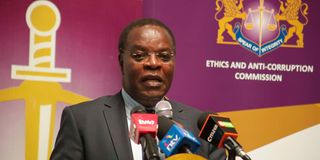
Ethics and Anti-Corruption Commission Chairperson David Oginde.

The Ethics and Anti-Corruption Commission (EACC) will establish a mechanism to support the media with information to scrutinise the integrity and suitability of candidates seeking elective and appointive positions ahead of the 2027 General Election.
EACC chairperson David Oginde said the initiative would enable journalists to interrogate the credentials, conduct and track records of political aspirants beyond their campaign promises and political alliances.
Dr Oginde said the Commission was concerned about the growing use of forged academic and professional certificates by people seeking elective positions, warning that presenting fake qualifications raised questions about their honesty and suitability for public office.


He urged editors to give sustained attention to the issue through investigative journalism and responsible public debate.
Speaking during the 9th Annual Editors Convention EACC-Kenya Editors Guild breakfast meeting at Travellers Beach Hotel in Mombasa on Thursday, Dr Oginde also identified voter bribery, misuse of public resources for political campaigns and political violence as some of the electoral malpractices that require closer scrutiny.
He said the Commission would strengthen its monitoring and intelligence-led efforts to detect and investigate voter bribery, adding that evidence gathered could also be relevant in resolving election disputes.
“The buying of votes undermines the freedom of citizens to choose their leaders. It turns an important democratic decision into a transaction and allows money to distort the choices of voters,” he said.
Dr Oginde urged the media to help Kenyans understand that voter bribery is an offence and should not be treated as an accepted feature of political culture.
He further warned public officers against using government vehicles, public funds, employees and official government functions to advance individual political ambitions.
He said public resources should not be used to promote the political interests of individuals holding public office.
The EACC chairperson also reminded public officers of the requirement to maintain political neutrality while in service, noting that those intending to contest elective positions must resign at least six months before the General Election.
He cautioned against situations where officials formally resign but continue using public resources and influence to advance their political ambitions.
On political violence, Dr Oginde expressed concern over the exploitation of young people during campaigns, saying they should participate in democratic processes as citizens rather than being recruited or manipulated to intimidate opponents, disrupt meetings or engage in violence.
“Politicians who sponsor violence and intimidation must be held accountable,” he said.
He urged editors to exercise editorial judgement when covering political campaigns, saying the framing of stories, headlines and live interviews could influence public conversations and political tensions.
However, he clarified that his appeal was not for journalists to avoid controversial stories but to prioritise facts, evidence and public interest while holding politicians accountable.

In January, the government sacked 449 civil servants out of the 1,019 staff found to have used fake academic certificates to get employment.
He also urged newsrooms to investigate unexplained wealth, questionable academic credentials, the use of public resources and decisions that place private interests ahead of public good.
Dr Oginde said journalists should distinguish between allegations, investigations and proven wrongdoing to protect both the public's right to information and the rights of people facing allegations.
He outlined six areas where the media could contribute to the fight against corruption and promotion of ethical leadership ahead of the 2027 elections.
These include making integrity a central election issue, exposing forged academic and professional certificates, highlighting voter bribery, scrutinising the misuse of public resources, challenging political violence and sustaining coverage of corruption cases.
He said accountability should remain a matter of public interest beyond the initial headlines of corruption investigations.
“As the country moves towards the 2027 General Election, we should recognise that the decisions we make as institutions, the standards we demand of those seeking public office, and the conversations we allow to dominate our newsrooms will all have a bearing on the kind of elections we hold,” he said.
Dr Oginde said EACC was seeking an independent media partnership and not favourable coverage, adding that journalists should also be willing to question the commission and other public institutions.
He said the quality of leadership in Kenya would partly depend on the quality of information available to citizens and the standards of integrity demanded of those seeking public office.
KEG president Zubeida Kananu urged journalists to interrogate not just who wants to lead Kenya, but how they have lived, how they have served and how they finance their pursuit of power.
“Our election coverage must go beyond political rallies, promises, opinion polls and the contest for power. We must interrogate the integrity and track record of those seeking leadership positions," said Ms Kananu.
Financial Journalists Society of Kenya official Mr Paul Wafula said Kenya's fight against corruption is yet to be won.
“Are we winning the war against corruption? I want to say we are not. We are actually going backwards. Some of our stories have pushed us so hard outside the newsroom and caused us sleepless nights.” said Mr Wafula.
Follow ourWhatsApp channel for breaking news updates and more stories like this.


