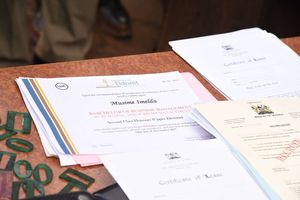
On Monday, September 21, 2026, a Nairobi court fined a former assistant elections officer at the Independent Electoral and Boundaries Commission (IEBC) Sh80,000 after finding him guilty of using a fake academic certificate to seek a promotion.
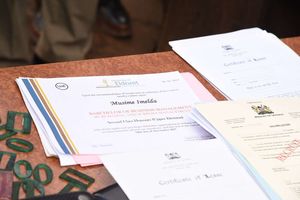
Evidence presented in court showed that Mr George Kipyatich Kibor submitted a forged Bachelor of Business Management (Finance and Banking) degree certificate purportedly issued by Moi University in support of his application for promotion.
The conviction is the latest in a growing list of cases exposing the use of forged academic qualifications to secure jobs, promotions and salaries in the public sector.
Last week, a former KenGen official was sentenced to 11 years in prison for fraudulently earning a salary after using forged academic documents to secure employment.
David Mogire Nyabuti was found guilty of using a forged Kenya Certificate of Secondary Education (KCSE) certificate and result slip to gain admission to the Kenya Power and Lighting Company Training School, now known as the Institute of Energy Studies and Research, before securing employment at KenGen.
At KenGen, he earned salaries and benefits amounting to Sh14,946,118.82 between August 2003 and September 2018.
Nyabuti was charged before the Milimani Anti-Corruption Court on June 13, 2025, with five counts—fraudulent acquisition of public property, two counts of forgery and two counts of uttering false documents.
The court convicted him of fraudulently acquiring Sh14,946,118 in salaries and ordered him to refund the money or serve five years in prison. He was also fined Sh900,000, with a default sentence of two years’ imprisonment on the same count.
On each of the two counts of uttering false documents, he was fined Sh200,000, with a default sentence of two years’ imprisonment. The court directed that all prison terms run concurrently.
The two cases highlight a persistent problem that has plagued the public service for years, with some employees using forged academic credentials to secure employment, promotions and higher salaries.
Integrity Centre in Nairobi which houses the Ethics and Anti Corruption Commission offices.
Photo credit: Pool I Nation Media Group
According to the Ethics and Anti-Corruption Commission (EACC), it has so far taken 90 cases involving forged academic certificates to court. Of these, 43 have resulted in convictions, while 39 remain pending before courts across the country. Seven accused persons were acquitted, and one case was withdrawn by the Director of Public Prosecutions.
The commission says the fraud has not only undermined merit-based recruitment but has also cost taxpayers millions of shillings.
During the 2025/2026 financial year alone, EACC recovered Sh18.5 million fraudulently paid to public officials through salaries linked to falsified academic certificates and cases of double employment.
Among those convicted was Martin Maigua Maina, who forged a Bachelor of Arts degree in Political Science to secure a promotion at IEBC. Jecinter Hezron Adoyo was accused of forging academic documents from the University of Nairobi to secure employment at the Commission on Revenue Allocation as a senior analyst and personal assistant to the chairperson.
Other cases include that of Teresia Kangai, who forged academic documents to obtain employment at the Tharaka-Nithi County government and Stacy Mwikali, who used a forged Bachelor of Information Technology degree certificate from Jomo Kenyatta University of Agriculture and Technology to secure a promotion at Nairobi City Water and Sewerage Company Ltd.
Last year, another high-profile case ended with a former Nairobi City County employee being sentenced to two-and-a-half years in prison after admitting to forging academic certificates and using them to secure government jobs. Gabriel Bukachi Chapia was given the option of paying a Sh150,000 fine instead of serving the jail term. His forgeries came to light after he sought an elective position, triggering scrutiny of his academic credentials.
The court further ordered him to refund Sh3.9 million earned while working at Moi Teaching and Referral Hospital and the Kenya Investment Authority, failing which he would serve an additional year in prison.
Bukachi was convicted in September last year by a Milimani anti-corruption court after entering into a plea bargain agreement with the prosecution. He pleaded guilty to three counts of forgery of academic certificates and two counts of fraudulent acquisition of public property.
The court found that he forged a Bachelor of Science (Computer Science) degree, which he claimed to have obtained from Maseno University, and a Master’s degree in Information Technology purportedly issued by Daystar University on November 24, 2009.
The convictions come amid renewed government concern over fake academic qualifications in public institutions.
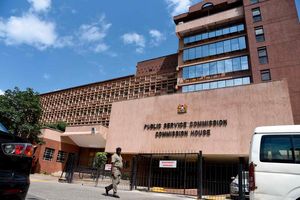
Last Thursday, Head of Public Service Felix Koskei chaired a consultative meeting at State House, bringing together the Public Service Commission (PSC), Kenya National Examinations Council (Knec) and the Ministry of Education to discuss measures to curb the problem. The meeting focused on integrating academic papers authentication systems ahead of the examination period and the 2027 General Election.
According to a source who attended the meeting, Mr Koskei criticised institutions for failing to decisively address the issue despite repeated concerns raised by President William Ruto.
In a statement after the meeting, Mr Koskei said: “The discussions underscored the importance of having robust and coordinated mechanisms for verifying academic qualifications. This will strengthen public confidence in recruitment processes. It will also ensure that individuals serving in positions of responsibility possess genuine and duly authenticated credentials.”
Public Service Commission (PSC) Chairperson Francis Meja.
PSC chairperson Francis Meja also called for the integration and streamlining of academic credential authentication systems. This, he said, would safeguard the integrity of recruitment processes while promoting professionalism, competence and merit.
The meeting was attended by Education Cabinet Secretary Julius Migos Ogamba, PSC Secretary and Chief Executive Officer Paul Famba, and Knec Chairperson Julius O. Nyabundi and Chief Executive Officer David Njeng’ere. Also present were Higher Education and Research Principal Secretary Beatrice Inyangala, Basic Education Principal Secretary John Ololtuaa and Public Service and Human Capital Development Principal Secretary Jane Imbunya.
Public Service Cabinet Secretary Geoffrey Ruku said the government would continue pursuing individuals who secured employment using fraudulent credentials.
“Government action is prompt, and we will not spare anyone dishonest about their academic qualifications. Such dishonesty undermines productivity and denies qualified Kenyans opportunities to serve. You may have occupied a position for years, but once you are found to have used fraudulent credentials, you will face the consequences,” Mr Ruku said during a radio interview.
Findings contained in a February 2024 PSC audit report revealed that more than 2,000 public officers had used fake academic and professional certificates to secure government jobs, promotions and re-designations.