How many people were killed? How many animals were stolen? Where and when did the attack take place?
These questions may sound like routine details in an incident report on the Turkana-West Pokot counties border. Government officials, however, say the answers can have consequences far beyond paperwork.
An exaggerated death toll or inflated number of animals stolen can deepen anger between communities, fuel retaliatory attacks and affect the way authorities respond, government administrators and security officials warn.
The warning was made on Thursday at the conclusion of a three-day training on Grassroots Data Management for Evidence-Based Planning for National Government Administration Officers in Turkana County, including chiefs and their assistants.
The training by the State Department for Economic Planning is part of efforts to improve the collection, management and transmission of information from the grassroots to top government officials.
For communities on the Turkana-West Pokot border, getting facts right can have immediate consequences.
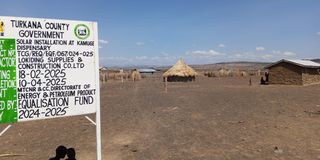
The main gate to the gated Kamuge village in Turkana East Constituency on June 13, 2026. Locals fled the village following sporadic bandit attacks.
Photo credit: Sammy Lutta | Nation Media Group
According to Turkana County Commissioner Julius Kavita, gaps in grassroots data collection continue to undermine efforts to respond effectively to insecurity and other emergencies, with inaccurate information sometimes making its way from villages to government officials.
He said chiefs must ensure information submitted is accurate and reflects the situation on the ground.
“We have agreed with chiefs that any data forwarded to us is accurate, not manipulated or tampered with to suit their interests. We need real data from affected households in case of banditry or a natural calamity,” Mr Kavita said.
The administrator added that accurate information is essential for responding to incidents of insecurity and national planning, economic development, health interventions and humanitarian assistance.
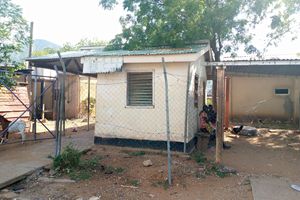
Residents of Kamuge village in Turkana East, an area affected by banditry, assemble to flee after an attack on August 30, 2026.
Photo credit: Pool
For local administrators, the difference between an estimate and a verified figure can affect decisions about what happens next.
Kainuk Senior Chief, Sarah Lochodo, said inaccurate figures of livestock stolen or people killed could fuel conflict between communities.
“With the training, we will be able to collect data in the right format, the exact time of the incident, where it occurred, and the people affected,” she said.
“Once you know that, you can plan well for responses that include the number of security personnel that may be assigned to patrol or recover the stolen animals.”
Her remarks underline the practical importance of the information collected by chiefs and local administrators.
A report of an attack is not simply a record of what happened; it can inform decisions. The government wants such information collected in a more consistent and structured manner.
In a speech read by Mr Kavita, Internal Security and National Administration PS Raymond Omollo said the programme is intended to ensure the government gets timely, reliable and credible information from the grassroots.
Dr Omollo said the information would be used in planning, resource allocation, implementation, monitoring and decision-making.
“Timely information sharing is critical in decision-making. Data must not only inform decision-making, it must also translate into action and measurable results,” he said.
Mr Alphonse Obonyo, a consultant at the World Governance Centre, said the State Department for Economic Planning is working with Konza Technopolis, the Kenya National Bureau of Statistics and the State Department for Interior to streamline grassroots data management.
The objective, he said, is to ensure information collected at household level is escalated through the administrative structure for planning.
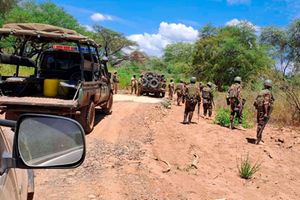
Police vehicles destroyed in an attack. For chiefs, improving the accuracy of information is about ensuring government responses match the reality faced by affected communities
Photo credit: File | Nation Media Group
Mr Obonyo said the State Department for Economic Planning has in the past faced challenges because information and reports were submitted in different formats, making analyses difficult.
“We are rolling out a structured data collection and management system, with a standardised format that will reduce the time it takes for information to reach decision-makers,” he said.
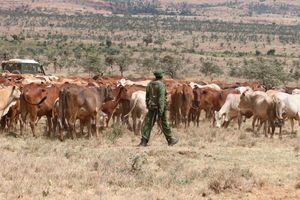
The push for more reliable information comes against the backdrop of insecurity on the Turkana-West Pokot border, where disputes involving livestock and retaliatory attacks have placed pressure on administrators and government security organs.
For chiefs, improving the accuracy of information is also about ensuring government responses match the reality faced by affected communities.
Data also matters in resolving disputes, according to Presiding Judge for Turkana County Patrick Otieno.
He told chiefs that reliable data is important in the administration of alternative justice, particularly as local administrators play a big role in resolving rows in communities.
He said the training was important since chiefs are a critical part of public administration and organisation, particularly in ending disputes.
Mr Otieno encouraged the use of evidence-based mediation through alternative justice systems, saying conventional court processes can leave underlying grievances unresolved.
“We encourage evidence-based mediation and alternative justice systems because the usual court system leaves many wounds unhealed. It is important that humans live in harmony with relations restored,” the judge said.
In the borderlands, where a stolen animal, an attack or a death can become part of a wider community grievance, officials say reliable information is essential in understanding what actually happened and deciding how to respond.
The new grassroots data initiative by the government is ultimately intended to close the gap between what happens in a household and what is known in government offices.