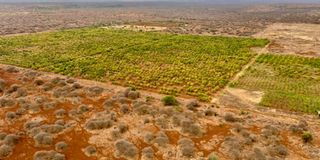
A multi-million-shilling avocado farm in the fragile Amboseli ecosystem, Kajiado County, faces an uncertain future after the Supreme Court dismissed its final appeal to continue operations.
On January 30, a five-judge bench led by Chief Justice Martha Koome struck out a petition by KiliAvo Fresh Ltd, ending the legal challenge over its 180-acre farm.
Chief Justice Martha Koome.
Photo credit: File | Nation Media Group
The company had sought to overturn previous rulings and reinstate its Environmental Impact Assessment (EIA) licence, revoked by the National Environment Management Authority (Nema) in 2020.
The Supreme Court ruling is the fifth consecutive defeat for Nairobi-based investors Harji Mavji and Suresh Kurji Kerai, who maintain about 780 avocado trees and several beehives on the farm.
The apex court said it lacked jurisdiction, noting the case did not raise constitutional questions under Article 163(4)(a) of the Constitution.
“The appellant, having failed to demonstrate that its appeal raises the interpretation or application of the Constitution, this court is not vested with the requisite jurisdiction,” the judges ruled, declining to entertain the appeal.
Judges ruled the dispute was procedural, regarding whether KiliAvo had used the correct legal channels to challenge National Environment Tribunal decisions—a matter previously addressed by the Environment and Land Court and Court of Appeal.
The court noted that the dispute was purely procedural, centring on whether KiliAvo used the correct legal avenue to challenge decisions by the National Environment Tribunal (NET).
That issue, the judges said, had already been conclusively addressed by the Environment and Land Court and the Court of Appeal under Section 130 of the Environmental Management and Coordination Act.
The Court of Appeal had similarly upheld a lower court ruling on April 5, 2025, dismissing KiliAvo’s judicial review application.
The series of decisions allows Nema to enforce the licence revocation, effectively halting the export-focused project.
Conservation groups and local landowners welcomed the verdict. Amboseli Land Owners Conservancies Association (Aloca) described it as a major win for community-led land-use planning.
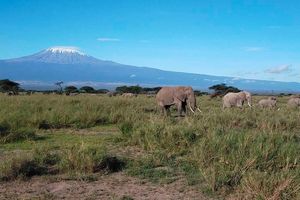
Chairman Samuel Ole Kaanki said the project violated agreed land-use plans and urged the investors to respect conservation priorities. Critics had also raised concerns over borehole drilling, fencing that obstructs grazing and wildlife routes, and threats to tourism and local livelihoods.
Grafted avocados of Hass variety
“This is the fifth ruling against KiliAvo by the courts. They should now accept that their project has no future here and move on. We are not opposed to investment, but development must respect agreed land-use plans approved by both communities and government," said Mr Ole Kaanki.
The series of rulings cleared the way for Nema to enforce its decision to revoke the farm’s operating license, effectively halting the investors’ ambitious export-oriented avocado project.
The Supreme Court’s decision brings the long-running legal battle to a close, with each party ordered to bear its own costs.
The association represents 334 Maasai landowners from the former Kimana Tikondo Group Ranch, located between Amboseli National Park and Kimana town. The landowners have consolidated their parcels into six conservancies, opting for conservation and tourism-based livelihoods while preserving traditional pastoralism.
Opposition to the avocado farm within the Amboseli ecosystem has been backed by multiple stakeholders, including the Kenya Wildlife Service, conservation organisations, local businesses and residents.
Critics argue that the project violated land-use zoning by introducing crop farming in areas designated for livestock and wildlife.
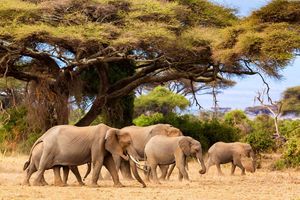
Concerns were also raised over boreholes drilled to irrigate export crops, which conservationists warned could deplete water resources relied upon by communities, livestock, and wildlife. Additionally, fencing around the farm was said to obstruct grazing routes and wildlife migratory corridors, threatening tourism and conservation efforts.