The year 2025 opened with a sense of renewed optimism, as Kenyans believed the country had finally turned the page on the 2023 cult tragedy that thrust the nation onto the global stage as one of the worst mass-casualty incidents linked to religious extremism.
The architect of the Shakahola deaths, which claimed over 450 lives in the forest, Paul Nthenge Mackenzie, had been arrested together with his key allies and held at Shimo La Tewa Maximum Security Prison, where they remain in custody.
The government, under President William Ruto, declared Shakahola Forest a crime scene and placed it under round-the-clock security, with at least 30 police officers deployed to prevent further unauthorised entry into the burial sites of the followers of Mackenzie’s outlawed Good News International Church.
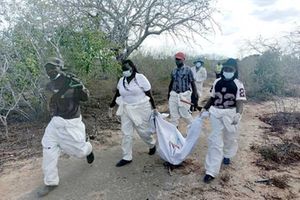
Morticians carry the remains of a person exhumed at Kwa Bi Nzaro village within the vast Chakama Ranch in Kilifi County on August 28, 2025 as part of investigations into a suspected cult.
Photo credit: Brian Charo | Nation Media Group
The Interior Ministry assured Kenyans that these measures were designed to prevent further deaths linked to cult-like activities. With Mackenzie and his associates behind bars and the forest secured, security agencies appeared to relax, seemingly confident that the “preventive measures” were sufficient.
That sense of renewal, however, was shattered in July when the discovery of shallow graves at Kwa Bi Nzaro, less than 30 kilometres from the first crime scene, cast a dark pall over the nation. Within two weeks of excavation, detectives from the Homicide Unit, morticians and pathologists had exhumed 32 bodies and recovered 102 mixed human remains scattered inside the forest.
In a country where security agencies have lately earned notoriety - for tracking down faceless government critics hiding in the most improbable corners, the new deaths at Kwa Bi Nzaro caught the same machinery embarrassingly flat-footed, just as Shakahola had.
Investigations would later reveal that survivors and escapees from the Shakahola operation regrouped deeper inside Chakama Ranch at Kwa Bi Nzaro. There, they continued radicalisation, fasting to death and burying those who succumbed, indicating the tragedy did not emerge in a vacuum.
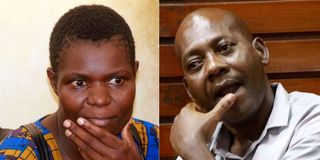
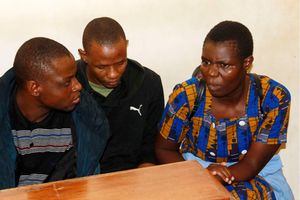
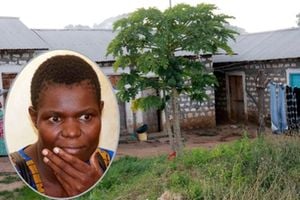
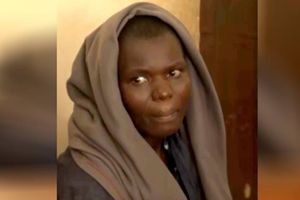
Eleven people were arrested. After a month of investigations, the number of prime suspects was narrowed to four: self-styled priestess Sharleen Temba Anindo and her associates, Kahindi Kazungu Garama, Thomas Mukonwe and James Kahindi Kazungu.
Investigations established that the four had been part of the original Shakahola cult and continued its activities after fleeing the forest.
“I know Ms Anindo. She was our neighbour in Shakahola, although I do not know where she is now,” witness Robert Kithi told the court earlier this month in Mackenzie’s ongoing murder trial over the deaths of 191 children.
Graves discovered at Kwa Bi Nzaro area, within Shakahola Forest, Kilifi County on August 15, 2025.
Photo credit: File | Nation Media Group
According to Kithi, Ms Anindo lived in Judea, one of the eight administrative villages created by Mackenzie, placing her squarely at the centre of both cult operations.
Documents filed in court show that Anindo and her accomplices not only revived and spread radical teachings after fleeing Shakahola but also lured followers into what they called a “holy safari to see Jesus,” mirroring Mackenzie’s starvation doctrine but with more brutal methods.
Recently, a Malindi court heard that Anindo, Garama, Mukonwe and James travelled across the country mobilising remnants of the church to go to Bi Nzaro for prayers, a euphemism for fasting to death. Statements from accomplices-turned-state witnesses, together with forensic evidence, including call-data records, M-Pesa statements and accounts from independent witnesses, have linked the four to the Kwa Bi Nzaro massacre.
A forensic and status report has also revealed critical details pointing to Mackenzie’s involvement.
“Mackenzie is therefore likely to be charged jointly with Ms Anindo, Mr Garama, Mr Mukonwe and Mr James once investigations are completed,” Inspector Oliver Nabonwe told the court in November.
Court documents indicate that Mackenzie coordinated the victims’ movements from inside his prison walls. Investigations show that between January and July, he contacted several former followers by phone, urging them to attend meetings in Busia, Migori and Malindi. During and after these meetings, he allegedly addressed them virtually, directing them to proceed to Malindi and begin fasting so they could die and “meet Jesus.”
Detectives say that even in custody, Mackenzie continued to exercise control over his followers, delivering radical end-time teachings through phone calls from prison.
By November, the death toll in Kwa Bi Nzaro stood at 52. The revised figure followed a detailed forensic exercise in which experts analysed and matched the 102 mixed human remains, enabling identification of additional victims.
Preliminary findings show that some victims died from blunt-force trauma. Pathologists reported that two bodies were fresh, 31 were either mildly or moderately decomposed and would take about 21 days to profile, while 19 were severely decomposed, requiring at least 50 days for analysis.
Grave diggers exhume bodies of suspected cult members at Kwa Binzaro village in Kilifi County on August 21, 2025.
Photo credit: Brian Ocharo | Nation Media Group
Investigations indicate that the cult remnants, who hid deep inside the fores,t not only continued extreme ideologies but also adopted new methods of disposing of bodies to frustrate forensic identification.
The prosecution told the Malindi court that those behind the Kwa Bi Nzaro deaths had carefully studied Government Chemist reports from Shakahola and adopted more destructive burial techniques after learning of the challenges experts faced profiling the decomposed remains.
“Mackenzie was simply picking the testimony of the Government Chemist in Mombasa and Shanzu and instructing associates that if this is what the government is doing and the challenges they are facing, then do it this way so that the bodies are never identified. It was deliberate,” Senior Assistant Director of Public Prosecutions Jami Yamina told the court.
Part of the instructions, investigators said, was to bury dying followers in extremely shallow graves and naked to accelerate decomposition, and to leave some bodies exposed to wildlife so the remains would be scattered and unidentifiable.
The aim, they believe, was to eliminate all physical evidence that could link victims to perpetrators or the crime scene.
“We intend to charge Mackenzie together with Ms Anindo, Mr Garama, Mr Mukonwe, Mr James and others not before the court. Call-data evidence has already corroborated witnesses who are under the Witness Protection Agency. There was coordination from within Shimo La Tewa and therefore Kwa Bi Nzaro is a continuation of Shakahola,” said Mr Yamina.
Because of this link, the prosecution wants to conclude all Shakahola-related cases by January to minimise disruption once Mackenzie is charged in the Kwa Bi Nzaro matter.
By December, the prosecution had closed the Tononoka Children’s Court case, in which Mackenzie and 30 others face charges including torture of children and denial of basic education.
In the murder case, only three witnesses remain, including the investigating officer, whose evidence will be taken in January. Manslaughter and radicalisation cases in Mombasa and Shanzu courts are also advanced, with more than 70 witnesses already heard.
Investigators have established that the Kwa Bi Nzaro deaths were neither accidental nor spontaneous, but the result of deliberate strategies to erase victims and conceal atrocities.
Prosecutors said a significant number of bodies were never buried. Victims were dumped in the forest and left to be eaten by wild animals. Others were buried in extremely shallow graves, some less than a foot deep, to ensure bodies could be exhumed by animals or decomposed rapidly.
The discovery of 102 mixed remains scattered across the forest underscores the scale of the cover-up. According to investigators, these were not simply deaths; they were orchestrated disappearances.
Inspector-General of police Douglas Kanja and DCI Director Mohammed Amin are shown around Kwa Binzaro village within Chakama ranch in Kilifi County.
Photo credit: Kevin Mutai | Nation
Exhumations revealed gruesome patterns both similar to and worse than those in Shakahola. While Shakahola graves often contained multiple bodies, including entire families, Kwa Bi Nzaro showed new levels of brutality. Unlike Shakahola victims, who were sometimes wrapped in clothing or sheets, Kwa Bi Nzaro victims were stripped naked and laid on their backs.
Thorny bushes concealed the graves. Many skeletal remains bore signs of scavenging, proof that bodies had been intentionally exposed to wildlife.
Clothing belonging to children and women was buried separately, indicating an effort to separate the victims from identifiable personal items.
The vast geography of Chakama Ranch facilitated the atrocities. Kwa Bi Nzaro lies more than 30 kilometres from the nearest police station, and even the government acknowledges that the vastness of the ranch makes crimes difficult to detect until they have escalated beyond control.
This vacuum allowed cult leaders to reorganise, relocate victims and conduct secret burials across a 400-acre radius so densely forested that even experienced homicide teams struggled to locate grave sites.
Investigators suspect many bodies were buried at least a year ago, meaning some victims were alive well after Mackenzie’s arrest, surviving into 2024 under revived extremist indoctrination.
Both Shakahola and Kwa Bi Nzaro demonstrate the enduring grip of cults on families and their capacity to destroy entire lineages under the guise of spiritual salvation, revealing a threat that is evolving faster than the state’s ability to respond.