In the quiet village of Korando in Kisumu County, 65-year-old Emmanuel Obiero watches his cows graze on land that has belonged to his family for generations.
A retired teacher, Obiero had hoped for a peaceful retirement but instead, he now lives with the looming fear of eviction.
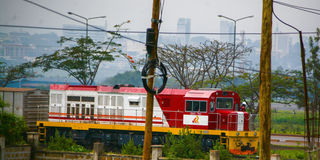
“My one-acre plot lies directly along the planned route of the Standard Gauge Railway (SGR) extension from Naivasha to Malaba via Kisumu. I should be enjoying my retirement, but instead, I’m wondering how to move my family, cows and chickens to an unknown place,” he said.
Residents of Korando village in Kisumu County hold demonstrations on August 8, 2021, against the planned construction of a Sh800 million sewerage plant in the area by Lake Victoria South Water Works Development Agency.
Photo credit: File | Nation Media Group
Obiero is among hundreds of residents from the Korando and Kogony communities facing a possible forced displacement to make way for the multi-billion-shilling rail project linking Kenya to Uganda and Rwanda.
“There has been no official eviction notice, but last year, surveyors placed beacons through my land. That is always how it begins,” he explained.
“Land prices are high. How can I relocate my seven children without the necessary resources? My biggest fear is that we will be evicted suddenly, with nothing to help us start anew,” he says.
He wonders why the government cannot upgrade the existing railway line. “Why destroy homes and scatter an entire clan when infrastructure already exists?” he asked.
Korando and Kogony clans have a long, painful history of surrendering land for State development.
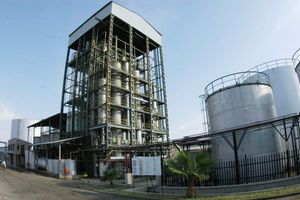
In the 1930s, they lost land for the Kisumu International Airport, followed by the molasses plant in the 1970s and numerous road expansions.
For Hellen Otieno, the thought of uprooting her extended family is deeply distressing.
“We have buried generations here. In Luo culture, the spirits of the dead remain with the living. How do we abandon them? My parents are in their 80s. This is the only home they have ever known,” she lamented.
Ms Otieno’s family has already lost land to the Kenya National Highways Authority (Kenha). Now, they stand to lose another half-acre to the railway.
“It is as though they are slowly erasing our lives,” she said.
David Achiando, another resident, expressed concern over compensation.
“Most of us have no title deeds. This is ancestral land passed down through generations. Without formal succession, how will the government determine who gets paid? Many will be left out,” he said.
Area Chief Aloyce Aboge confirmed that an Environmental Impact Assessment (EIA) was conducted on July 22, 2025. However, residents must wait until November to learn how many households will be affected.
“We do not yet have final figures. Once the EIA report is released, we will know who must be relocated,” Mr Aboge said.
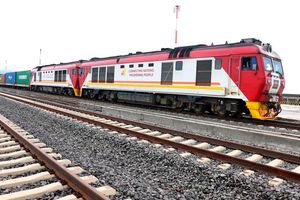
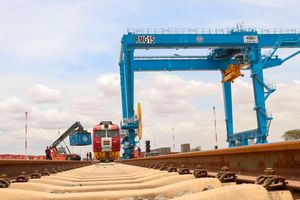
Earlier this year, the government announced that a private investor would operate the Naivasha–Malaba SGR extension to ease the financial burden on taxpayers. The Kisumu and Malaba phases are projected to cost approximately Sh645.95 billion ($5 billion).
The initial SGR line, part of China’s Belt and Road Initiative, connected Mombasa to Nairobi and was completed in 2017 at a cost of Sh409.9 billion. It currently ends in Suswa, far short of the Ugandan border, due to funding setbacks.
Plans to extend the line further stalled after China scaled back its financing of large infrastructure projects. In response, Kenya has increasingly turned to public-private partnerships, including toll roads, to fund its development agenda.
This is not the first time national projects have transformed life in Korando and Kogony. Yet, residents say they have seen little benefit from these sacrifices.
Some are now calling on the government to replicate the compensation model used during the 2010 airport expansion by the Kenya Airports Authority (KAA), which included financial literacy training for displaced families.
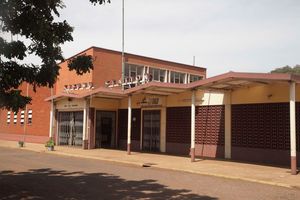
Kisumu International Airport.
“They took us through a three-day seminar to help us manage the compensation wisely,” recalled George Weda, Secretary-General of the Kisumu Community Welfare Association.
Shem Kosse, a long-time resident, voiced frustration over repeated displacements.
“We have given land for the airport, for the molasses plant—what have we received in return? Poor roads, broken promises and cultural erosion,” he said.
“People are willing to surrender land but only if the process is transparent, compensation is fair and timely, and relocation is done with dignity. Right now, there is no relocation framework. We need early engagement with elders, youth leaders, women’s groups, and land trustees. Otherwise, this will just be another chapter in a long history of injustice,” he warned.