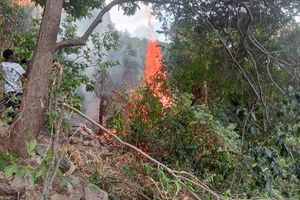
The Russian Quarters estate in Kisumu is being demolished to pave the way for ultra-modern residential housing and to expand hospital amenities.

In 1990, Ruth Abiero Oketch was a medic in Kisumu, newly posted as a trainer at the Kenya Medical Training College (KMTC), Kisumu Campus. Like many public servants at the time, she struggled with housing in the lakeside city, where demand far outstripped supply.
Her posting, however, came with a rare advantage — accommodation in the so-called Russian Quarters, a residential estate closely tied to Kisumu’s post-independence growth and Kenya’s early diplomatic engagement with the Soviet Union.
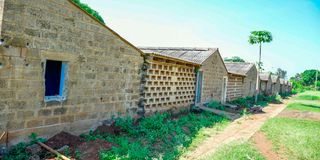
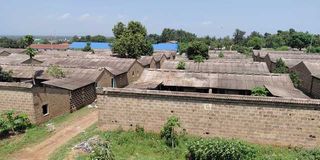
A section of the "Russian Quarters" (locally known as Rasia Quatas) in Kisumu City on June 11, 2026. The decades-old residential estate, located behind Jaramogi Oginga Odinga Teaching and Referral Hospital (JOOTRH) and adjacent to Kondele and Arina estates, has been earmarked for demolition to pave the way for the government's affordable housing project.
The estate’s housing blocks were arranged alphabetically. Ms Abiero lived in Block Z, the last row facing the Kondele bypass. She was then about 46 years old and remained there until 2000, when she moved to Homa Bay.
What she remembers most is not just shelter, but a sense of community.
“The place was secure and spacious. We had enclosed blocks and space for kitchen gardens where we grew vegetables and kept poultry. Neighbourliness was strong, and life was good,” she said.
For her son, William Otieno Oketch, who grew up in the estate, the design of the houses remains unforgettable.
“We loved the kitchens, the separate bedrooms and the large cubic verandas where we would eat during hot afternoons,” he said.
He also recalls a more light-hearted legacy — that many young residents found life partners within the estate. The Russian Quarters, he says, carried a reputation for beauty and youthful energy that extended beyond its walls.
That reputation is echoed by Fred Madanje, a Kisumu journalist who grew up in nearby Nubian Estate and often crossed over as a teenager.
“There are many memories. We used to troop there to meet girls. During inter-estate football matches, we often won, and their supporters would celebrate with us. It created a fierce but friendly rivalry,” he said.
The estate also became a sporting hub. A basketball court served local youth, while informal football teams emerged from a mix of boys from Russian Quarters, Manyatta settlement and Arina Estate. Together, they formed Urusi Football Club, later nicknamed Desert FC for playing on dusty grounds.
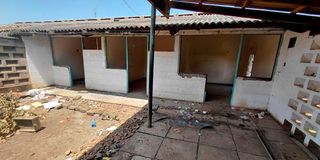
What is remaining of the Russian Quarters estate in Kisumu, which is being demolished to pave the way for ultra-modern residential houses and a hospital.
For Manyatta residents, the estate also provided a convenient shortcut to Kibuye Market, avoiding the longer route through Kondele and Kisumu–Kakamega Road. That passage has since been closed.
More than two decades after leaving, Ms Abiero has received news of the estate’s demolition with mixed emotions. The government is replacing it with modern housing units and a new hospital.
While nostalgic, she supports the redevelopment.
“Change must always come. I am happy there will be modern staff quarters for young medics,” she said.
Her acceptance reflects broader realities in the health sector, where staff have long faced overcrowding, poor plumbing and ageing facilities that have affected morale and retention.
The demolition of Russian Quarters mirrors a wider transformation in Kisumu, where ageing low-density estates are being replaced by high-density developments to meet growing urban demand.
The estate traces its origins to the late 1960s, when the Kenyan government partnered with the Soviet Union to build housing for healthcare workers serving at Nyanza Provincial Hospital — now Jaramogi Oginga Odinga Teaching and Referral Hospital (JOOTRH), commonly known as Russia.
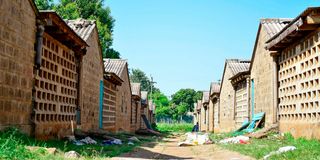
A section of the "Russian Quarters" (locally known as Rasia Quatas) in Kisumu City on June 11, 2026. The decades-old residential estate, located behind Jaramogi Oginga Odinga Teaching and Referral Hospital (JOOTRH) and adjacent to Kondele and Arina estates, has been earmarked for demolition to pave the way for the government's affordable housing project.
Constructed in 1969 during the Cold War era, the hospital symbolised Kenya’s diplomatic ties with Moscow, championed by then Vice President Jaramogi Oginga Odinga.
However, political tensions following the fallout between Jaramogi and President Jomo Kenyatta led to reduced support for associated projects. Over time, the estate suffered neglect, weak maintenance and infrastructure decay.
Yet the name “Russia” endured, long after the original political context faded from public memory.
In recent weeks, demolition crews have moved in, marking the end of an era. The once orderly estate is now a construction site, its perimeter wall drawing crowds of onlookers.
Some youths have attempted to salvage materials such as doors, window frames and metal fixtures for resale, prompting police intervention and the use of tear gas to disperse crowds.
Despite the disruption, tenants had earlier vacated voluntarily ahead of the redevelopment, which has received broad public support.
According to JOOTRH Chief Executive Officer Dr Joshua Okise, the project goes beyond housing.
“We have a mega plan that includes over 2,000 housing units — bedsitters, one-, two- and three-bedroom houses — and expansion of the hospital itself,” he said.
The Russian Quarters estate in Kisumu is being demolished to pave the way for ultra-modern residential housing and to expand hospital amenities.
The master plan will be implemented in phases. Phase One includes an eight-storey, 500-bed facility with medical and surgical wards, a 20-bed ICU, a 20-bed HDU, renal services, a 28-bed accident and emergency unit, 20 operating theatres, specialist clinics, a rehabilitation centre and a dental unit.
Phase Two will add another 600-bed facility, alongside a Doctors’ Plaza and expanded support infrastructure.
Once complete, JOOTRH is expected to grow into a 2,000-bed referral and teaching hospital.
The broader redevelopment also includes staff housing under the Affordable Housing Programme, expansion of training and research facilities, improved traffic and parking systems, and a modern logistics centre.
The disappearance of Russian Quarters is part of a wider pattern across Kisumu, where historic estates such as Makasembo, Anderson and Lumumba have also been replaced or transformed.
As the city expands, authorities are prioritising higher-density housing and modern infrastructure to accommodate rapid population growth while improving service delivery.
Yet, as the final walls come down, what remains is not just rubble but memory — of friendships, routines and a once tightly knit community that defined an era of Kisumu’s urban life.
Follow our WhatsApp channel for breaking news updates and more stories like this.