Security and health officials have raised alarm over a new synthetic drug, locally known as ‘Karambela’, which they say is fuelling a surge in violent crime, amid concerns over weak regulation and cross-border trafficking.
Police say the substance, suspected to be a form of benzodiazepine or a mixture of antidepressant drugs, is increasingly being abused by youth, triggering erratic and aggressive behaviour linked to recent machete attacks.
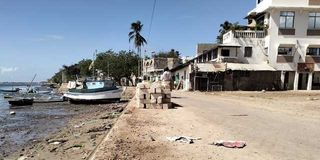
The concern follows a series of violent incidents on Lamu Island in the past week. On Wednesday, a 42-year-old woman, Mercy Ramadhan, was seriously injured after she was attacked by a man armed with a machete in the Gadeni area. A day earlier, 26-year-old Twahir Madi was assaulted by a gang of machete-wielding youths in Wiyoni. Both victims were admitted to King Fahd County Referral Hospital.
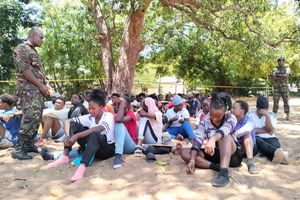
Two weeks ago, security officials led by Regional Police Commander Ali Nuno and Regional Commissioner Rhoda Onyancha held a public security meeting in Lamu following a spike in insecurity. Authorities cited organised gangs and drug traffickers as key drivers of the violence.
Coast Regional Commissioner Rhoda Onyancha briefs the press on Shakahola exhumation in this past photo.
Photo credit: Kevin Odit I Nation Media Group
Mr Nuno ordered police officers to take firm action against individuals found carrying dangerous weapons, including enforcing a shoot-to-kill directive in life-threatening situations. However, attacks have persisted, prompting deeper investigations into the role of narcotics in the violence. Lamu County Police Commander Shadrack Ruto said the spread of ‘Karambela’ is now a major security concern.
Coast Regional Police Commander Ali Nuno at a past event.
“We are investigating the supply of this drug into Lamu from other regions and want to establish those behind the illegal trade harming our youth and society,” he said, warning chemists and pharmacies against dispensing controlled substances without prescriptions.
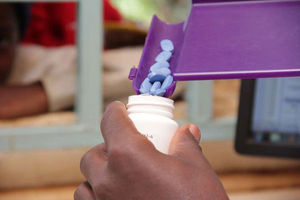
Lamu Deputy Governor and County Health Executive Mbarak Salim said preliminary assessments suggest the drug could be benzodiazepine tablets or a cocktail of antidepressants such as amitriptyline, both of which are regulated and require a doctor’s prescription. “Based on the effects observed among users, this appears to be abuse of benzodiazepines, whose tablets are typically blue,” said Dr Salim. “There is also a possibility that it is a mixture of compounds designed to mimic diazepam.”
He explained that overdosing on such substances can disrupt the central nervous system and trigger abnormal surges in adrenaline, the hormone responsible for the body’s fight-or-flight response, resulting in agitation, aggression and loss of inhibition.
Health officials suspect that, in pursuit of a quick high, users ingest excessive quantities—sometimes between 10 and 20 tablets—leading to hallucinations, confusion and violent tendencies. Dr Salim further claimed the drug is likely manufactured in Somalia, where it is repackaged to resemble legitimate pharmaceutical products before being trafficked into Lamu. Similar patterns have been reported in other parts of the Coast. In Mombasa, previous investigations linked violent youth gangs to abuse of Rohypnol, another benzodiazepine commonly referred to as ‘Bugizi’.
Local administrators in Lamu, speaking on condition of anonymity due to the sensitivity of the matter, identified miraa transport vehicles from Isiolo County and boats operating between Lamu and Somalia as key channels for smuggling the drug.
Residents have accused regulatory agencies of failing to control the distribution of pharmaceutical drugs, allowing the substance to be sold openly in retail shops and chemists at between Sh5 and Sh10 per tablet. Mr Fuad Ali, a youth leader in Lamu, called for coordinated enforcement action.
“We want to see agencies responsible for drug control working closely with security teams to conduct impromptu inspections in chemists and retail outlets,” he said. “The level of violence we are witnessing is unacceptable.” He added that users often become highly irritable and aggressive after consumption, sometimes planning attacks while under the influence.
During the recent security visit, Mr Nuno said authorities would intensify inspections of miraa vehicles and maritime transport routes to curb the inflow of the drug.