Piles of uncollected garbage that have turned parts of Mombasa into eyesores for many years pose an increased health threat as heavy rains wash the waste from undesignated dumpsites into residential areas, sparking fears of a possible disease outbreak.
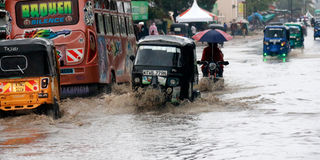
Mombasa, Kenya's main port city and a tourism hub, has long struggled with poor waste management systems and illegal dumping. Despite numerous clean-up drives, large heaps of garbage remain a common sight in areas such as Kisauni, Likoni, Kongowea, and Changamwe, often blocking drainage systems and worsening flooding during heavy rains.
According to an advisory on expected heavy rainfall and its potential public health impact, the office of the director-general for health stated that flood waters mixed with solid waste can create ideal breeding grounds for waterborne diseases such as cholera and typhoid, especially in low-lying areas on the Coast.
The advisory was addressed to the county directors of health from all regions expected to be affected by the rains.
"The heavy rainfall may extend to October 30, 2025. This is likely the onset of the short rains season. In view of the forecast, people are advised to avoid driving through or walking in moving water, clear their water drainage, and maintain high hygiene standards," said Health Acting Director General, Dr Kamene Kimenye.
Heavy rains have caused floods in Mombasa.
Photo credit: Kevin Odit | Nation Media Group
Dr Kimenye further urged Kenyans to drink clean, boiled, or treated water and to sleep under treated mosquito nets or to apply repellents.
The advisory also warned that "exposure to contaminated floodwater and poor drainage systems could trigger an increase in diarrhoea and vector-borne infections if immediate waste management measures are not enforced."
However, Mombasa County Executive Committee (CEC) Member for Environment and Water Kibibi Abdallah said the tourism hub has already started the cleaning initiatives to reduce flooding when it rains. Ms Kibibi agreed that garbage thrown into undesignated areas poses a health risk.
According to residents, the county government's failure to manage solid waste has left them living in fear whenever it rains.
"Every time it rains, garbage floods our doorsteps. Children play in the dirty water, and we fear a cholera outbreak could strike any time," said Bombolulu resident, Ms Fatuma Salim.
The Mombasa County Government recently launched an ambitious three-month pilot project that places 500 youth at the centre of its renewed war on garbage, a move officials say could mark a turning point in how the coastal city manages its waste.
Under the new community-based model, the youth will use 41 tuktuks to collect household waste across residential estates and transport it to designated transfer stations for proper disposal. The initiative, spearheaded by the county department of environment and water in partnership with community-based organisations (CBOs), seeks to improve efficiency, create jobs, and restore cleanliness in the county.
Ms Abdallah said the project aims to address the garbage crisis in Mombasa and empower young people through income-generating opportunities.
"This pilot will engage 500 young people working with 41 tuk-tuks across different estates. Once evaluated, we plan to expand it to benefit at least 3,000 youth," Ms Abdallah said during the registration of participating CBOs.
She added that the initiative targets informal settlements and estates where garbage trucks rarely access.
"We are working with organised CBOs because we want waste management to be owned by the community. The youth will collect household garbage and deliver it to transfer centres for proper disposal. This way, we not only improve sanitation but also create sustainable jobs," she said.
The County Executive for Lands and Urban Planning, Mr Mohamed Hussein, said keeping Mombasa clean requires both discipline and cooperation from residents.
"Residents must take responsibility for how they dispose of their garbage. No system can work if people continue dumping waste on roadsides and open spaces," he said.
According to county data, Mombasa produces 1,200 tonnes of waste daily, yet only about 60 per cent is collected correctly and disposed of. The rest ends up in drainage systems, open fields, or the ocean, threatening both marine life and public health.