As Mombasa’s skyline rises, the rapid construction of high-rise buildings in established neighbourhoods is raising questions about the price neighbouring residents pay for urban development.
From falling debris and dust to damaged property, widening cracks and concerns over safety, access to clean air and privacy, some families are struggling to coexist with towering structures built next door.
While most families persevere through what has become a nuisance, one family in Ganjoni has refused to cave in to the financial power of property developers.
The construction of a 15-storey apartment building on Plot Number Mombasa/Block XXI/191/Mombasa Island, along Sauti Ya Kenya Road in Ganjoni, has been the subject of a legal battle between the developer and the Vaghadia family since 2023.
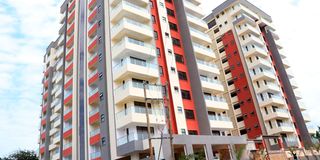
The New Darul Naeem Apartments under Construction in Ganjoni, Mombasa, in this photo taken on September 17, 2026.
The dispute escalated to the Environment and Land Court in Mombasa after construction debris allegedly fell repeatedly into the family’s compound and onto their vehicles, while cracks appeared in their house.
The family’s property comprises a two-storey load-bearing residential house with reinforced concrete slabs and beams, a gated driveway and a paved parking area.
In court documents, the family said the construction had disrupted their peaceful occupation of a homestead that has stood for more than 55 years.
They blamed deep excavation for the foundation of the apartment building for causing structural damage to their house, while dust, falling debris and construction activity made the property unsafe and uninhabitable.
The family has lamented what it terms a disregard for safety measures and an agreement reached before construction began, which included safeguards to protect their property and preserve trees and plants along the shared boundary.
According to the family, stones, wooden planks, wet cement and other debris repeatedly landed in their compound, terrace and roof, damaging property and creating a risk of injury.
“A woman and a seven-year-old child were struck and slightly injured by falling wet cement and stones,” the court documents read.
Cement dust and debris also damaged their vehicles, forcing the family to incur additional costs for covers, repairs and repainting.
“The excavation and construction had caused cracks in the walls and floor of the house, weakened the boundary wall and caused a pillar supporting the main gate to sink, raising fears that it could collapse,” the family said in court documents through their advocate.
They also complained that construction sometimes continued beyond agreed working hours and that the protective barriers and nets at the site were inadequate.
After complaints to the developer and the National Environment Management Authority failed to resolve the dispute, the family moved to court seeking orders to stop construction until adequate safety measures were installed, prevent further nuisance, repair the damage and compensate them, including Sh510,400 for vehicle repairs.
The parties later recorded a consent setting out how construction was to proceed, including measures to protect the neighbouring residential property.
But the family returned to court, lamenting that the orders and consent had not been fully complied with.
They said debris, wet cement, stones and dust continued to fall into their compound, endangering their lives and damaging their property.
“The continued works violated our constitutional rights to a clean and healthy environment and protection of property. The repeated notices demanding compliance and repairs had been ignored,” they told the court.
In response, Darul Naeem Apartments Ltd and Husamudin Tayabari Nanabhai, who were sued as respondents, denied the allegations and said they had substantially complied with the court orders and consent.
“Measures remained in place to protect the family’s property from falling debris and construction materials. We had taken steps to repair all vehicles alleged to have been damaged by the works and paid the associated costs,” they said in the court document.
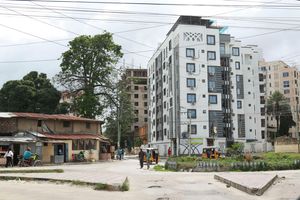
Modern apartment blocks in the Kiziwi area in Tudor, replacing the traditional Swahili-style homes in Mombasa, in this photo taken on September 25, 2026.
Photo credit: Kevin Odit | Nation Media Group
The respondents also relied on investigations by NEMA, saying the authority had found that the required environmental mitigation measures had been complied with and were being satisfactorily implemented.
They argued that some dust and cement particles were an inevitable consequence of construction and could disperse because of factors beyond their control.
The court, however, found that the developer had not fully complied with its orders and the consent.
It noted that there was no proof that payment for one of the damaged vehicles had been made, while cracks in the family’s house remained unrepaired and construction debris continued to spill onto the property.
The court consequently found the directors of Darul Naeem Apartments Ltd in contempt and gave them 14 days to comply.
They were ordered to install adequate safety nets and barriers, repair cracks and structural damage to the family’s property and restore the damaged vehicles.
“In default of compliance with these orders, the Court shall proceed to impose the appropriate sanctions for contempt, including committal to civil jail and/or the imposition of a fine,” the court said in a ruling delivered on July 16.
The Chief Building Inspector was directed to inspect the construction site and the adjoining property every 30 days and file reports on compliance.
The family has since engaged a consultant after what it describes as significant structural damage, ground instability and continuing safety hazards emerged from November 2023, coinciding with construction of the neighbouring apartment building.
The consultant noted that the new building had been constructed directly along the boundary, with scaffolds, hoarding and debris containment systems encroaching on the family’s property.
The Ganjoni dispute is not an isolated case. In Kizingo, residents also went to court to challenge the construction of a high-rise building, citing concerns over privacy and the impact of the development on the neighbourhood.
Two years ago, it took the intervention of the Mombasa Environment and Land Court to have a proposed 18-storey building in the leafy Kizingo suburbs reduced by two floors for construction to continue.
The project had stalled after Kizingo residents opposed its implementation, arguing that an 18-storey structure would compromise their privacy, particularly in their bedrooms and swimming pools.
The residents, led by Mohamed Abdalla, Salim Said, Abdulaziz Abbas, Bharat Devidas and Ketan Doshi, challenged the project, arguing that it was being undertaken in violation of the law and without adequate consideration for residents’ welfare and environmental concerns.
They lamented that the proposed development of 53 flats lacked adequate supporting infrastructure, including sewerage, water supply, road access and proper drainage.
The court initially halted the project, finding the proposed 18-storey development irregular, illegal and non-compliant with the Constitution.
However, the developer, Khansa Developers Ltd, challenged the decision, asking the court to review its judgment after obtaining what it described as new material, including fresh validation of county approvals and the NEMA licence.
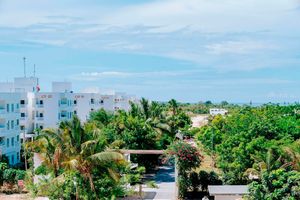
A modern apartment block under construction at Majengo King'orani in Mombasa, in this photo taken on September 25, 2026.
Photo credit: Kevin Odit | Nation Media Group
The court subsequently reviewed the decision and allowed the developer to proceed, but reduced the building to 16 floors.
The court also ordered an Environmental Impact Assessment addressing dust and noise, traffic, water and electricity demand, solid waste, occupational safety and the impact on neighbours’ privacy and natural light.
The developer was directed to ensure that the project did not threaten residents’ right to a clean and healthy environment.
It was only in March this year that Khansa Developers Ltd finalised the consequences of litigation arising from Kizingo residents’ opposition to the massive project.
The developer succeeded in its bid to overturn a September 25, 2025 ruling that had found its directors in contempt for failing to comply with the conditions imposed on the project, including the reduction of the building from 18 to 16 floors and ensuring compliance before continuing with the project.
The court dismissed the residents’ February 26, 2025 contempt application against the developer’s directors, bringing the long-running legal battle over the development to an end.
Meanwhile, Mombasa continues to witness an increase in high-rise construction, with established neighbourhoods increasingly having to contend with dust, noise from excavation and flying debris during construction.
A spot check by the Daily Nation showed massive development taking place within Mombasa’s central business district, with high-rise buildings coming up in several neighbourhoods.
The rapid development has also raised safety concerns, with some homeowners choosing to sell their properties and relocate as high-rise buildings continue to transform the city’s skyline.
“The owner of this house sold his property and left. You can see there is a construction ongoing. This is a high-rise building coming up,” said a labourer at a construction site in Majengo.
For the Ganjoni family, however, the legal battle is not over. The matter returns to court on September 30 for mention and further directions.
In a letter to the National Construction Authority (NCA), the family continued to express their dissatisfaction with the project, citing the risks the building poses to their daily lives and seeking clarification from the authority on its verification of alleged violations of the National Building Code.
“Beacon-to-beacon constructions, compounded by openings on the shared boundary wall looking directly into my parking lot and entrance, have a direct effect on my family and me, who have been residing on the property for almost 55 years,” he said in the letter dated August 3.
The family said that, as professionals entrusted with the mandate to ensure the quality and safety of buildings and their occupants, the NCA should appreciate the health, safety, security and environmental risks posed by such construction.
They lamented that the latest evidence showed that the problems had persisted even after a judicial order, and urged the authorities entrusted with protecting citizens and the environment to act urgently on the alleged violations.