Immigration and Citizen Services Principal Secretary Dr Belio Kipsang faced MPs on Thursday as they questioned unequal access to diplomatic passports by senior government officials, including constitutional office holders.
Dr Kipsang faced intense questioning from the National Assembly Committee on Administration and Internal Security over a glaring omission.
The Principal Secretary was specifically hard-pressed to explain why his State Department included the Clerk of the National Assembly on the list of eligible beneficiaries but completely left out the Clerk of the Senate, who performs a comparable parliamentary function.
The committee also questioned the exclusion of some constitutional commissions and independent offices, with Teso North MP Oku Kanuya, a member of the committee, reminding the PS that State institutions placed in the same constitutional category should be treated equally.
“It is important to ensure that access to diplomatic passports is all-inclusive in the sense of what the constitution provides,” said Mr Kaunya, adding, “all those offices that the constitution expressly puts in one category should be included.”
The committee, chaired by Narok West MP Gabriel Tongoyo, was moved by concerns raised in a petition by the Commission on Administrative Justice (Ombudsman) regarding alleged discrimination in the regulations governing the issuance of diplomatic passports.
Cornered by the MPs, Dr Kipsang took the flak, admitting that the unfair exclusion “could have been an oversight” as he undertook to review the regulations governing the issuance of the diplomatic passports to address the glaring omissions and ensure fairness in the distribution of the document.
“There is no reason why we should have the Clerk of the National Assembly access to diplomatic passports and leave out the Clerk of the Senate. It could just be an omission and I think it is fair to admit that,” said Dr Kipsang.
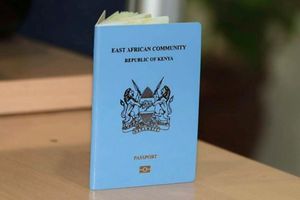
A diplomatic passport is a specialised, tightly regulated travel document a government issues to its diplomats, high-ranking state officials, and designated public servants who represent the country on official business abroad.
In Kenya, the document is recognisable by its distinct cover and is legally managed under national frameworks like the Kenya Citizenship and Immigration Act alongside international protocols.
The primary purpose of a diplomatic passport is to signify to foreign governments that the holder is travelling in an official, state-sanctioned capacity.
It serves several key functional purposes that include international identification, visa facilitation, consular protection and expedited border processing.
Under the international identification function, the document formally identifies the bearer as a representative of their country's sovereign authority, signalling to border control that they are on state business.
The visa facilitation function allows many countries to enter into bilateral visa-waiver agreements, allowing diplomatic passport holders to enter without a pre-arranged visa or with expedited approval.
Under the expedited border processing function, holders generally bypass standard airport queues, utilising dedicated diplomatic lanes for expedited immigration and courtesy customs processing.
This, as the consular protection function, alerting local authorities and embassy protocols in a foreign country to extend maximal administrative and consular assistance to the bearer during crises or official engagements.
Immigration Principal Secretary Dr Belio Kipsang.
Photo credit: Jared Nyataya | Nation Media Group
Under the Kenya Citizenship and Immigration Act and its 2012 regulations, diplomatic passports are issued to specified categories of State and public officials.
They include the President and their immediate family, Deputy President, Cabinet Secretaries, Principal Secretaries, Speakers of Parliament, the Chief Justice, judges of superior courts, Attorney-General, Director of Public Prosecutions, Auditor-General, Controller of Budget and other designated state officers.
The PS, however, blamed the discrepancies on rules governing the issuance of the diplomatic passports, saying that “with the passage of time since 2012 and all that has happened with the implementation of the Constitution, there is a need for us to relook at the schedule.”
“We are not in any dispute about reviewing the regulations," said the PS.
The PS noted that the current framework, which was introduced in 2012, needed to be reviewed to reflect changes brought about by the 2010 Constitution and the establishment of various constitutional offices.
But the committee told the PS that the omission was difficult to justify, noting that the Senate was already provided for under the constitution when the regulations were introduced in 2012.
This even as the PS assured the committee that the department was prepared to initiate the necessary review, subject to public participation and the required legislative procedures.
"We can look at the regulations, and we have no objection to that. The final draft will be published and the regulations will go through public participation and the due process before being brought to parliament for consideration," Dr Kipsang said.
The committee Vice-Chairperson, Mr Dido Raso, the Saku MP, sought clarification on whether the absence of an office from the list “automatically disqualified its holder from obtaining a diplomatic passport.”
According to Mr Raso, the PS' explanation “appeared to suggest that other public officers could still qualify for the document when undertaking official government assignments, even if their positions were not expressly listed in the regulations.”
"From your response, one thing that clearly stands out is that the diplomatic passport is meant to afford holders immunities and privileges during official international travel. That does not necessarily exclude others," said Mr Raso.
The Saku MP sought confirmation from the PS that officers not covered by the existing categories could still be considered for diplomatic passports when travelling on official government business, while using ordinary Kenyan passports for personal travel.
The PS explained that the law provides for such flexibility, as it gives the Cabinet Secretary responsible for immigration powers to authorise the issuance of diplomatic passports to persons who do not fall within the specified categories where it is considered necessary.
"The diplomatic passport is an official travel document intended to facilitate travel in connection with official duties and diplomatic functions,” said Dr Kipsang.
The PS added that “its issuance must therefore be undertaken with due consideration and caution, taking into account the mandate and functions of the office bearers."
Notably, the PS revealed that the government is keen to safeguard the integrity and international standing of the Kenyan diplomatic passport, “given the privileges and recognition associated with the document.”
He explained that his State Department operates within international and national legal frameworks, including the standards of the International Civil Aviation Organisation (ICAO), East African Community (EAC) guidelines and the Kenya Citizenship and Immigration Act.
This even as he clarified that ICAO does not prescribe the categories of people entitled to diplomatic passports, leaving individual countries to determine eligibility through their national laws.
Others eligible to hold a diplomatic passport include county governors, the Inspector-General of Police, the Chief of the Defence Forces, service commanders of the Kenya Defence Forces, the Director-General of the National Intelligence Service and specified former state office holders.