Every day, Hussein Choya of Funzi Island stares at the empty chair his brother once occupied before police whisked him away in 2013. Like hundreds of other families, he is still waiting.
“We are walking but dead,” he says — words that now define the anguish of victims of enforced disappearances as they demand answers from the state.
The families want the Office of the Director of Public Prosecutions (ODPP) to compel police to produce their loved ones “dead or alive ,” accusing security agencies of hiding behind impunity while hundreds of Kenyans remain unaccounted for.
According to civil society groups, more than 100 people have been killed or disappeared in Kenya between 2012 and 2025, leaving families without answers or justice.
Their demands come as the government begins rolling out a compensation plan for victims of police brutality during recent Gen Z protests — a move activists say must also cover families of those abducted or executed in past years.
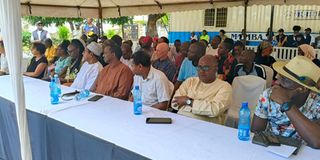
Hussein Choya outside during the commemoration of victims of enforced dissapearance on August 30, 2025. His brother Mohammed was allegedly abducted by people believed to be police officers in 2013
Photo credit: Mishi Gongo | Nation Media Group
For Choya, the agony stretches back to 2013. His brother, Mohamed Hussein, was taken from his home at night in full view of his wife and children after officers fired shots in the air to subdue the family.
“They asked his wife what her husband did to earn a living. She told them he was a tour operator. They then told her they were taking him to Tanzania to be charged with terrorism. They asked if she still loved him, then dragged him away. At the police station, I was denied help until IPOA intervened,” Choya recalled.
He added that police accused his brother of being Al-Shabaab, yet he was only a tour boat captain serving tourists. Hussein left behind a wife and seven children.
“I became their father, but I can only educate them up to Class Eight. After that, they do manual jobs. I worry about their future. We are angry,” he said during the commemoration of the International Day of the Victims of Enforced Disappearances in Mombasa.
Agnes Nzilani from Mombasa recounted how her brother was abducted in 2021 in Changamwe. He was briefly arraigned after 14 days in custody, but immediately after his release, she says, plainclothes officers bundled him into one of three waiting vehicles.
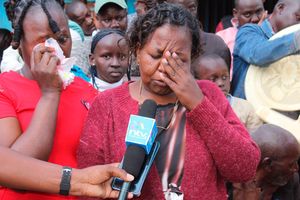
“From that day to date, we do not know his whereabouts. My brother vanished in the hands of the state,” Ms Nzilani said, breaking down as she pleaded with authorities to end her family’s torment.
“It is impossible to get closure when we are not even sure whether our families are dead or alive — whether they are somewhere being tortured. Sleeping is not possible with this pain,” she added.
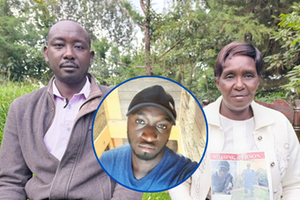
Mr Paul Tata who lost his Son in 2024 during the anti Finance Bill protests
Photo credit: Pool
Rose Waruguru said her son was brutally assaulted by police in 2020 during the 7 pm Covid-19 curfew. According to her, he remained mute and bedridden for over a year before succumbing to his injuries.
“No parent deserves to bury their child like this. The government must admit it wronged us before talking about compensation,” Waruguru said.
Another case is that of Emanuel Tata, who lost his life during the 2024 Finance Bill protests. His grieving father told the gathering that he had been left with only one daughter to care for while struggling with diabetes.
Civil society groups say these stories demonstrate why the government’s current pledge of compensation is insufficient.
“Apologies and partial payments cannot replace justice. Officers who ordered or executed these killings must face trial. Otherwise, we are simply whitewashing atrocities,” said Amnesty International’s Executive Director in Kenya, Irungu Houghton.
The Missing Voices coalition demanded that the government expand its compensation plan to cover victims of enforced disappearances and extrajudicial killings, warning that leaving them out would amount to erasing past atrocities.
They also insisted that security officers implicated in the killing of Gen Z protesters be held personally accountable, saying financial payouts alone cannot replace justice.
Muslims for Human Rights (MUHURI) board member Khalifa Khalef said many have been killed by police from previous regimes to date but no officer has been held accountable.
“We cannot be compensated with taxpayer money while the killers roam free. Every officer who pulled a trigger must go to jail,” he said.
He cited remarks by the President and senior state officials such as “shoot them in the leg” as evidence that police violence is sanctioned from the top.
“The Constitution gives no police officer the right to kill innocent Kenyans. Youths are even branded terrorists and slapped with high bail to silence them. Yet these are the young people who represent the country’s future,” Mr Khalef added.
Ms Evaline Ombele of the ODPP said the office was committed to ensuring people-centred prosecutions and protecting the innocent.
“We want to assure the public that our office works to withdraw cases where there is no guilt, and to prosecute only when there is solid evidence,” she said.
The Independent Policing Oversight Authority (IPOA), through Commissioner Mohammed Abubakar, urged families to be patient, citing funding and staffing constraints.
“We are only 77 officers instead of the 440 required. Still, we have closed several cases and delivered justice. We need you to cooperate with us. Our commitment is to build a country that respects the rule of law,” he said.