The violent clash between supporters of Governor Susan Kihika and Kuresoi North MP Alfred Mutai last Friday has laid bare deep political divisions simmering beneath the surface in Nakuru County, exposing political fault lines that could shape the battle for the county's top seat in the 2027 General Election.
But beyond the violence lies a broader political contest that has steadily intensified over the past two years.
Governor Kihika, who swept to victory in 2022 with 440,707 votes against former Governor Lee Kinyanjui's 225,620 votes, is increasingly finding herself isolated within her own political backyard.
Once regarded as one of President William Ruto's most influential allies in the Rift Valley, she now faces growing opposition from a section of Nakuru's elected leaders amid claims of exclusion, poor consultation and unequal distribution of development projects.
The governor has politically fallen out with at least seven of Nakuru's 13 MPs, creating a potentially dangerous political dynamic as the county begins positioning itself for the next election cycle.
The fallout is threatening to fracture the United Democratic Alliance (UDA) in one of its key strongholds and could provide an opening for former Deputy President Rigathi Gachagua's Democracy for Citizens Party (DCP), which is aggressively courting support in the Mt Kenya region and parts of the Rift Valley.
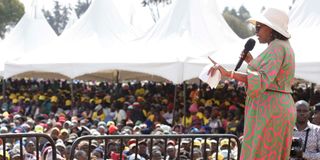
Nakuru County Governor Susan Kihika.
Photo credit: Dennis Onsongo | Nation Media Group
“Governor Kihika is feeling the heat from DCP, while some MPs are struggling to balance their relationship with the national government and their popularity among voters back home. Except for Kuresoi North and Kuresoi South, politics in most constituencies remain fluid, and UDA risks losing significant ground to DCP and Jubilee if the current divisions persist,” he said.
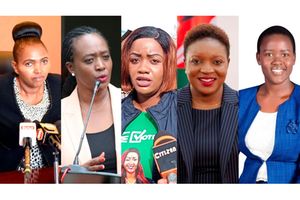
Among the leaders who have publicly criticised Governor Kihika's leadership style are Kuresoi North MP Alfred Mutai, Rongai MP Paul Chebor, Kuresoi South MP Joseph Tonui, Njoro MP Charity Kathambi Chepkwony, Nakuru Woman Representative Liza Chelule, Gilgil MP Martha Wangari, Naivasha MP Jayne Kihara and Senator Tabitha Karanja.
Nakuru Senator Tabitha Karanja.
Photo credit: Lucy Wanjiru | Nation Media Group
Most of them accuse the governor of failing to consult fellow elected leaders, sidelining some regions in development and appointments and working with politicians from outside Nakuru to undermine local leaders.
Only a handful of legislators, among them Nakuru East MP David Gikaria, Molo MP Kuria Kimani, Subukia MP Samuel Gachobe, Bahati MP Irene Njoki and Nakuru West MP Samuel Arama, are widely viewed as remaining firmly in the governor's corner.
Apart from Ms Njoki and Mr Gikaria, none of Nakuru's elected MPs attended the function, despite the presence of several influential national leaders, including UDA Chairperson and Embu Governor Cecily Mbarire, Kapseret MP Oscar Sudi, Mathira MP Eric Wamumbi, Nyeri Woman Representative Rahab Mukami and Trans Nzoia Senator Allan Chesang.
Political observers interpreted the absence as a clear signal of the widening gap between Governor Kihika and a section of Nakuru's leadership.
The governor's critics also accuse her of quietly grooming preferred candidates to challenge sitting MPs during the 2027 UDA nominations.
Governor Kihika has dismissed the claims and linked some of the criticism to attempts to inject ethnic politics into Nakuru's leadership.
“Nakuru is a cosmopolitan county and has no space for tribalism. We are all children of the same house (UDA) and should not have tribal tendencies. I am ready to work with all leaders who are committed to serving the people. As leaders, we must not allow ourselves to be divided, intimidated or drawn into schemes by selfish individuals. Nakuru remains united and focused on development,” she said.
The tensions are particularly significant because Nakuru's electoral politics are heavily influenced by voting patterns among the county's two largest communities, the Kikuyu and the Kalenjin, whose support often determines the winners of the governor, senator and woman representative races.
The county also has huge pockets of Luo, Luhya, Kisii, Kamba, and Maasai, among other communities.
Some analysts warn that Kihika's strained relationship with influential leaders from the Kalenjin voting bloc could complicate her re-election bid.
“The Kalenjin vote remains a critical factor in determining countywide races in Nakuru. The governor needs to rebuild relationships with leaders from that bloc because even if she secures the UDA ticket, the general election will require broad political support across communities,” said political analyst Steve Kabita.
The latest tensions can also be traced to a series of empowerment programmes organised by the governor's allies across Nakuru.
The events, often attended by Mr Sudi and other leaders from outside the county, have generated controversy, with some local MPs accusing organisers of using them as political platforms to attack elected leaders who have not publicly endorsed Kihika's re-election bid.
The first empowerment programme was held in Salgaa in April, followed by another in Olenguruone in May.
Nakuru Woman Representative Liza Chelule and MP Alfred Mutai have both accused some leaders of attempting to shape Nakuru's political future while disregarding local leaders.
“It is unfortunate that leaders from outside Nakuru have made deliberate attempts to influence the county's politics while disregarding the democratic rights of elected leaders,” Ms Chelule said.
For his part, Mr Mutai has accused Governor Kihika of sidelining some constituencies and prioritising political mobilisation over development.
“Instead of focusing on development projects, these empowerment programmes have become platforms for undermining elected leaders in their own constituencies,” he said.
Naivasha MP Jayne Kihara in Parliament.
Photo credit: Dennis Onsongo | Nation Media Group
Naivasha MP Jayne Kihara, now aligned with Mr Gachagua and DCP, is backing former NHIF chief executive Geoffrey Mwangi, who is increasingly being mentioned as a potential challenger for the Nakuru governorship.
At the same time, Senator Tabitha Karanja has maintained a critical stance toward the county administration and has previously threatened impeachment proceedings against the governor. It remains unclear whether she will defend her Senate seat or seek the governorship in 2027.
Further complicating matters is the perception that powerful figures within the UDA have already begun positioning preferred candidates for various seats.
That perception gained traction when Mr Sudi publicly declared support for Nakuru East MP David Gikaria's Senate ambitions during the Kuresoi event.
“We will support David Gikaria for the Senate seat in 2027. Residents should be prepared for that,” Mr Sudi said.
To Governor Kihika's critics, the statement reinforced claims that political succession plans are already being crafted within sections of the ruling party.
"There has been a trend where Nakuru elects Governors only for one term. I want to plead with you to break the pattern and support my bid for a second term so that I can complete the development projects that my administration has initiated," she stated.