On November 15, David Kuria, a Nakuru-based medic, wanted to travel to the capital, Nairobi, to attend a workshop.
Since he had received the notification about the workshop late, he decided to book a ticket online.
He found a group on Facebook and called the contacts provided to make a payment. Unknown to him, he had fallen victim to online ticketing fraudsters who use the name of the Public Service Vehicles firm to con victims.
Mr Kuria was scammed by fraudsters posing as officials selling tickets online for Mololine, a popular PSV brand. He lost Sh800, which he paid as fare from Nakuru to Nairobi. When he tried calling them the following morning, their phones had been switched off.
Scammers are taking advantage of the holiday rush to scam Kenyans.
Photo credit: Photo I Pool
"They asked me to send Sh800 directly to their contacts. One posed as a driver and the other as an official of the company. When I realised I had been conned, I did not bother to report the matter to the police. I just went straight to the Mololine office at Milimani, Nakuru, and booked a matatu to Nairobi because I was required there on November 16," Mr Kuria said.
In another incident last week, Mary Juma fell victim to fraudsters posing as staff of a local airline and ended up paying Sh6,000 for a “flight” from the Jomo Kenyatta International Airport to Mombasa.
These are just examples of increasing cases of online ticketing fraud targeting major bus companies, Standard Gauge Railway (SGR) trains, long-distance PSVs, and airlines.
As the festive season gains momentum and with the expected increase in travel by Kenyans upcountry and to various tourism sites, including the Coast, authorities and individual companies have sounded a warning over rising online ticketing fraud.
"As we enter the festive season, Kenyans are cautioned to be aware of the rising online ticketing fraud targeting unsuspecting members of the public," said DCI boss Mohamed Amin.
He, however, assured Kenyans that the police, particularly the DCI, were on high alert during the festive season and would deal with fraudsters.
The Nation learnt that in Nairobi and Mombasa, the fraudsters have been exploiting the popularity of the SGR service, particularly targeting travellers unfamiliar with official booking channels and those seeking what they believe to be convenient alternatives.
According to a senior detective attached to the DCI Cybercrime Department in Nairobi, who spoke in confidence, the fraudsters have recently been creating fake ticketing pages and cloned websites impersonating legitimate companies. They then offer "good discounts" to trap unsuspecting members of the public.
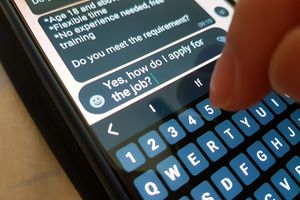
Scammers use platforms like Facebook, X, Instagram and TikTok.
Photo credit: Shutterstock
They use platforms like Facebook, X, Instagram and TikTok.
"Fraudsters post deals promising discounted or last-minute tickets to attract the public. They also provide unofficial phone numbers to facilitate the 'ticket sales', a tactic used to initiate first contact," explained the officer familiar with the fraud.
"The cybercriminals also impersonate airlines and other travel brands to exploit victims. They create social media pages using an airline's branding and offer customers flight deals that prey not only on people's wallets but also entice them to hand over personal information," he added.
The officer also revealed that detectives have heightened their surveillance, especially during this festive season, and are investigating and tracking down groups involved in the fraud.
Mr David Mwangi, a local security expert, advises the public to always book tickets through official channels, be suspicious of deals that seem too good to be true, and always verify the authenticity of websites and social media pages.
"It is also good not to send money to personal numbers or unknown pages. Also, be wary of third-party sellers who claim to have tickets they may not actually possess," he stated.
"You can also minimise being conned by buying hard copy tickets when possible," he added.
Already, the Kenya Railways Corporation (KRC) has raised the alarm over a surge in fraudulent online booking websites and social media pages purporting to sell Madaraka Express tickets.
The corporation cautioned that these platforms are managed by scammers targeting unsuspecting passengers seeking to book Standard Gauge Railway (SGR) tickets online.
In a statement issued on November 6 by its Managing Director, Philip Mainga, Kenya Railways urged the public to avoid third-party websites and to only use official booking channels.
“Whenever you want to speak to us, please reach us through our official contacts,” the corporation said, warning that any other site or number claiming to sell tickets on its behalf is fraudulent.
The corporation noted that scammers often provide phone numbers to initiate contact and collect payments before disappearing without issuing valid tickets.
Kenya Railways has stated that tickets for the Nairobi–Mombasa train can only be accessed through three channels: its official portal, via a USSD mobile phone code or physically at any Madaraka Express passenger service station.
KRC further urged Kenyans to confirm all contact information only through its verified social media pages and official website, warning that deals promising discounted or last-minute tickets are likely scams.
Some of the flagged groups on Facebook include have thousands of members. In each of the pages, a phone number had been provided to facilitate the “ticket sales”, a tactic used to initiate first contact.
The Madaraka Express operates along the SGR line between Mombasa and Nairobi, offering two main services — the Intercounty train, which stops at multiple stations, and the Express train, which runs non-stop between the two cities.
It makes stops at Athi River, Emali, Kibwezi, Mtito Andei, Voi, Miasenyi, and Mariakani.
Local airline Jambojet has also previously issued a public alert about scams involving fake tickets and accounts designed to defraud customers. The airline has engaged security agencies such as the DCI to investigate and arrest those behind the fraud.
Major bus companies and long-distance matatu companies like Mololine have also warned the public about fake tickets and asked them to beware of unauthorised sellers. Their brand names have also been tainted by the fraudsters.
In 2020, the Ethics and Anti-Corruption Commission detectives unearthed a cartel behind multi-million-shilling ticketing fraud that targeted passengers using the Mombasa–Nairobi SGR trains.
Another trick that online ticket fraudsters, who operate at the train stations in Nairobi and Mombasa terminals, is to sometimes pose as families travelling in large numbers. They can buy up to 20 tickets, which they then resell to desperate passengers at exorbitant prices.
In 2018, three people were arrested by police in Nairobi after it was discovered they had been reselling Madaraka Express tickets.
The fraudsters were taking advantage of travellers by selling tickets 42 per cent above the set price. Police said the fraudsters bought tickets in large numbers to create an artificial shortage and later sold them to unsuspecting travellers at Sh1, 000 for economy class.