In the early hours of Monday, April 29, 2024, the walls of the blocked Kijabe Railway Dark Tunnel in Kiambu County burst, releasing thousands of gallons of water that swept through Kamuchira, Jerusalem, Ruiru, Githioro and Georges villages in Maai Mahiu, Nakuru County.
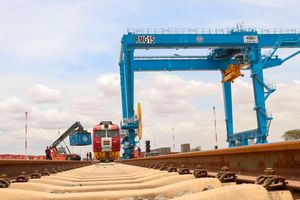
The raging waters, originating from the Kijabe and Kinare hills, had temporarily settled inside the tunnel due to a blockage but broke through at about 3am, gushing downhill with immense force. The 131-metre-long colonial-era tunnel, built in 1931 beneath a railway line, could not withstand the pressure.
The relatively small structure—christened the Dark Tunnel for its pitch-black interior and once a tourist attraction—gave way, tearing off part of the railway line. Floodwaters carrying rocks, uprooted trees and debris slammed into the five villages at high speed, killing more than 60 people and destroying property worth millions of shillings.
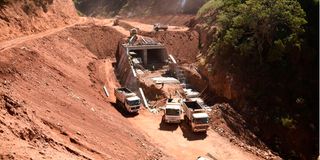
The Kijabe Railway Dark Tunnel where flash floods killed over 60 people in Maai Mahiu, Nakuru County, in April, 2024.
Photo credit: Robert Gichira | Nation Media Group
Dozens escaped with injuries, but many lost homes, livestock and farmland.
Thirty-eight people were still missing when multi-agency emergency teams called off active searches. Heavy rainfall in the Kijabe and Kinare catchment areas was cited as the cause, though some survivors believe human error played a role.
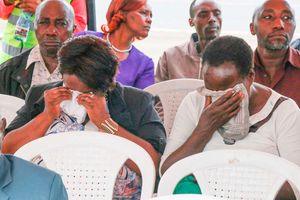
Twenty months on, survivors of the Maai Mahiu tragedy continue to live under the shadow of the floods. Television crews and visiting dignitaries have long departed, while humanitarian assistance now comes sporadically from charities and individual well-wishers.
Renovation works at the 131-metre-long old Kijabe Railway Dark Tunnel where flash floods killed over 60 people in Maai Mahiu, Nakuru County, in April, 2024.
Photo credit: Robert Gichira | Nation Media Group
Among them is Bernard Kamau, a 40-year-old primary school teacher who lost his two sons, Maxwel and Rowan, and narrowly survived himself. “It was a harrowing experience. I heard my sons cry, but I could not save them. Nothing is more heartbreaking than knowing you cannot even save your own children,” he said.
Once a homeowner and practising farmer, Mr Kamau now rents a house in Maai Mahiu town and is struggling to rebuild his life.
“The government forgot us after making many promises. Many families are yet to recover,” he said.
Mary Muthoni, 61, lost eight family members and now lives in Memo village, Murungaru, Nyandarua County. On the night of the disaster, she had invited relatives to her rented home in Ngeya, near Maai Mahiu shopping centre, to help her raise bail for her son, Isaac Mwangi, who had been in police custody for a year.
Mary Muthoni Mwangi, who lost eight members of her family during the Maai Mahiu tragedy, prays besides River Ngeya on December 5, 2024.
Photo credit: File | Nation Media Group
Of the 12 people in the house, only four survived. Those who died included her last-born daughter, a Form One student, a daughter-in-law and six grandchildren.
Ms Muthoni, a survivor of the 1988 Londiani and 1992 Nairegie Enkare ethnic clashes, said she also lost her home, possessions and fertile land, now covered in rocks and silt.
“We were promised resettlement, but nothing has been done. We are struggling to survive,” she said. Well-wishers raised Sh1 million for her, which she used to buy half an acre of land and start building a house. Construction has since stalled after she ran out of funds.
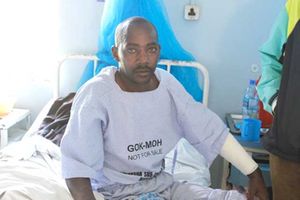
Another survivor, Alex Kimani, lost his entire family and is still haunted by the absence of his daughters’ bodies. A Good Samaritan based in the United States built him a house, easing his rent burden.
“Life has been hard. I cannot work because of injuries to my hand and chest. I used to hawk fruits in Maai Mahiu market. The government made promises but abandoned us months later,” he said.
During a visit to the area on April 30, 2024, President William Ruto promised to secure land for resettlement.
President William Ruto and Nakuru leaders visit the site of the Maai Mahiu flood tragedy.
Photo credit: PCS
More than a year later, most survivors remain homeless, living in rented houses and unable to resume farming.
The victims identified about 120 acres to resettle 60 families, but the government declined to buy the land at Sh1.4 million per acre. Meanwhile, Rotary International and the Scann Foundation have built 18 two-bedroom houses for affected families.
Despite these efforts, most survivors reMaain in limbo, traumatised and financially strained.
Questions also persist over whether the disaster was purely natural or the result of negligence by Kenya Railways, which survivors accuse of failing to clear the tunnel.
For the survivors, the scars—physical and psychological—still run deep, alongside hope that the government will honour its promises and help restore what was lost.