A report by the Senate has revealed a broken healthcare system in Mandera, Wajir and Marsabit Counties, littered with grounded ambulances, broken down dialysis machines and shortage of critical staff and essential drugs.
According to the report, health facilities in Mandera and Wajir are also grappling with acute water scarcity, while in Marsabit County, some of the facilities lack bathrooms inside female wards and have no clean water points.
The report revealed that Wajir County Referral Hospital’s maternity wards do not have running water, severely affecting hygiene and posing challenges of infection control and overall quality of maternal care.
Further, the maternity wards did not have sufficient beds and baby cots for use by newborns and their mothers as well as lack of mosquito nets alongside unmaintained laundry equipment.
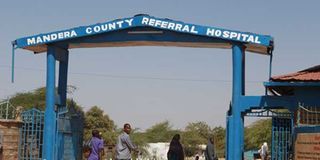
A signpost at Wajir County Referral Hospital.
Photo credit: Manase Otsialo | Nation Media Group
According to the report, Mandera and Marsabit reported significant infrastructure decay with healthcare facilities suffering from leaking roofs, missing electric bulbs, exposed wiring and poorly maintained wards
This is in addition to chronic staffing shortage and skills gaps in virtually all the departments with critical units like dialysis units operating below capacity due to insufficient trained personnel.
Despite the glaring shortages, absenteeism and staff working at private clinics while on public payroll were reported.
In Mandera County health facilities, there was sophisticated equipment in specialised departments lacking human resource to operate them.
Similarly, Marsabit County Referral Hospital sends most diagnostic tests to facilities outside the county due to inadequate local laboratory capacity causing delays in patient care.
“In all the three counties, healthcare facilities had untrained personnel dispensing medication, including community health promoters without basic pharmacy training raising concerns about patient safety and quality of care,” noted the report by Uasin Gishu Senator Jackson Mandago-led committee.
Mandera County Referral Hospital was struggling with insufficient staffing, poor referral system, frequent stock-outs and widespread unsanitary conditions with community health promoters found dispensing medication in some instances.
For instance, the referral facility was battling acute shortage of nursing staff and midwives at the maternity wards coupled with absenteeism, putting the lives of expectant mothers and their unborn children at risk.
“The Committee was informed that mothers attend maternity service late, often arriving in critical condition. This was associated with weak referral systems and poor road infrastructure which hindered timely access to health facilities,” reads the report.
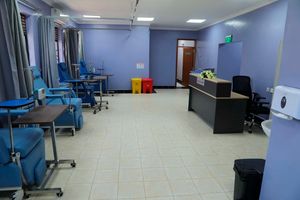
The renal unit also had several dialysis machines that were either non-functional, broken down or required repairs with only three working against a requirement of at least 10 such machines.
“The committee observed that concerns had been raised on possible diversion of medicine to private pharmacies owing to lax controls in the issuance chain,” noted the report.
The report noted almost similar challenges at the Wajir County Referral Hospital which is grappling with understaffing and inadequate infrastructure.
In Wajir County, the committee observed that the TB Manyatta lacks proper personal protective equipment such as protective gowns and face masks which compromise the safety of healthcare workers and patients.
Marsabit County Referral Hospital.
Photo credit: File I Nation Media Group
The committee observed even worse challenges at the Marsabit County Referral Hospital where there was prevalence of expired drugs and medications which were stored openly in shelves or in appropriate locations such as lavatories and in open fields and also made available at wards.
The hospital infrastructure was dilapidated with evidence of continued neglect being witnessed in leaking roofs, falling ceiling boards, missing electric bulbs and naked live wires.
“There were no bathrooms inside the female surgical wards and no clean water points within the ward severely affecting patient hygiene, dignity and infection control,” said the report.
In all the three counties, the report indicated, the health facilities did not have the optimum numbers of ambulances and requisite facilities to provide emergency services as well as no structures to facilitate referral of emergency services from one healthcare facility to another.
For instance, Marsabit County Referral Hospital was grappling with rundown ambulances which appeared to have been poorly maintained or were no longer in operation.
“Some of these ambulances had been repurposed as temporary storage facilities rather than to serve their intended emergency transport function.”
Further, health facilities in the county also lack trained pharmacy personnel which is likely to compromise proper handling, storage and dispensing of health products and technologies.
The report further flagged widespread shortage of essential drugs and medical supplies across the three counties.
Interestingly, expired drugs were found on shelves and at the wards indicating their routine use in several facilities indicating poor stock management and oversight.
In some instances, these expired drugs were improperly stored and dumped in open fields or unused toilets, highlighting failures in waste management and incineration infrastructure.
The committee fingered the counties for prioritising recurrent expenditure with key spending drivers being personnel emoluments, salaries and wages leaving a limited share for development, infrastructure and equipment.
The senators said the effect of the underinvestment was evident in slow progress on expansion and modernisation of existing healthcare infrastructure as well as inability to fully equip existing facilities.
Wajir County, with a population of 781,263 according to 2019 census and over 100 government-managed public health facilities, allocated Sh3.78 billion to the health sector in the financial year ending June 2025 with recurrent expenditure accounting for Sh2.98 billion leaving development activities with a paltry Sh798.7 million.
Marsabit County with a population of 489,785; allocated Sh2 billion to the health sector with Sh1.84 billion going towards recurrent and Sh239 million left for development activities during the period under focus.
On the other hand, Mandera County with a population of 1.2 million people, allocated Sh2.65 billion to the health sector. Of that, recurrent expenditure consumed Sh2.16 billion while Sh492 million was allocated to development.