For more than a decade, the once-volatile Tana Delta has enjoyed a fragile calm.
For years, peace committees, local leaders, and the community itself worked tirelessly to mend wounds, ensuring that never again would blood be spilled over land and pasture. But today, that peace hangs by a thread.
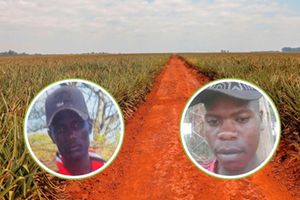
On Sunday evening, violence broke out at Miticharaka village in Chara Location. According to police records filed at Tarasaa Police Station, more than 600 head of cattle belonging to herders Ali Bashir Ibrahim and Abdi Mohamud strayed into farms, destroying maize, green grams, cassava, and cashew nut plantations.
Farmers, enraged by the destruction, struck back, injuring four animals. What followed was a bloody confrontation. A spear tore into the forehead of 23-year-old Hassan Chome Tabu, now nursing wounds at Ngao Hospital.
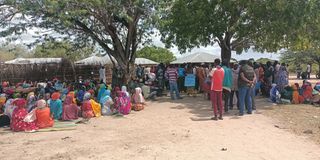
People converge at a mosque amid the smouldering houses at Kilelengwani village, Tana Delta District, after clashes in 2012.
Photo credit: Photo | File
By dusk, 100 armed youths had mobilised, stormed herder camps near the Lower Tana Conservancy, torched houses, and cornered 25-year-old Baricha Racho, hacking him to death as he sought shelter in a manyatta. His body now lies in Malindi sub-County Hospital morgue, another victim in the endless cycle of land, livestock, and vengeance.
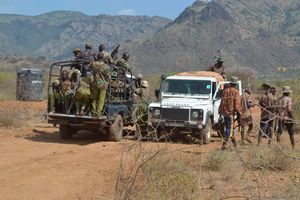
“This situation was escalating very fast. We had mobilisation within minutes, an indicator of how tense the community remains,” Tana Delta sub-County Commander Harrison Njuguna told reporters.
Behind the farmer-herder clashes lies a bigger, darker battle: land. A simmering conflict that is no longer just about pasture, but about power, politics, and profit.
The epicentre of this new unrest is the Lower Tana Conservancy, specifically the 5,000-acre Kon-Dertu Ranch. Once envisioned as a community conservancy and a vital ecological zone under the Tana Delta Land Use Plan, it has now become the prize in a secretive, high-stakes land transaction.
According to a leaked letter by the Civil Society Organisations Network of Tana River County, a sitting legislator, four elders, and rogue land officers are working to dispose of the ranch under dubious circumstances. The deal is disguised as a government-backed resettlement project for flood victims, tied to President William Ruto’s Sh500 million pledge.
In reality, the buyer is a private investor from Mandera, seeking grazing land. The scheme, investigators say, reeks of fraud. Ranch members were allegedly coerced into selling at Sh40,000 an acre, resold to the legislator at Sh80,000, and finally transferred at Sh140,000 to the investor. A staggering margin, while the actual community that owns the land remains sidelined.
“The community has not been consulted. This is a violation of the Constitution, the Community Land Act, and basic decency. If this deal is not stopped immediately, we are staring at another round of deadly conflict. We demand a halt, an investigation into the MP, the elders, and land officers involved, and protection of the community’s rights,” said Rashid James, secretary-general of the Civil Society Network.
To many in Chamwanamuma, the secrecy around the Kon-Dertu land echoes the prelude to the 2012 clashes, when whispers of land grabbing, resource scarcity, and political incitement exploded into bloodshed. Then, it was about grazing and water corridors. Today, it is about who controls land worth hundreds of millions.
Jillo Kokani, chairperson of the Peace Committee in Tana Delta, has watched these events unfold with dread.
Jillo Kokani, Chairperson of the Peace Committee in Tana Delta during an interview at Chamwanamuma Village, Tana Delta in this picture taken on 2nd September 2025.
Photo credit: Stephen Oduor | Nation
“The involvement of politicians in land deals is dangerous. We are seeing a Member of Parliament working with elders behind the backs of their people. This betrayal is planting seeds of mistrust and anger. If they continue, fresh skirmishes are inevitable,” he said.
The betrayal cuts deep. The elders implicated are not strangers; they are respected figures, including a former teacher and chief from Chamwanamuma, Nduru, and Handaraku. By accepting political tokens, they risk fracturing the very fabric of trust that peace was built on.
But Kon-Dertu is not the only hotspot. In Kipini, land disputes have been simmering since a controversial squatter survey. Over 800 families were displaced after land was allocated to “aliens” from outside Tana River County. To this day, bitterness festers.
“We were duped. Our people were told they were being registered for settlement, only for their land to be given to outsiders. We have sworn to guard our land with our lives. We will not be dispossessed again,” fumed Taksan Omar, Chairperson of the Kipini Development Committee.
It is this vow, uttered not in desperation but defiance, that reveals just how close the region is to an eruption. The alleged hand of national politicians looms large over Tana Delta’s land crisis. Some serve in the National Assembly, others hold Cabinet positions.
They are accused of pushing for Tana River’s vast lands to be converted into grazing reserves for political allies, all while cloaking their schemes as “settling the landless”.
“Some political actors are increasingly turning land issues into a tool for influence in this county. We’ve observed worrying trends of pressure and misinformation that risk undermining lawful processes and community trust. If these patterns continue, they could stir divisions and undo the progress we’ve made toward peace and development,” said Mwanajuma Hiribae, Tana River County’s Lands Executive.
She added that the County Government has already written a protest letter to the National Land Commission (NLC) and the Ministry of Lands, demanding recognition of the devolved unit, specifically the Department of Lands and Physical Planning, in processes that must protect the interests of the people.
“We are not in any competition. We are doing very well with the Kenya Informal Settlement Improvement Programme. Why the secrecy and hide-and-seek games in Delta?” Ms Hiribae added.
County Commissioner David Koskei confirmed that the state is fully aware of the tension building around land and pasture in the county. He said his office is liaising with the entire security apparatus in the county to ensure land problems do not escalate into fresh skirmishes.
“We have received memorandums and letters from residents of Kipini, and I have personally met with them to hear their concerns. We are also engaging peace committees in volatile areas to ensure small conflicts are resolved between the afflicted before they explode into ethnic incitement,” Mr Koskei said.
He further warned that all local politicians are being closely monitored regarding land issues and that his office would not hesitate to order arrests if they are found responsible for stirring violence.
“Nobody is above the law, and Tana River must enjoy its hard-earned peace,” he emphasised.
For over 10 years, Chamwanamuma and its neighbors had been a testament to reconciliation. After ethnic clashes claimed lives in Chamwanamuma in 2012, peace committees worked painstakingly to unite farmers and herders.
The Lower Tana Conservancy was meant to symbolise a shared commitment to preservation, coexistence, and prosperity. But as land grabs intensify, old wounds reopen.
The land conflict in Tana River is not isolated. It fits a nationwide pattern of elite capture of land, often masked as state-sanctioned projects.
From Mau Forest evictions to Lamu’s settlement schemes, the playbook is the same: dispossess the vulnerable, enrich the powerful.
However in Tana Delta, the stakes are higher. The area is not just farmland, it is a critical ecosystem, a community conservancy, and a historical flashpoint of violence. Any destabilisation risks not only human lives but also Kenya’s biodiversity and long-term development agenda.