How did former Trans Nzoia County accountant, Andrew Biketi Musuya, end up with assets worth Sh207.7 million that he could not satisfactorily explain?
That is the question at the centre of an Ethics and Anti-Corruption Commission (EACC) case that has resulted in a court order for the assets to be forfeited to the State.
Mr Musuya has lost assets worth Sh207.7 million to the State after the Anti-Corruption and Economic Crimes Court found that he had failed to satisfactorily explain the source of his wealth accumulated over six years.
The anti-corruption court has ordered surrender of the assets to the State, noting that the wealth was disproportionate to the accountant’s known legitimate sources of income.
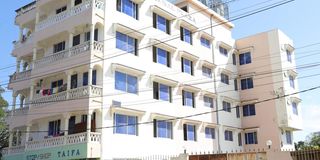
Another five-storey residential apartments targeted in Mtwapa.
In a judgment delivered on October 8, 2026, the Anti-Corruption and Economic Crimes Court ruled that Mr Musuya held unexplained assets accumulated between January 2013 and October 2018, when he worked at the Ministry of Public Health and Sanitation and later at the county government.
The court ordered the forfeiture of properties, bank deposits, money held in M-Pesa accounts and two motor vehicles after finding that the former accountant had not adequately accounted for the source of the assets.
The Ethics and Anti-Corruption Commission (EACC), which instituted the proceedings under Section 55 of the Anti-Corruption and Economic Crimes Act, said the assets ordered forfeited were valued at Sh207,741,928.
They include two five-storey apartment blocks and a five-bedroom townhouse in Mtwapa, Mombasa County, as well as undeveloped parcels of land in Mombasa and Bungoma.
The properties were valued at approximately Sh150.2 million, while bank and M-Pesa deposits totalling Sh53.5 million and two motor vehicles worth Sh4 million accounted for the remainder of the assets identified for forfeiture.
EACC had initially sought to recover Sh284.1 million from Mr Musuya, arguing that his assets were disproportionate to his known legitimate sources of income.
Investigations by the commission found that Musuya had accumulated assets worth approximately Sh289.9 million between January 2013 and October 2018. These included properties valued at Sh226.8 million, bank deposits of Sh45.5 million, M-Pesa deposits of about Sh8 million and motor vehicles worth Sh9.6 million.
However, following the court proceedings, EACC said assets valued at Sh207.7 million had been ordered forfeited to the State. The court’s assessment took into account factors including property acquired before the investigation period, legitimate third-party interests and the need to avoid recovering the same money twice.
The proceedings sought to establish whether the former accountant could satisfactorily account for the wealth accumulated during the six-year period, with the commission asking the court to order the forfeiture of assets deemed to have been acquired from unexplained sources.
In his defence, Mr Musuya maintained that his wealth came from legitimate sources, including his employment, maize farming and trading, consultancy assignments, rental income, business activities and loan repayments.
He disputed the commission’s assessment of his assets, arguing that it had not adequately accounted for the relationship between his business receipts, withdrawals, transfers and expenditure.
However, the court found that he had failed to satisfactorily explain the source of the assets declared unexplained and ordered their forfeiture to the Government.
The court also examined the assets individually, making adjustments to the commission’s claim to account for property acquired outside the investigation period, legitimate interests held by third parties and the need to avoid recovering the same money twice.
It excluded a parcel of land identified as Bungoma/Kamakoiwa/4455 after finding that it had been acquired in 2008, before the period under investigation.
The court also dismissed the forfeiture claim against a Toyota Prado held by Wachenya Auto Garage Limited, finding that there was insufficient evidence to establish that the company held the vehicle on Musuya’s behalf.
However, it ordered the forfeiture of a Toyota saloon registered to his and a Toyota Harrier registered in his wife’s name, which the court found was beneficially owned by him.
The judgment further addressed the treatment of property in which a contractor had legitimate interests. The court excluded the established third-party construction credit belonging to Lolong Contractors Limited when determining the assets attributable to Mr Musuya, while ordering forfeiture of the remaining interests it found unexplained.
The court also ordered the forfeiture of bank deposits amounting to approximately Sh45.5 million and M-Pesa funds totalling about Sh8 million, subject to safeguards against double-counting money already captured in the recovery claim.
Although EACC announced the forfeiture of assets valued at Sh207.7 million, the judgment also set out a monetary liability ceiling of approximately Sh284.1 million, subject to adjustments for excluded assets, third-party interests and credits for property forfeited. The court directed that the value of assets surrendered be credited against the monetary liability to prevent double recovery.
Mr Musuya was directed to surrender the relevant title documents and vehicle logbooks to facilitate implementation of the orders. The Land Registrar and the National Transport and Safety Authority were also directed to give effect to the forfeiture and vesting orders upon receipt of a certified extract of the decree.
The preservation restrictions imposed on the assets are to remain in force until the required valuation, transfer, sale or payment process is completed.
The court ordered Mr Musuya to pay EACC’s costs of the case, while the interested parties were directed to bear their own costs.
The commission said the outcome demonstrates its commitment to protecting public resources and pursuing the recovery of wealth that public officials cannot satisfactorily explain.