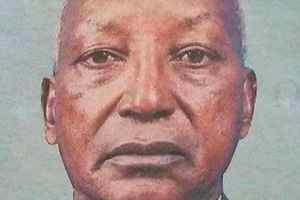
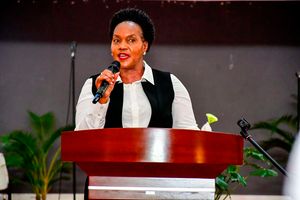
Two brothers have ganged up against their five sisters after their father, a deceased Nandi tycoon, allegedly entrusted his Sh300m estate to his daughters, excluding the sons, in a now contentious will.
Mzee Benard Kimurei Chirchir was a businessman-cum-farmer, and died on July 17, 2023, at St Luke's Hospital in Eldoret, Uasin Gishu County.
He allegedly entrusted his estate to his five daughters in a will that his two sons now contest in court. The assets include parcels of agricultural land, commercial buildings, and plots spread across Nandi and Uasin Gishu counties.
The brothers claim the document their sisters used to distribute the estate as a forged will, and that by the time their father died, the more than Sh300 million estate had no will as claimed by their sister.
They have accused their sisters Basilisa Rono, Emily Chirchir, Collette Chirchir, Agnes Chirchir, and Ruth Chirchir of forging the will to take over the estate, disputing that it was done by their late father.
The will, which was deposited in court expresses how their late father wanted his estate shared among the siblings.
Mr Alfred Kipkosgei Murei and Mr Elicky Kiprotich accuse their sisters of allegedly forging the will to get the lion's share of the inheritance and want the court to subject it to a forensic audit.
“Our father did not entrust his will to our sisters as purported. He died leaving the property intestate contrary to claims that he left behind a will in favor of our sisters,” they argued in court.
"The validity of the will dated November 27, 2020, purporting to have been written by the deceased was procured through fraud and coercion,” claimed Murei, the deceased’s eldest son.
On Friday, an Eldoret court ordered a forensic audit of the contested will.
The late Nandi tycoon left behind a widow, Mrs Divina Chemutai Chrichir, and the seven feuding children.
Justice Reuben Nyakundi directed that the contested will be subjected to a forensic analysis to establish its legitimacy in the wake of the bitter inheritance battle among the siblings.
Justice Nyakundi directed that the original copy of the documents should be subjected to extensive examination by document experts from the Directorate of Criminal Investigations.
"I direct that the executors in possession of the will which is at the centre of contestation in the ongoing succession case be surrendered to the DCI headquarters within ten days to speed up the process," ruled Justice Nyakundi.
He asked the DCI to file a report on the outcome of the analysis before his court within two weeks when a status conference on the succession feud will be held.
In his evidence in chief, the deceased's eldest son, Mr Murei, told the judge that his father died without leaving behind a will contrary to claims by his sisters.
He claimed that the signature appearing on the purported was not their father’s, alleging forgery by his sisters.
Mr Murei claimed that their father was illiterate and did not understand English. He wondered how he drafted the purported will in English.
"On the material day my father is said to have written the purported will, he was bedridden suffering from congestive heart failure and therefore he was not in a position to pen down the document," he claimed.
Further, he faulted his sisters for excluding prime properties owned by their father located near Eldoret International Airport and the University of Eastern Africa, Baraton (UEAB) in Nandi county.
However, the deceased's daughters led by Ms Emily Chirchir insist that their late father left behind a will showing how he wanted his properties shared among his family.
She told Justice Nyakundi that the deceased had full mental capacity and was of sound mind by the time he was writing his will.
She told the court that contrary to claims by her brother that the deceased was illiterate, he was a literate person in both written and spoken English.
"As a successful businessman valued at the date of his death, he regularly engaged in complex business and real estate transactions, legal matters, and correspondence, all conducted in English," stated Ms Chirchir.
She said that throughout his life, their late father demonstrated a clear ability to comprehend and communicate effectively in English, having handled numerous contracts, and financial and legal documents without any need for interpretation or assistance in understanding the language.
While defending the mode of distribution of their father's estate, Ms Chirchir said the deceased had the legal right to distribute his assets in any manner he saw fit.
"As the lawful owner of his properties, he was under no obligation to allocate his estate in equal shares or based on any expectations from family members or beneficiaries,” stated Ms Chirchir.
The matter will be mentioned on March 10, 2025.