Amid struggles by various county governments to meet revenue targets, political waivers, selective collection of levies and a general lack of commitment in debt recovery are denying devolved units billions of shillings.
Some governors, while pursuing debts owed, have been issuing costly waivers to please the electorate at the expense of critical revenue, leaving counties heavily dependent on national government disbursements.
These transfers are often delayed, paralysing key operations in the devolved units.
Most counties, which are owed millions in land rates, house rent and other levies, have put in little effort to recover the arrears. In some cases, they have been forced to grant huge waivers, leading to significant revenue losses.
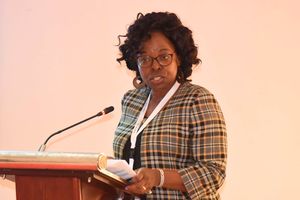
According to the County Governments Implementation Review Report for the 2024/2025 financial year by Controller of Budget Margaret Nyakang’o, the 47 devolved units are owed a total of Sh124.95 billion in outstanding revenue arrears.
“As of June 30, 2025, county governments reported a total of Sh124.95 billion in outstanding revenue arrears. The amount includes ordinary own-source revenue arrears of Sh112.47 billion, Sh7.46 billion from the Social Health Insurance Fund, and Sh5.01 billion from the defunct National Health Insurance Fund (NHIF),” reads the report.
The report notes that the mounting arrears highlight persistent challenges in revenue mobilisation, constraining liquidity, delaying service delivery, and undermining fiscal sustainability in counties.
Ms Nyakang’o recommends that counties strengthen enforcement mechanisms, adopt automated revenue management systems, and address institutional weaknesses, particularly in high-revenue potential areas such as Nakuru and Nairobi.
She further advised county leadership to collaborate with the Social Health Authority to settle outstanding arrears.
Nairobi County Governor Johnson Sakaja.
Photo credit: Bonface Bogita | Nation Media Group
Governor Johnson Sakaja’s Nairobi County accounts for the largest share of arrears at Sh63.52 billion – 51 percent of all outstanding revenue – followed by Mombasa (Sh13.75 billion), Nakuru (Sh12.59 billion, up from Sh10 billion previously), and Kajiado (Sh12.09 billion).
In Nakuru, Governor Susan Kihika’s administration is owed more than four times the amount the county generates annually from own-source revenue.
For instance, in the 2024/2025 financial year, Nakuru generated Sh3.65 billion, up slightly from Sh3.32 billion the previous year. Yet, last year, Governor Kihika issued a Sh693 million waiver on rent arrears owed to the county government.
The waiver, which targeted residents of county houses in Kivumbini, Bondeni, and Flamingo estates who had defaulted since the advent of devolution, derailed efforts to significantly raise own-source revenue.
Nakuru Governor Susan Kihika.
Photo credit: Boniface Mwangi | Nation Media Group
The Nation established that Nakuru has instituted some measures to recover arrears in the 2025/2026 financial year. These include the enforcement of the Housing Estates Tenancy and Management Bill, the Revenue Administration Act, the Rating Act, and other relevant laws to collect arrears from land rates (property taxes), house rent (county-owned houses), and stall rent (market stalls).
Other measures include issuing demand notices, establishing a Debt Collection Unit, and collaborating with the national government to recover arrears from agencies such as Kenya Railways, Kenya Wildlife Service, and the Pyrethrum Processing Company of Kenya.
According to Ms Nyakang’o’s report, Nakuru is owed Sh10.5 billion in property rent, Sh697.6 million in house rent, and Sh5.7 million in market stall rent. The Social Health Insurance Fund owes the county Sh886 million, while NHIF owes Sh412.9 million.
Despite being granted city status in December 2021, Nakuru continues to struggle with revenue collection, only raising between Sh3 billion and Sh3.6 billion annually.
Recently, Senate Public Accounts Committee chair Moses Kajwang revealed that Nakuru County, which hosts a city, cannot sustain itself as it spends more than Sh6 billion annually on salaries and benefits. Its own-source revenue is insufficient even to cover staff pay.
In Nairobi, arrears include Sh54 billion in land rates, Sh447.1 million in house and market stall rent, Sh711.1 million from sundry debtors, Sh5 billion in wayleave fees owed by Kenya Power, and Sh371.7 million in outdoor advertising and billboard fees.
In Kajiado, arrears include Sh10.54 billion owed by Magadi Soda, Sh933.9 million by Jamii Bora, Sh130.2 million by East African Portland Cement, and Sh54.1 million by Police Sacco, among others.
In Mombasa, arrears comprise Sh12.3 billion in plot rates, Sh1.3 billion from the Facility Improvement Fund, and Sh110.4 million from single business permits.
Kwale County reported arrears of Sh160.44 million but had no evidence of measures to collect the outstanding amounts in the 2025/2026 financial year.
In Marsabit, arrears stood at Sh30.24 million as of June 30, 2025, but the county had shown no commitment or effort to collect them.
Other counties with significant arrears include Kakamega (Sh2.4 billion), Kiambu (Sh5.9 billion), Kitui (Sh1.6 billion), Laikipia (Sh1 billion), Siaya (Sh667 million), Nyeri (Sh991 million), Nyandarua (Sh565 million), Makueni (Sh628 million), Homa Bay (Sh723 million), and Bomet (Sh730.6 million).
In most devolved units, revenue arrears had increased by June 2025.