For more than 30 years, Joshua Kosgei, 62, a small-scale farmer from Moiben in Uasin Gishu County, has relied on maize and wheat farming as the primary source of income.
His efforts have not only sustained his family but also contributed to the country's food security. However, like many other cereal farmers in Kenya’s food basket region, Mr Kosgei is now rethinking his future in cereal farming.
“The investment in maize and wheat cultivation has proved counterproductive despite incentives introduced by the government. The rising costs of seeds, fertiliser, chemicals and an unstable market have pushed many of us to look for alternative sources of income,” he says.
Coffee farming campaign: Nandi Governor Stephen Sang (left), and Uasin Gishu Governor Jonathan Bii at a farm during planting of coffee seedlings on June 17, 2025.
Photo credit: Jared Nyataya | Nation
He is among the increasing number of farmers in the region shifting focus from maize and wheat to alternative cash crops such as coffee, avocado and horticulture, lured by better returns.
This shift is being backed by regional authorities and governors under the North Rift Economic Bloc (NOREB), who have teamed up with counterparts from Central Kenya to promote coffee farming in traditionally cereal-growing regions.
“Coffee is the new green gold. We are supporting the transition by supplying quality seedlings, offering extension services and opening up markets for the crop,” said Uasin Gishu Governor Jonathan Bii.
Recently, the county distributed 383,000 coffee seedlings, 17,500 avocado seedlings and 50,000 pyrethrum splits to farmers venturing into cash crop farming.
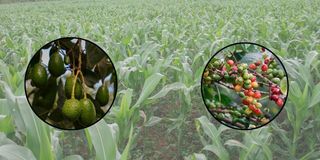
Many farmers in the Rift Valley are shifting focus from maize and wheat to coffee, avocado and horticulture, lured by better returns.
Photo credit: File
The North Rift is emerging as a key coffee-producing region as output from Central Kenya declines due to changing land use driven by urban development and real estate investments. According to the Coffee Research Foundation (CRF), land once dedicated to coffee in Central Kenya is being diverted to commercial projects.
In contrast, the Rift Valley offers favourable climate and fertile soils that support high coffee yields. Last season, the region produced 65,618.5 tonnes of coffee up from 19,573.38 tonnes the previous year, as more farmers joined the sector. The foundation has since increased seed production to meet demand and make high-quality seedlings accessible.
Key coffee-growing areas in the Rift Valley include Uasin Gishu, Trans-Nzoia, Baringo, Kericho and Bomet, as well as parts of Nakuru County.
“Seed production has been intensified to support the expansion of coffee farming in the Rift Valley,” states the March Agriculture report.
The revival of dormant cooperative societies, improved prices, timely payments and fair revenue sharing has motivated farmers to embrace coffee. According to Peter Boit, a coffee farmer in Uasin Gishu, improved payments have encouraged better crop management.
“Coffee farmers are now earning an average of Sh75,000 annually from a well-managed acre,” Boit said.
The region now boasts more than 35 active coffee processing factories, including three privately owned estates. Coffee is marketed mainly through the Coffee Board of Kenya although some farmers work with private millers such as Scofina, Thika Mills and Sasini.
Despite the success, challenges persist. Delayed payments from some millers and the high cost of inputs, including fertilisers, agrochemicals and labour, pose significant hurdles.
Coffee farming campaign: Uasin Gishu Governor Jonathan Bii second (left) and Deputy Governor Evans Kapkea third (left) during the distribution of high value coffee seedlings to farmers in Kapseret on June 17, 2025.
Photo credit: Jared Nyataya | Nation
While crop diversification is proving profitable, it has come at a cost. Traditional staples such as wheat are in decline. In Uasin Gishu County, wheat acreage has dropped from 40,000 hectares to 18,000 hectares over the last decade threatening food security.
“There has been a huge decline in wheat acreage which has negatively impacted the availability and cost of wheat-based products,” states a report by the county's agriculture department.
National wheat production stands at an average of 365,600 tonnes annually far below the consumption demand of 8.4 million 90-kilogramme bags. This forces the country to import the deficit.
Last season, the Rift Valley produced about 4.5 million bags of wheat from 127,825 hectares. However, maize yields have also declined—from 44 million bags in 2022/2023 to 21 million in 2024/2025—before a brief recovery to 70 million (50kg) bags in 2025/2026. Despite this rebound, maize shortages persist.
Agricultural experts now warn of looming food insecurity as cereal farmers in Uasin Gishu, Nandi and Trans-Nzoia counties shift to coffee and other cash crops. Trans-Nzoia, traditionally a maize stronghold, now has about 8,000 acres under sugarcane, especially in Kwanza, Saboti, and Endebess constituencies.
Sugarcane farming is gaining traction in Rift Valley due to attractive prices and new processing facilities. Production of factory cane rose from 1,041,780 tonnes to 1,644,395 tonnes last season. The area under chewing cane also grew, from 56.8 hectares to 64.2 hectares, with output of 2,198 tonnes.
The construction of Butali Sugar Factory and the rehabilitation of Muhoroni and Chemelil factories have boosted sugarcane farming in Kericho, Trans-Mara, Nandi and Uasin Gishu.
“There is significant potential for sugarcane farming especially in Trans-Mara, Nandi South, Tinderet, Belgut, and Kericho,” said a May agriculture report.
“Cane yields have increased to 60–100 tonnes per acre, thanks to modern farming practices,” added George Otieno, an agricultural expert in Eldoret.
A tractor transporting cane. Sugarcane farming is gaining traction in Rift Valley due to attractive prices and new processing facilities.
Photo credit: File
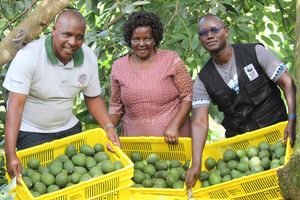
Additionally, many farmers are turning to horticulture and avocado farming to replace their cereal ventures. These high-value crops offer quicker returns, especially when supported by robust export markets and agro-processing industries.
But as farmers diversify into profitable ventures, experts urge a balanced approach that safeguards national food security. Sustained decline in cereal production, especially in traditional zones such as Uasin Gishu and Trans-Nzoia, could have far-reaching consequences.