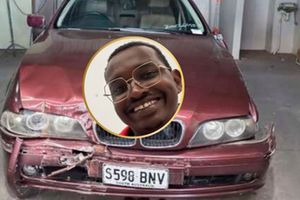
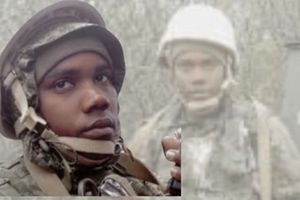
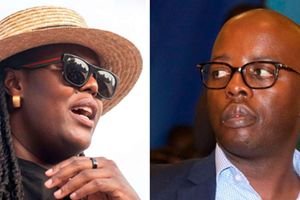
Caleb Leriano and Allan Kiplimo were two young Kenyans chasing the Australian dream. Now Leriano, 24, is dead and Kiplimo, 22, is in handcuffs, extradited across 2,700 kilometres of Outback to face a murder investigation that has shaken the Kenyan diaspora.
What began last Wednesday as a routine car crash in Adelaide quickly curdled into a cross‑continental manhunt. With Mr Kiplimo’s arrival at Adelaide Airport on Monday, flanked by detectives, wrists bound, a procedural milestone was reached, but the deeper rupture remains.
For a migrant community built on the sacred bond of nationality, the realisation that victim and suspect were compatriots has transformed a local crime into a global mourning, leaving families from Nairobi to Perth grappling with how a shared journey for opportunity ended in such a violent, irreversible knot.
Within hours of finding Mr Leriano’s body, South Australian investigators had classified the scene as suspicious, and the manhunt began, one that would stretch nearly 3,000 kilometres across the continent before it was over. He had come to Australia, as so many young Kenyans do, looking for a better life. He was found death instead, in circumstances his family still cannot fully comprehend.
“It is very sad,” his father, David Leriano, told Australian media. “My heart is broken into pieces. We don’t know why this happened. We just want justice for our son.”
For police, Mr Kiplimo’s transfer marked the end of the pursuit phase and the beginning of something slower and harder. Building a case.
South Australian authorities are no strangers to complex homicide investigations involving migrants. Over the years, the state has accumulated more than 111 unsolved murder cases dating back to the 1950s, many of them requiring painstaking forensic reconstruction and cross‑border cooperation.
In recent years, Australian police have turned to forensic genealogy, a technique that helped crack the decades‑old Kangaroo Island cold case, demonstrating how investigators can revive stalled inquiries through DNA‑based family tracing.
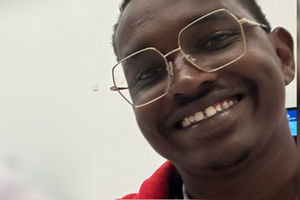
Caleb Leriano was found dead at Morphett Vale, Australia.
Photo credit: Pool
Although that case involved an Australian victim, the method has been hailed by law‑enforcement experts as a breakthrough for solving crimes affecting immigrant communities, who often lack extended family networks in the country.
South Australia’s homicide units also maintain a strong record of solving cases where victims and suspects knew each other, a pattern that mirrors national trends.
Crime Stoppers South Australia notes that most murders in the state are solved, with only about 10 per cent remaining unsolved each year, and that in the majority of cases, “the victim and offender are known to each other.”
This statistical reality has shaped the investigative lens now being applied to the Leriano case. Investigators are now working to reconstruct the early‑morning hours in which Mr Leriano died, piecing together timelines, forensic evidence, and the nature of a relationship that, authorities believe, the two men shared.
That last detail, that the victim and the suspect knew each other, has landed with particular weight in Kenyan communities across Australia. Diaspora life depends on familiarity.
Young migrants in unfamiliar cities tend to find one another, share apartments, exchange job leads, keep each other company against the particular loneliness of being far from home. The idea that such a bond could end this way has unsettled many who live it.
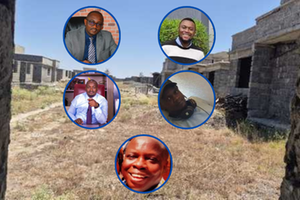
The grief has not stayed in Adelaide. In Washington State, US, where part of the Leriano family has settled, a cousin, Consolata Lekisaat, learned the news and was undone by it.
“My cousin was full of hope and looking forward to a bright future,” she told the Daily Nation. “This killing has really broken my heart. The family is really shattered.”
Her words capture something the formal chronology of the case, the extradition order, the airport transfer, and the pending court proceedings, cannot contain.
It’s the specific devastation of losing someone young and far away, someone who left not out of desperation but out of ambition. What happened between these two men in the hours before dawn in Adelaide remains, for now, unanswered.
Caleb Leriano who was found dead in a car in Morphett Vale, Australia. A fellow Kenyan has been arrested in relation to the incident.
Photo credit: Pool
The investigation is active. The courtroom proceedings are ahead. And a community spread across Australia, the United States, and Kenya itself is left in an uncomfortable in‑between, relieved, perhaps, that the suspect has been found, but no closer to understanding how a shared dream of building something better could fracture so completely, and so tragic.
David Leriano is waiting for justice. For a father whose son crossed an ocean to make something of himself, the wait is its own kind of unbearable.