Residents turn destructive mathenge weed into fortune
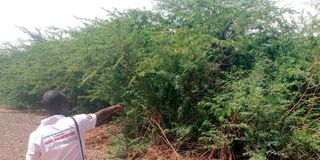
A dense thicket of mathenge weed in Turkana West.

What you need to know:
- The thorny and evergreen tree has disrupted farming, pastoralism, and settlement space, particularly in Kakuma refugee camps and nearby villages.
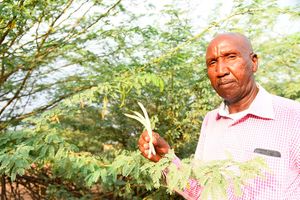
Mathenge weed (Prosopis Juliflora), an invasive tree species, is rapidly colonising farms, grazing fields and river banks in Turkana West Sub-county, outcompeting native plants.
The thorny and evergreen tree has disrupted farming, pastoralism, and settlement space, particularly in Kakuma refugee camps and nearby villages.
While it was initially introduced to combat desertification and provide firewood, its aggressive growth has caused ecological and socio-economic challenges.
With an increasing population at Kakuma refugee camp and Kalobeyei Integrated Settlement as well as increased rural-to-urban migration in fast-growing Kakuma, competition for land continues to grow. Some locals rely on charcoal burning for income, but mathenge’s spread has worsened deforestation.
Mr Chris Lokaapa, a resident of Kakuma, said he has been in the charcoal business for more than 15 years, supplying mainly Kakuma Refugee Camp.
Quick profit
He noted that some charcoal traders only use deadwood, but others cut live indigenous trees for quick profit.
But all is not lost.
Development partners, the county government and the Kenya Forestry Research Institute (Kefri) have partnered to develop a joint strategy for the management and utilisation of mathenge by working with structured groups in Kakuma.
Innovative uses include turning the invasive weed into charcoal, construction materials, animal feed, and briquettes.
"I have embraced this initiative because the dense growth of mathenge was impeding grazing by colonising fields and exacerbating floods along River Tarach whenever it rains by blocking water courses and diverting floods into villages and refugee camps," Mr Lokaapa said.
He added that with proper management, reclaimed land could support agriculture, real estate, and urban expansion in the fast-growing Kakuma municipality.
In Nawoitorong village, a group led by Peter Palal is producing charcoal using mathege.
“As an environmental group, we have an objective of protecting indigenous trees by solely relying on mathenge for commercial production of charcoal. We use steel ring kilns, which ensure that we reduce emissions," Mr Palal said.
Deputy Governor John Erus emphasised green jobs, sustainable enterprises, and research-driven solutions to harness mathenge’s economic potential.
"We want both refugees and host communities to have a direct role in turning the aggressive plant into usable products such as fuel, construction materials, animal feed, briquettes, and timber because they are all affected by its negative effects," Dr Erus said.
He added that relevant stakeholders have a shared vision to promote ecosystem restoration while harnessing mathenge as a catalyst for rural livelihoods, especially for women and youth.
“We are proud of our natural resources and are fully committed to unlocking their value. It's time we view mathenge as an asset that must be explored for industrial and economic potential rather than a curse.”
Dr Erus further emphasised the need for research-driven solutions that connect local entrepreneurs to international markets.
He called on institutions to support evidence-based policies and frameworks that can position Turkana’s economy for long-term stability.
County Climate Change, Tourism and Natural Resources Executive Leah Audan highlighted youth and women-led innovations in Prosopis utilisation. “Our youth and women are already leading the way in resource-based initiatives. Their innovations have received recognition at national and international levels, including forums in South Africa and inter-county benchmarking visits,” she noted.
Kefri’s assistant Regional Director Patrick Mwirig, outlined plans for entrepreneurship training, value chain assessments, and vocational programmes aimed at strengthening local production of Prosopis-based products.
While Prosopis juliflora poses severe ecological and livelihood challenges, coordinated efforts are turning it into an economic opportunity, fostering environmental restoration and community resilience.