Why Africans feel cheated by EU in deal to prevent future pandemics
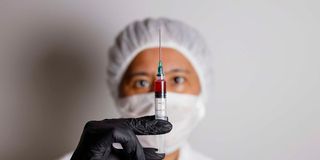
A virologist poses with a syringe for vaccination versus the corona virus.

What you need to know:
- During the Covid-19 pandemic, some African countries were among the first to discover new variants of the virus.
- Many African countries, including Kenya, had to rely on donor-funded vaccines through the WHO's COVAX mechanism.
If a new virus is found in Kenya today and the data is shared with the rest of the world to aid drug or vaccine development, it is unlikely that the country will benefit from this.
This has happened before. During the Covid-19 pandemic, some African countries were among the first to discover new variants of the virus, such as the Beta and Omicron variants, which were identified through surveillance by South African scientists.
Many African countries, including Kenya, had to rely on donor-funded vaccines through the World Health Organisation’s COVAX mechanism.
There were delays, hoarding by wealthy nations, and high costs imposed on poorer countries in order to obtain the vaccines.
Countries affiliated with the WHO decided that such inequities should not be repeated. They therefore decided to draw up a legally binding treaty.
This decision was made during a Special Session of the World Health Assembly (WHA) in Geneva, Switzerland, in December 2021.
Last year, during the 78th World Health Assembly, countries adopted the world’s first Pandemic Agreement after three years of negotiations.
The aim of the agreement is to guide nations in preventing, preparing for and responding to future disease outbreaks with pandemic potential.
But negotiations for a specific section of the agreement concerning pathogen and benefit access sharing (PABs) were extended by a year due to some contentious issues. Therefore, countries cannot ratify the deal until all issues have been resolved.
Since then, member states have met five times under the Intergovernmental Working Group of the WHO to negotiate this annex.
Repeat of vaccine apartheid
Prior to last year’s extended discussions, it was agreed that pharmaceutical manufacturers participating in the PABS system would ensure equitable and timely access to pandemic-related health products by sharing them with the WHO.
The target is for manufacturers to share roughly 20 per cent of their real-time production of safe, quality and effective vaccines, therapeutics and diagnostics for pathogens with pandemic potential.
These products would then be distributed to countries on the basis of public health risk and need, paying particular attention to the needs of developing countries such as Kenya.
However, in the latest draft of the negotiations, countries have enforced compulsory obligations to share pathogen samples (viruses, bacteria and parasites) and genetic sequence information, ignoring the repeated demands of developing countries for accountability, safeguards and equitable benefit-sharing.
The text also fails to define the boundary between non-commercial and commercial use of the data, which could generate legal uncertainty when implementing the PABS system. Diana Tibesigwa, the Regional Advocacy and Policy Manager at AIDS Healthcare Foundation (AHF), said this annex determines who gets vaccines, diagnostics and treatments, and on what terms.
With less than two weeks to go until the end of the year-long negotiations, civil societies in low- and middle-income countries are worried that the EU is causing a deadlock in the process.
They are concerned that the agreement may not be legally binding after all this year, which would expose healthcare systems in developing countries such as Kenya. The outcome of these talks is expected to be announced at the World Health Assembly in Geneva in May.
“We call on the European Commission, Germany, Switzerland, Japan and Australia to align their positions with the values they champion. Developing countries have shared their pathogens freely and in good faith. They deserve binding, enforceable benefit-sharing in return — not voluntary guidelines or ‘mutually agreed terms’ that are code for no agreement at all,” said Ms Tibesigwa, speaking in Nairobi.
They are concerned that a weak Pathogen Access and Benefit-Sharing Annex could lead to a repeat of the vaccine apartheid seen during the pandemic, undermining regional manufacturing investments in Africa and leaving every country, both rich and poor, less prepared for the next pandemic.
Africa’s Health Security
In a letter to African leaders and negotiators discussing this specific section of the Pandemic Agreement, civil societies say that this last opportunity of the sixth meeting of the Intergovernmental Working Group (IGWG 6) should help in coming up with an equitable Agreement that is central to Africa’s Health Security.
“A PABS system built on strong foundations, anchored in equity, accountability, and transparency, and supported by mechanisms for regular evaluation and improvement, will ultimately prove more durable and effective over time,” read a section of the letter.
Aggrey Aluso, Executive Director of the Resilience Action Network of Africa (RANA) said African leaders are also playing a part in derailing the progress that will benefit their citizens.
“When you go to such a meeting, you will find only one representative from a country who may not be well versed with all the expertise and therefore weakening the outcome during the negotiations,” he said. “Developed countries on the other hand send so many people.
Follow our WhatsApp channel for breaking news updates and more stories like this.