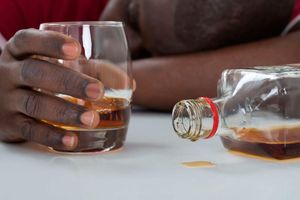
Before your next drink: Here's what alcohol does to your body

Alcoholism breaks families. But humanity has never found a common approach to the problem.

It's the weekend, and by now someone in the group chat has typed "one for the road." Everyone knows exactly what that means.
What most people don't think about is what happens once that alcoholic drink actually gets into the bloodstream, or whether it even matters if it came from a proper factory or a backstreet brewer.
We asked Dr Wahome Joseph, a toxicologist, to explain what alcohol really does inside the body, and why some of it doesn't leave without doing damage on the way out.
What happens in the body when a person drinks alcohol?
First, the liver takes it on. But before it gets broken down any further, alcohol reaches the central nervous system, and that's where things start, with a bit of stimulation or excitement, before it eventually tips over into depression.
Alcohol is, at the end of the day, a drug, and its reach goes further than most people assume.
Too much of it and the gut pays the price, which explains the vomiting and the stomach pain that often follow. It draws water out of the body as well, which is exactly why it is important to always rehydrate after consuming alcohol.
Which other body parts does it affect?
The liver, for one, because alcohol speeds up how fast it has to work. That's part of why people are told not to mix alcohol with certain drugs; it makes the liver process other things faster than it should.
It also affects the brain, acting as a mood depressant over time, and the pancreas, where it can cause inflammation known as pancreatitis.
Used over a long period, it raises the risk of cancer, and in large amounts, it damages the kidneys too. In general, it speeds up several body processes, and the damage builds up slowly, affecting how different parts of the body function.
Why the liver is affected the most
The liver is the main metaboliser and deactivator of toxins; it's the body's main filter. Everything a person takes in ends up in the bloodstream, but it has to pass through the liver first, either to be broken down or activated.
The liver's enzymes handle that breakdown. With alcohol, it gets converted into a substance called an aldehyde, turning it from an active compound, ethanol, into an inactive one.
This is also why people are told to avoid alcohol on certain medications. Those drugs get broken down in the liver too, using the same enzymes, so when alcohol is added, it speeds up that process.
Some drugs end up getting broken down too fast, losing their effectiveness before they've done their job. Painkillers and blood thinners are among the drugs affected this way.
We have original versus adulterated alcohol; is there any difference in taking the two?
Most illicit manufacturers add methanol as the main component as opposed to ethanol, which is safer. The reason they use methanol is that it has a higher potency to cause hangovers. It makes you drowsier. So the effect of alcohol in terms of methanol is stronger.
People who drink it often say it tastes more bitter, and oddly enough, some chronic drinkers prefer that, because the effect lasts longer. But this is where it turns dangerous.

Alcohol counterfeiters are becoming increasingly sophisticated, including by reusing genuine bottles.
Ethanol breaks down into a substance called aldehyde, and that's harmless. Methanol goes further. It breaks down into an aldehyde too, but also into formic acid, and that's the real problem.
Formic acid stops the body's cells from taking in oxygen, and once that happens, those cells start to die.
Someone who has been drinking methanol-laced alcohol will usually show it fairly quickly, through drowsiness, abdominal pain, vomiting, and eyesight that starts to dim.
Is this how people go blind from illicit alcohol?
Yes. At that point, the formic acid is being distributed around the body through a process called hepatic portal circulation. One of the areas affected is the optic nerve of the eye, and once that happens, it causes a form of inflammation that leads to blindness.
Is there an antidote for methanol poisoning?
Yes, but these should be administered by medical professionals with ethanol as one of the options.
What other major organs are affected?
The kidneys. They aren't built to get rid of formic acid, so it ends up damaging the way they filter blood, and that's how a lot of people end up in kidney failure.
Remember, when cells and tissues are starved of oxygen, they keep working anyway, and one thing they produce is carbon dioxide, which mixes with the formic acid already in the body.
Together, they form carbonic acid, and that makes the whole body more acidic. This is called metabolic acidosis, and if it goes far enough, it can shut the kidneys down completely. Short of that, a person can slip into a coma as the brain, starved of oxygen, loses function, and eventually, the whole body gives up.
Why are some alcohol-dependent people given alcohol during rehab?
To moderate the withdrawal. A person can't withdraw completely, otherwise they risk becoming confused and disoriented, which is far more dangerous.
If someone is severely intoxicated, doctors will typically either run haemodialysis or work to alkalinise their urine.

Alcoholism kills the soul before the body.
Haemodialysis is essentially a blood clean-up. Alkalinising urine works differently: it helps the kidneys push out the formic acid that methanol leaves behind, neutralising the body and flushing it out through urine. However, these decisions should be made by medical professionals and other experts.
Is there a safe amount of alcohol a person can take?
The World Health Organisation (WHO) says there isn't one. Valid scientific evidence would need to show that at or below a certain level, there is no risk of illness or injury from drinking.
Their data show that half of all alcohol-attributable cancers in the WHO European Region are caused by "light" and "moderate" alcohol consumption, equivalent to less than 1.5l of wine, less than 3.5l of beer, or less than 450 ml of spirits a week.
In countries like Kenya, there are existing standards. The legal Alcoblow (breathalyser) limit for private car drivers is 35 micrograms of alcohol per 100ml of breath.
What happens with binge drinking?
It tips people into acute alcohol intoxication. Some go club-hopping, competing to see who can drink the most, and once blood alcohol levels spike that high, the gut takes serious damage, pancreatitis can set in, or a person can slip into a coma. That's how binge drinking kills.
According to Anti-Counterfeit Authority, illicit and counterfeit alcohol account for approximately 59 percent of the market by volume.
Are there warning signs the body sends out before someone drinks too much?
Self-control matters, along with noticing when the head starts feeling lighter and knowing how much the body can tolerate. It usually starts with mild headaches, which then graduate to vomiting, but most people miss those early cues.
Does the price of alcohol reflect its impact on the body?
That's a socio-economic question, really, because cheap and expensive can be relative. Most of the time, what's labelled cheap alcohol has been counterfeited.
These days, counterfeiters copy even big, well-known brands so closely, packaging included, that they sell at almost the same price as the original, so the expensive option isn't automatically genuine either. Manufacturers and the Kenya Bureau of Standards need to teach people how to tell key brands apart.
Follow our WhatsApp channel for breaking news updates and more stories like this.