It begins with a bargain bottle, a familiar label, or a drink poured at a trusted joint. Then comes the bitter taste, a burning throat, vomiting, a debilitating hangover or worse.
Across Kenya, drinkers are describing encounters with alcohol they believe was counterfeit or adulterated. Some ended up in hospital, others fearful of another sip, while others have had to shift their choices altogether. The stories are emerging from far and wide, some going viral on social media, as the authorities play catch-up.
Just this week, multi-agency teams seized hundreds of suspected counterfeit and illicit drinks in Nairobi’s Eastleigh and Jericho estates alongside suspected fake excise stamps, empty bottles and bottle tops. The products were taken for analysis and suspects were arrested. The Eastleigh operation recovered 868 assorted drinks, while in Jericho, 315 were found.
A 2025 consumer survey report by the Anti-Counterfeit Authority noted that the alcoholic drinks sector faces “significant counterfeiting challenges posing risks to both consumer safety and market integrity”.
“Wine is the most counterfeited product, accounting for 50.12 per cent of total instances, followed by beer at 47.44 per cent. Other notable beverages include whiskey (42.68 per cent) and vodka (36.95 percent), highlighting the prevalence of counterfeit alternatives that pose health hazards. Products like rum (32.44 percent) and tequila (28.41 percent) also show considerable counterfeiting rates,” said the report.
The rise of Kenya’s modern cocktail movement has also positioned gin as the go-to spirit for flavour play, experimentation, and elegance.
Photo credit: File
“While gin (23.05 per cent), brandy (19.27 per cent), and liqueurs (11.71 per cent) are less frequently counterfeited, the presence of craft spirits (11.22 per cent) reveals vulnerabilities within niche markets. These high rates of counterfeiting threaten not only consumer safety but also legitimate businesses, emphasising the need for stronger regulatory measures, heightened consumer awareness, and collaboration among stakeholders to combat counterfeiting in the alcoholic beverages market,” the authority added.
Personal accounts by people who have consumed suspected counterfeit liquor point to a growing danger. Below are recollections by four of them.
“The alcohol was unbearably bitter. I had already paid for the bottle, so I made the mistake of finishing it rather than ‘wasting’ my money. I bought it at a bar on Munyu Road in downtown Nairobi, a place I had visited several times without incident. I had not been there for about three months. From the first sip, I knew it did not taste like the brand I knew. It burnt, and I had to dilute it with water and swallow it with a chaser.
The next morning brought severe migraines, an upset stomach and repeated vomiting. Anything I tried to eat came back up. My joints hurt, and my body felt weak. I had drunk on Friday, yet by Monday I still could not go to work. I went to the hospital and spent about Sh3,000 on medicine. I had never felt anything like it.
The effects did not end with the bill. My stomach has remained uncomfortable and noisy, my body has felt too weak, and I have had to be careful even with food. I have turned down invitations from friends because I do not want to relive the experience. I later bought a more expensive bottle from a local supermarket and still thought the taste was wrong. That deepened my mistrust. A higher price or a familiar shop no longer feels like a guarantee.
I have now stopped drinking and call myself a teetotaller, at least for the present. If I could go back to that Friday, I would walk away at the first bitter sip, regardless of what I had paid. I’d advise others not to be in a rush to finish a suspicious drink because they have incurred costs. The cost of the bottle is nothing compared with lost work, treatment and continuing pain.”
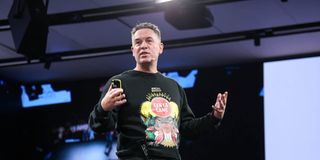
An Australian strategy consultant and author who spent 13 years in New York City and is considering relocating to Kenya
“My first serious episode began before dawn on a Friday. On the preceding Wednesday evening, I had four tequilas at a Kilimani venue and left at about 7pm. The next night I drank wine at an embassy, then beers in Westlands. At about 4am or 5am, I woke up vomiting and with diarrhoea. It eased after several hours, but I kept asking myself, ‘What is this?’ I had previously taken shots at two venues and vomited immediately. Those moments had already made me wonder whether I was drinking real alcohol.
Six days later, I ordered a Kenyan gin through [a delivery app] from a well-known supermarket. I sipped only about 60 to 70 millilitres over two hours. By 9pm, I had explosive vomiting and diarrhoea. My eyes watered, dehydration set in, and I kept thinking, ‘Can this please stop?’ It felt different from gastroenteritis and was far worse than the first episode.
I did not seek medical treatment. After the first incident, I bought some Imodium (over-the-counter diarrhoea medicine). It was incredibly expensive, about US$21 (Sh2,718) for around 12 tablets. That surprised me.
I cannot prove the alcohol caused either illness. An underlying condition or contaminated food is possible, and I do not want to spread misinformation. But what made me suspicious was the repetition, the small quantity the second time and the similar accounts sent to me by scores of people after I spoke publicly.
The experience changed how I drink. I stopped for two weeks, felt better and even went clubbing while drinking only water. I now try to reduce my consumption, eat before drinking and keep water on the table. But trust is the hardest problem. I had already restricted myself mainly to beer, then friends in the industry warned me that even sealed bottles might not be safe. Kenya needs consistent enforcement, credible product controls and opportunities that reduce the incentive to survive through a broken illicit system. Alcohol is already a poison; if adulterated alcohol is circulating too, it is a grave public-health issue.”
Photo credit: Nation Media Group
“My own ordeal happened in June. I did not expect that a night of drinking could leave me in what felt like a three-day trance. I could barely move or go to work. I have drunk heavily before, so I knew this was different from an ordinary hangover. It was among the nastiest mornings I have experienced, and the only logical conclusion I could reach was that the drink may not have been genuine.
I was fortunate not to be hospitalised. My sister has a nursing background, and with her advice, I took plenty of fluids and over-the-counter medicine until I recovered. But the stories shared with me were worse. People have spoken about hospital admissions and complaints involving the liver or pancreas. I am not a medical expert, so I cannot diagnose those cases, but they deserve investigation. This year alone, I have buried three friends whose deaths were linked to alcohol-related complications. For me, the crisis has become painfully personal.
I regard the counterfeit-liquor menace as a ticking time bomb that has not received the seriousness it deserves. Public attention rises for a few days, then shifts, and the people behind adulterated alcohol return to business as usual. I raised the issue on my Facebook page [Wakili Ouko] because I have an audience that could amplify it. It gained traction, and many people came out to share their first-hand experiences with counterfeit liquor.
I have consumed beer long enough to know the expected taste and froth of the brands I choose. When either changes sharply, suspicion begins. If counterfeiters can imitate beer, imagine what may be happening with wines and spirits. Consumers should not carry the blame. When I buy a sealed product, I reasonably presume it is legitimate. Regulators must follow the supply chain back to the seller and producer. The government should strengthen enforcement while examining whether the high cost of legitimate alcohol is pushing consumers towards cheaper, dangerous alternatives. Unless this is checked, lives and families will be destroyed.”
Fake alcohol destroyed in Nairobi on June 2, 2018. KRA has failed to fully utilise a multi-billion-shilling system to stop their entry into the local market and seal tax-evasion loopholes.
Photo credit: File | Nation
“The drink tasted different from my usual brand. It was strange and left a burning sensation after I swallowed. Soon, I was sweating and struggling to breathe. The hangover lasted much longer than anything I had experienced before, and I could not report to work the next day. I had to be put on a drip at Karen Hospital. With insurance, I estimate the treatment cost me about Sh15,000.
Since then, I have avoided hard liquor and drink only beer. That decision has not always been easy socially. Friends struggle to accept that I no longer take spirits, and I often have to defend myself when we go out. Still, I remember the people who have died, lost their sight or become critically ill. We do not know what is being added to some drinks, and I do not want to gamble with my health again.
The physical illness was only part of the damage. I felt guilty that my parents now knew drinking had sent me to hospital. I feared their trust in me as a responsible person had fallen. My advice is to avoid brands repeatedly associated with counterfeit complaints and to take any unusual taste or reaction seriously. No night out is worth a medical emergency or a permanent injury.”
Dr Joseph Wahome Mukundi, a consultant toxicologist at Meru Teaching and Referral Hospital and director of the Centre of Toxicology and Applied Research, says the contaminant repeatedly associated with adulterated alcohol is methanol, an industrial alcohol sometimes added to intensify intoxication or reduce cost.
“For the majority of these brands, you can never even tell whether it is a counterfeit or not,” Dr Mukundi says. “These guys do it so well that they copy almost to the point of the original product.”
Once swallowed, methanol is processed in the liver into formaldehyde and formic acid. The formic acid prevents body cells from using oxygen properly, setting off damage that can begin with vomiting, abdominal pain and unusually prolonged drowsiness. The eyes are especially vulnerable.
“The optical nerve is affected, and it can lead to blindness if it is not cleared the soonest,” he says.
As acid accumulates and oxygen use is disrupted, he adds that the blood can become dangerously acidic — a condition known as metabolic acidosis. The kidneys may then fail, followed by multiple-organ failure and even death.
That progression explains why a presumed bad hangover should not be ignored when it is unusually severe, persistent or accompanied by visual disturbance, breathing difficulty, confusion or extreme drowsiness.
Even when methanol is not in the equation, he reasons, all forms of liquor contain ethanol that can be dangerous if consumed in large quantities.
“The chances of you developing almost similar symptoms [to methanol consumption] are high. Apart from nerve damage, you can easily develop the same vomiting and delirium. You can even have an effect on the kidneys,” he says.
“We keep reminding the regulators and manufacturers to do what other product manufacturers have done, maybe do a QR code or have something that people can scratch to reveal, then send a number for confirmation before purchasing or consumption,” Dr Mukundi reasons.
He also urges Kenyans to buy their drinks from established outlets like supermarkets and properly licensed shops.
“Let it be somewhere you know you can come back tomorrow,” he says. “That one is easier for traceability because if questions are asked, they’ll also have to produce the legitimacy of the alcohol they have.”
Mr Robi Mbugua, the executive director of the Anti-Counterfeit Authority, says price should be an early warning.
“If a normal genuine product perhaps costs Sh200, and you find the same product in a bottle that is costing Sh50, then that should ring a bell to any consumer that whatever they are likely to consume or they are consuming is not a genuine product,” he said on Thursday.