Beyond survival: Ensuring adolescents with sickle cell disease can thrive
In Kenya, 14,000 children are born with sickle cell disease yearly.

What you need to know:
- Sickle cell disease affects approximately 7.74 million people worldwide, with an average of 300,000 children born with the disease annually.
- What is of note to us is that approximately 75 per cent of these children are born in Africa.
Two Saturdays ago, an amazing community turned up for a most fun football tournament; the sickle cell disease (SCD) community. The Utalii Sports Club hosted the Children Sickle Cell Foundation and its partners in observing World Sickle Cell Awareness month.
The sports club was filled with sickle cell warriors of all ages, together with their families and care providers; health service providers; pharmaceutical companies; foreign missions; foundations, non-governmental organisations and civil society organisations that work in or support the sickle cell disease field.
As the soccer teams battled it out for the ultimate gold medal, various exhibitors showcased their work, provided free screening for SCD and HIV, and cheered their teams with vigour.
In our little booth off to the side, we spent the day interacting with the adolescent warriors who visited us to learn more about our organisation. However, it turned out that we were the ones learning a whole lot more from them instead!
Our Gen-Zs are generally deemed to be the digital era wiz kids, authentic, pragmatic and realistic, prioritising flexibility and mental health. It was wonderful to note that living with a chronic disease that can cause remarkable physical and psychological strain has not robbed them of that.
The boys started by demanding to know why many programmes for adolescents were not inclusive of the boy child. This is such a spot-on observation that sent me back to science to take a hard look at what exists in published scientific papers addressing reproductive health in boys living with sickle cell disease.
Sickle-cell disease affects approximately 7.74 million people worldwide, with an average of 300,000 children born with the disease annually. What is of note to us is that approximately 75 per cent of these children are born in Africa. In Kenya, the disease is predominant in the Lake Region and in the Coastal Region, the malaria-endemic areas. This covers the counties of Bungoma, Kakamega, Vihiga, Siaya, Kisumu, Kisii, Homabay, Migori, Taita Taveta, Kwale, Mombasa and Kilifi. Nairobi also carries a heavy burden of the disease, being the melting pot of all communities as the country’s capital.
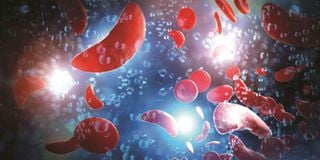
SCD is an inherited disorder where a gene mutation ends up causing abnormal development of haemoglobin, a protein in the red blood cells that carries oxygen from your lungs to your body's tissues and organs. This causes the red blood cell itself to lose its normal discoid round shape and flexibility. Further, whereas a normal red blood cell lives for about 120 days, in SCD, this is greatly reduced to just about 20 to 40 days. This compromises the capacity of the red blood cells to optimally do their job, leaving the body cells chronically starved of oxygen.
Due to this shorter lifespan, the body is unable to replace the dying cells fast enough to keep up with how fast they are dying, resulting in low blood levels, which is chronic anaemia. The loss of flexibility limits their ability to squeeze through smaller blood vessels without easily breaking and blocking the tiny blood vessels, meaning the cells at the end of these vessels fail to receive oxygen due to this occlusion.
This poor oxygen supply to the cells and tissues can have moments when it is more pronounced, causing severe complications such as painful episodes called vaso-occlusive crisis, acute chest pain due to the poor supply of oxygen, and even strokes.
With better understanding of the disease has been remarkable advances in care, including medications that optimise the patient’s condition and reduce complications such as folic acid, hydroxyurea, crizanlizumab, L-glutamine, prophylactic penicillin, and targeted vaccination. More advanced treatments such as hematopoietic stem cell transplantation (HSCT), popularly known as bone marrow transplant; and recently approved gene therapies, have come closest to what would be a cure for the disease.
Becoming adults
What is failing to keep up is our appreciation for what this progress means to our warriors. These babies who have survived childhood are now adolescents on the journey to becoming adults. It is not enough that they survive this transition too. It is paramount that they thrive in this transition.
As we strive to keep them out of hospital by being pain- and infection-free, and mentally healthy, we must acknowledge they are coming into their reproductive maturity too. This means we must add another layer of care. They require appropriate and timely information and care regarding their reproductive health needs.
In response to my challenge from the adolescent SCD warriors, I did a quick search on Pubmed publications on adolescent reproductive health for boys and noted that most literature has tended to focus on priapism, an emergency complication that arises from SCD, causing persistent, painful penile erection not related to sexual stimulation. In the recent years, a few studies have been addressing fertility in males living with SCD and the impact of the hematopoietic stem cell transplantation (HSCT) on the fertility.
These studies heavily focus on the clinical aspect of care for boys and not the socio-cultural context of reproductive health and its impact on their healthcare. The FUTURES Study (2023) by Stanek et al, looked at the efficacy and acceptability of a novel reproductive health education programme for adolescent males with SCD. This was a web-based reproductive health education programme rolled out to adolescents and young people with SCD.
We have a lot of work to do in this space. We must learn from our past mistakes with our adolescents living with HIV, especially those who were born positive. We must stop infantilising our adolescents with chronic disease and equip them with the strategies and means to navigate their reproductive life safely, within the confines of their disease limitations. Otherwise, we leave them at the cross-hairs of the triple threat.
Most importantly, we must recognise that these young ones fully embody the Gen-Z spirit! They are bold, ambitious and best of all, they know the solutions that work for them. We must never attempt to craft solutions that they are not a part of. Co-creation is not an option. They know what they need. Let us engage them meaningfully to ensure we secure their future; because after all, they are the ones who belong in that future, not us,
May we never forget, our adolescents are growing up and they are NOT their disease!
The writer is a gynaecologist/obstetrician