Beyond the spots: Kenya's giraffes aren't who we thought they were
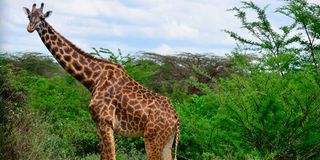
A giraffe at Nairobi National Park.

What you need to know:
- Here's what makes Kenya absolutely extraordinary in this story: it's the only place on Earth where three of these four newly-recognised giraffe species call home.
Imagine driving through the Maasai Mara, camera ready, when you spot a giraffe gracefully bending its impossibly long neck to browse acacia leaves. You snap the perfect shot, thinking you've captured "just another giraffe." But what if that gentle giant represents one of four entirely different species? What if it's disappearing faster than we ever realised?
The moment everything changed
Picture this: You're at Samburu National Reserve watching a giraffe with a coat that looks like nature's own stained-glass window, bold, geometric patterns creating a living mosaic against the golden savannah. Then you drive south to Amboseli, where another giraffe sports completely different markings: irregular, leaf-like patches that seem painted by a different artist entirely.
For generations, we assumed these were simply cousins in the same big, happy family.
We were wrong.
In August, scientists delivered news that turned everything we thought we knew about giraffes upside down. These aren't just different-looking relatives, they're four completely separate species that have been quietly evolving apart for millions of years.
“This discovery underscores how close we are to losing species we thought were safe,” said the International Union for Conservation of Nature (IUCN). “By recognising four giraffe species, the conservation picture becomes much clearer, and in many cases, far more alarming.”
Kenya: Where three worlds collide
Here's what makes Kenya absolutely extraordinary in this story: it's the only place on Earth where three of these four newly-recognised giraffe species call home.
In the north, around Samburu and Isiolo, you'll find the Reticulated giraffe, the one with those stunning geometric patterns. These are the supermodels of the giraffe world, instantly recognisable by their bold, net-like markings that seem almost too perfect to be real.
Across central and southern Kenya, from the famous Maasai Mara to Amboseli's elephant-dotted plains, roams the Masai giraffe. With their irregular, puzzle-piece patches, these are probably the giraffes you've seen in most wildlife documentaries, Kenya's most widespread giraffe ambassadors to the world.
In western Kenya, near Lake Baringo, lives a much rarer sight: the Nubian giraffe, part of the northern giraffe family. These are Kenya's rarest giants, and they're in serious trouble.
Why this discovery changes everything
Remember when you learned that Pluto wasn't a planet anymore? This feels similar, except the stakes are much higher. When scientists thought all giraffes were one big family, it was easy to look at the numbers and think, "Oh, there are still plenty of giraffes around."
But here's the wake-up call: when you separate them into four species, the picture becomes alarming.
Fewer than 3,000 Nubian giraffes survive in the wild, placing them on the IUCN Red List as Critically Endangered. This means they are one step away from extinction.
Reticulated giraffes have lost more than half their population in 30 years. Even Masai giraffes, still common in Kenya’s south, are listed as Endangered.
The climate connection
Here's where climate change enters the story in ways you might not expect. Those natural barriers that helped create separate species millions of years ago—rivers, valleys, deserts—are now becoming death traps as our planet warms.
Droughts are lasting longer and hitting harder across Kenya's rangelands. When water sources dry up, giraffes must travel farther, often into conflict with human communities also struggling with the changing climate. Traditional migration routes that giraffes have used for millennia are being blocked by expanding settlements and agriculture.
The acacia trees that giraffes depend on are also under stress. Rising temperatures and erratic rainfall patterns are affecting when and how well these trees leaf out, potentially leaving giraffes without their primary food source during critical times.
A race against time
The reclassification comes just weeks before a crucial global conservation meeting in Abu Dhabi, where world leaders will decide how to allocate limited conservation resources. For Kenya, this could mean the difference between targeted protection for its three giraffe species and watching them fade into memory.
Kenyan conservationists and communities are already pioneering innovative solutions. Community conservancies around the Maasai Mara are creating corridors that allow giraffes to move safely between protected areas. In Samburu, local communities are being trained as giraffe monitors, creating jobs while protecting their natural heritage.
The new species classification also opens doors for targeted funding and conservation strategies. Instead of generic "giraffe protection," conservationists can now focus on the specific needs of each species—from protecting Nubian giraffe habitat around Lake Baringo to creating movement corridors for Reticulated giraffes in northern Kenya.