Classrooms or ovens? The price of schooling under a scorching sun
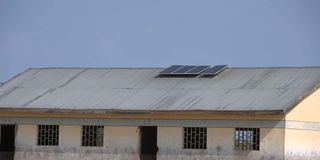
A section of Naipa Primary School in Turkana Central.

What you need to know:
- With no ventilation, temperatures inside soar to unbearable levels, forcing students and teachers to seek refuge under scattered acacia trees.
- Further, the absence of doors leaves classrooms exposed to dust, wandering goats, and even snakes.
For 12-year-old Everline Nakamu, a Grade Six pupil, each day begins with a three-kilometre barefoot trek from her village to Naipa Primary School in Turkana Central. The scorching sand burns her feet, leaving painful blisters that will still be fresh when she makes the return trip under afternoon heat reaching 40°C. Inside the school's iron-roofed classrooms, temperatures soar beyond human tolerance by mid-morning.
Despite the harsh conditions, the pupil clings to education as her only escape from poverty.
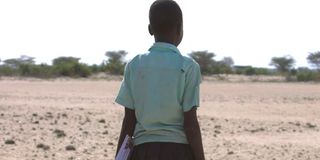
Everline Nakamu, a 12-year-old Grade Six pupil at Naipa Primary School in Turkana Central during the interview.
In the arid plains of Turkana, education is not just a pursuit of knowledge—it is a daily battle against extreme heat, hunger, and hazardous conditions.
Pupils start their journey to school at dawn. Under a sky streaked with pale light, they set off on foot, their shadows stretching across the cracked earth. Every step is a race — against the sun, against the heat that will soon rise in waves, turning the land into a furnace. To reach the classroom is to defy the odds.
At Naipa Primary, a remote institution tucked deep within the county, students endure a gruelling journey just to attend classes. Located 65km off the Kalokol highway, Naipa stands as a fragile beacon of hope. The journey there is a stark reminder of the region’s isolation — dry riverbeds, cracked earth, and patchy phone signals mark the way. With no signage and spotty networks, finding the school requires local knowledge. Even Google surrenders here.
The occasional sighting of thatched, mud-walled houses tucked far off the road breaks the monotony. Herders pass by with goats, cows, and camels — the only signs of life in the vast, sandy expanse, some sitting under scattered acacia trees trying to shelter themselves from the blazing sun.
The school itself is a cluster of seven stone-walled classrooms with iron sheet roofs, which, rather than providing shelter, turn into suffocating ovens under the Turkana sun. With no ventilation, temperatures inside soar to unbearable levels, forcing students and teachers to seek refuge under scattered acacia trees. The absence of doors leaves classrooms exposed to dust, wandering goats, and even snakes, which occasionally slither in among textbooks.
Established in 2002, the school accommodates 350 students, serving learners from Early Childhood Development to Grade Six. But nearly two decades later, the cracks in both the walls and the education system are hard to ignore. The aging infrastructure magnifies the sun's intensity, turning classrooms into suffocating ovens by mid-morning.
Climate Action finds Everline and her classmates sitting under a big tree.
Everline recalls a frightening incident that happened last year. One morning after arriving at school and beginning her usual sweeping duties, she spotted a snake slithering in among textbooks.
"We ran out of the classroom screaming and calling the head teacher, who, with the help of other teachers, managed to kill and burn the snake," she says.
Chewing books
But snakes aren't the only uninvited guests. With no doors to keep them out, goats often wander into classrooms, chewing exercise books.
"Sometimes I find my classmates' books torn by goats. We chase them away, but they keep coming back," Everline says, shrugging her shoulders as if it's an accepted part of school life.
For Everline, the struggle begins long before she steps into class. Every morning, she walks for three kilometres from her home in Nachwan village to school — barefoot.
"In the morning, the sun isn't too harsh, so it's manageable," she says. "But from mid-morning, learning becomes a nightmare." The iron sheet roofs trap heat, making concentration nearly impossible. "The class becomes too hot and stuffy. I often remove my blouse and fan myself to avoid dozing off," she explains.
But the heat doesn't relent even during break-time, making the act of walking to drink water or use the toilet a painful ordeal. When the sand scorches bare feet, survival trumps dignity; and education becomes secondary to physical endurance.
Like many of her schoolmates, Everline endures painful blisters from walking barefoot on the scorching sand. "I usually take 45 minutes to get to school, but on days I get blisters, I use an hour and 20 minutes. Since walking is painful, I limp through and take breaks to soothe my legs," she says.
Despite these obstacles, her dream of becoming a general surgeon keeps her going. "I want to operate on people and save lives," she says.
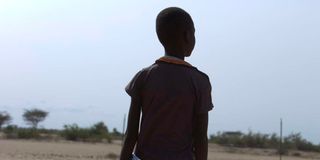
Wilson Lopeyok, a 13-year-old Grade Six pupil at Naipa Primary School in Turkana Central during the interview.
The script is the same for 13-year-old Wilson Lopeyok, also in Grade Six. He walks five kilometres each way and sometimes stays at school until 6pm to avoid the heat. During lunch hour, when the school isn't providing food, Wilson often chooses to remain behind rather than brave the scorching walk home.
Wilson points at trees planted beside the classrooms, their leaves already nibbled by animals. "We planted the trees last April and fenced them with dried branches to protect them from animals like camels. However, the camels are still able to reach the trees and eat them due to their long necks," he explains.
All in all, the pupils anticipate the future benefits of the trees. “One day the trees will provide shade, particularly during lunch breaks since we don’t have a dining room.”
Like Everline, Wilson depends on the school's feeding programme for his meals. "Most of the time we don't have food at home. I only eat lunch if the school provides food. But when there’s no food or water and the sun is too hot, I get headaches and sweat a lot," he says.
Despite the hardships, Wilson's resolve is unwavering. "I want to be a gynaecologist.”
Mercy Emanikor, Naipa Primary's head teacher, describes the challenges. She notes that the school’s remote location forces students to trek long distances barefoot. "It's far from surrounding villages, so students trek long distances," she says. She further cites extreme temperatures, noting: “"We have had temperatures as high as 40°C, making learning almost impossible.”
Classes typically last 30 to 40 minutes, but teachers adjust based on exhaustion levels. "You can tell when pupils are unable to concentrate — they unbutton their shirts, fan themselves, stare outside, or keep asking to go out and fetch water. When it gets too hot, teachers shift lessons under the trees.”
She adds that attendance drops when the school feeding programme stalls as many children rely on it for their only meal.
The dangers at Naipa Primary go beyond heat and hunger. Snake bites are a real danger. The head teacher notes that a Grade Two pupil was recently rushed to a dispensary 10km away, only to be referred to Lodwar Hospital (70 km further) due to lack of antivenom.
"A snake once fell from the roof and almost bit a teacher. I've found snakes in the toilets, even where teachers live."
For now, the children of Turkana continue their daily battle — not just against the heat, but for a future that seems just as distant as the nearest town.