Major education stakeholders have opposed President William Ruto’s seven Education Bills, saying they risk reversing gains made in the sector unless key provisions are amended.
The Bills, which are undergoing public participation led by the National Assembly Education Committee, seek to overhaul the sector, from the management of schools and teacher training to the funding and placement of university and technical college students.
The stakeholders, including teachers’ unions, university staff and parents, have proposed amendments they want MPs to consider before passing the legislation.
The Bills are the Tertiary Education, Placement and Funding Bill, 2026; the Basic Education Bill, 2026; the Kenya Institute of Curriculum Development (Amendment) Bill, 2026; the Kenya National Education Assessment Council Bill, 2026; the Pre-Service Education and In-Service Training Bill, 2026; the Kenya National Qualifications Framework (Amendment) Bill, 2026; and the Teachers Service Commission (Amendment) Bill, 2026.
The Basic Education Bill seeks to replace the existing legal framework governing basic education, covering school governance, financing, learner welfare, teacher management, quality assurance and education data.
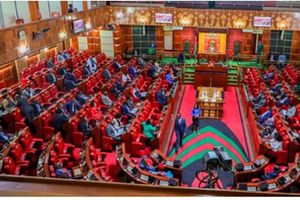
The National Assembly Public Investment Committee on Education chaired by Bumula MP Jack Wanami Wamboka during a session on April 23, 2025.
Photo credit: Dennis Onsongo | Nation
The Tertiary Education, Placement and Funding Bill proposes a new framework for financing and placing students in universities and Technical and Vocational Education and Training (TVET) institutions. It would establish a Tertiary Education Funding Authority (TEFA), consolidate the functions of the Higher Education Loans Board (HELB), Universities Fund and TVET Funding Board, and re-establish the Kenya Universities and Colleges Central Placement Service (KUCCPS) under one statute.
The Kenya National Education Assessment Council Bill proposes a new legal framework for national assessments and seeks to repeal the Kenya National Examinations Council Act. The Pre-Service Education and In-Service Training Bill provides for the training of prospective teachers and continuous professional development for serving teachers and education managers.
The Kenya National Qualifications Framework (Amendment) Bill seeks to strengthen credential tracking and establish a national qualifications database, while the KICD Amendment Bill aims to streamline the institute’s mandate and eliminate overlaps with the tertiary education sector.
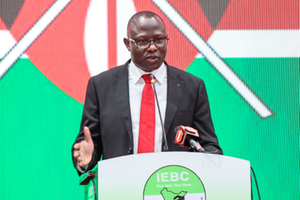
National Assembly's Departmental Committee on Education Chairperson and Tinderet Constituency MP Julius Kibiwott Melly.
Photo credit: Dennis Onsongo | Nation Media Group
In its submission to the committee, the Universities Academic Staff Union (UASU) raised concerns about the proposed student funding model.
The union wants the Bill amended to protect existing students, loans, scholarships, university obligations and staff rights during institutional transitions.
It has also called for a full fiscal and institutional impact assessment before the law takes effect, including projections of student financing costs and the recurrent expenditure of public universities.
UASU’s central concern is that the proposed framework focuses heavily on financing students while failing to adequately address the funding of institutions that employ academic staff and provide tertiary education.
“The Bill is principally a student financing statute. It should not be interpreted as a complete law on the financing of public universities. Parliament should make this boundary explicit. Otherwise, a financing authority may become the de facto financier of the entire university system without a sufficiently defined statutory duty to finance the institutional cost base,” the union said.
On the proposed repayment framework, which requires graduates to begin repaying loans within one year of completing their studies, with payroll deductions capped at 25 per cent of their earnings, UASU wants a distinction between completing studies and securing gainful employment. It has also proposed a grace period for graduates who are unemployed or underemployed.
Education Cabinet Secretary Julius Ogamba, however, said the financial challenges facing universities stemmed from an outdated government funding model that the Ruto administration was seeking to address.
“The Education Bills that are before Parliament are aimed at addressing the funding challenges in the institutions of higher learning in the country in what we believe will bring to an end the perennial strikes in the institutions, and enable smooth operations, learning and teaching,” Mr Ogamba said.
Education Cabinet Secretary Julius Ogamba.
Photo credit: File | Nation
He spoke on Friday during the inaugural graduation ceremony at the newly chartered Bomet University, attended by acting University Vice-Chancellor Professor John Shiundu, acting Council Chairperson Dr Emily Nyangarama, acting Vice-Chancellor Professor Richard Mutai, Principal Secretary for Parliamentary Affairs Dr Aurelia Rono, Bomet Senator Hillary Sigei and Deputy Governor Shadrack Rotich.
Mr Ogamba said the government wanted to ensure uninterrupted learning in higher education institutions so that students could complete their courses within the stipulated timelines.
The Kenya Union of Post Primary Education Teachers (KUPPET) has also criticised the proposed one-year loan repayment period, describing it as rigid and unrealistic in a tight job market. It warned that the provision could penalise graduates who have yet to secure employment.
It has also questioned Clause 48, which it says does not clearly explain how the funding will be applied, leaving new students and continuing beneficiaries uncertain about the support they qualify for and whether it will be maintained.
KUPPET further argues that the Bill does not identify a clear source of funding. It wants the financing capped at 2.5 per cent of annual tax revenue collected by the Kenya Revenue Authority (KRA).
“Our proposal is that it should be amended to include full government funding to eligible students and trainees in form of grants, scholarships and or loan according to the need and nature of the cost,” reads its submission.
KUPPET has also objected to the proposed composition of the TEFA board under Clause 31, saying it excludes key stakeholders, including parents, religious organisations, human rights groups and teachers’ unions.
“Parents, faith communities, teacher unions and human rights bodies all have a direct stake in how tertiary students are placed and funded, and deserve a seat at the table,” the union said.
The Kenya Union of Technical and Vocational Education Trainers (KUTVET) has challenged the proposed funding model, arguing that it does not account for differences in the cost of training across programmes.
It says courses such as welding, automotive engineering, mechatronics, electrical installation, building technology and mechanical engineering require equipment and practical training that cannot be priced like classroom-based programmes.
“Funding must reflect the actual reasonable cost of delivering each occupational programme,” the union told the committee.
KUTVET wants funding to move beyond a student-centred loans model to cover machinery, consumables, protective equipment, modern technology, industrial attachments, competency-based assessments, continuous trainer development and the replacement of obsolete equipment.
It has also sought representation on the TEFA board to ensure that funds allocated to TVET institutions are ring-fenced and separately accounted for.
The Kenya National Union of Teachers (KNUT) has opposed a provision in the Teachers Service Commission (Amendment) Bill, 2026, that bars teachers from engaging in other gainful employment while serving the commission.
Teachers Service Commission (TSC) headquarters in Upper Hill, Nairobi.
Photo credit: File | Nation Media Group
In its submission, KNUT argues that the TSC should not regulate what teachers do outside their working hours.
“The Commission should not control what a teacher does or does not do outside the required working hours as provided under the law,” the union said.
The Kenya Private Schools Association, meanwhile, wants Clause 22 of the Basic Education Bill amended to recognise and allow the registration of standalone junior schools.
“Provide expressly that a junior school may be registered as a standalone institution or operated within a comprehensive school,” the association said.
It argues that private providers have invested in independent junior schools and that requiring them to have a primary school section would impose unnecessary costs and disrupt learners.
The January 2023 Junior Secondary Education guidelines provide for junior schools to be domiciled in existing primary schools.
The association is also seeking changes to Clauses 72(4) and 79 to allow learners in private schools to access public scholarships and bursaries.
It wants eligibility to be based on a learner’s circumstances across all registered private school models, rather than being restricted to faith-based or non-profit institutions.
“A learner shall not be excluded solely because the school is private. Allow direct payment to the institution for the named learner, with transparent accounting, refunds of unused awards and an accessible eligibility-review process,” reads its submission.
The National Parents Association (NPA) has called for stronger parental representation in the education system through amendments to the Basic Education Bill.
It wants MPs to amend Section 55(2) of the Basic Education Act to provide the association with clear corporate powers and the institutional capacity to operate as a durable national representative body.
The association says this would strengthen structured consultation between parents, the Ministry of Education, Parliament, county governments, schools and other education agencies.
The committee will continue engaging stakeholders next week, with the exercise scheduled to end on Thursday. The Teachers Service Commission and the Council of Governors are expected to make the final submissions.
The committee will then table its report in the House for consideration, incorporating the views received from stakeholders.