Donor exit pushes Western Kenya counties to fund control of neglected tropical diseases
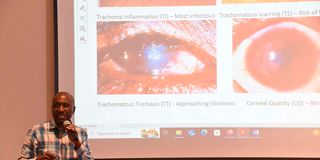
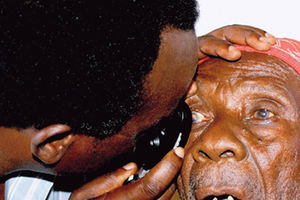
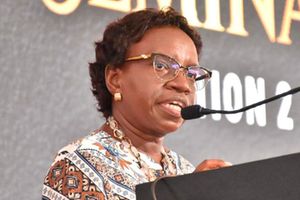
Prof Jefitha Karimurio during a Trachoma Transition Plan Forum on May 29, 2025. Trachomais, a neglected tropical disease, is the leading cause of blindness in Sub-Sahara Africa. Western Kenya counties are increasing their allocations to sustain the fight against neglected tropical diseases.

What you need to know:
- Western counties are raising health budgets to sustain NTD control as donor funding declines significantly.
- They are stepping in to prevent resurgence of neglected diseases affecting vulnerable communities.
County governments in western Kenya are allocating additional funds to the fight against neglected tropical diseases (NTDs) to sustain control and treatment amid a gradual withdrawal of donor support.
The shift in global priorities and funding cuts have left many counties facing the urgent task of filling the deficits by increasing budgetary allocations to their health department for NTD programmes. Consequently, counties like Vihiga, Kakamega, Bungoma and Trans Nzoia have allocated additional funds to prevent resurgence of the NTDs, including bilharzia, trachoma, lymphatic filariasis and intestinal worms, which mainly affect the poor and marginalised communities.
The counties have for long depended on international donors to finance mass drug administration, surveillance and community outreach to check the spread of such diseases. Trans Nzoia is increasing its budgetary allocation from the current Sh13.5 million to Sh15 million next financial year under the NTD programmes. “The funds will be channelled to logistics, purchase drugs and support mass administration and reach out to Community Health Promoters to help eliminate the diseases,” said Christopher Kerio Lorot, the County Executive Committee Member for Health.
Data from the Ministry of Health indicates that millions of Kenyans remain at risk of NTDs, particularly in endemic regions across the Coast, Western, and parts of Rift Valley. Bungoma is allocating additional Sh5 million—from the current Sh10 million to Sh15 million—in the next financial year to step up self-reliance in disease control. “We do not to create any vacuum as donor support shifts. That is why we are allocating more funds to attain self-ownership to prevent reappearance of the diseases,” said Dr Magrina Mayama, the Chief Officer for Health and Sanitation.
Kakamega is allocating Sh20 million up from Sh17 million in the next financial year to combat NTD and cut down overdependence on donors in implementing key health programmes. “Although the allocation is insufficient, it signals a shift towards replacing donor support and a move towards attaining sustainability in management of health programmes,” said William Olaka, County Director of Health.
The Ministry of Health, in collaboration with the End Fund and Amref Health Africa, has for long intensified efforts to combat NTDs in Western Kenya. They equip trainers with necessary skills to implement a community-wide mass drug administration campaign targeting soil-transmitted helminths (intestinal worms) and schistosomiasis (bilharzia).
Soil-transmitted helminths are parasites that spread through soil or water contaminated with human waste. In contrast, schistosomiasis is transmitted when urine or faeces from an infected person contaminate freshwater sources. “Through the Deworming Innovation Fund, supported by the End Fund, we have successfully conducted two rounds of mass drug administration since 2021,” said Titus Waititu, the Preventive Chemotherapy Manager at the Ministry of Health. “Our goal is to interrupt disease transmission in this area with a low endemicity. We have made tremendous progress with the support of Amref Health Africa and the county governments.”
More than 200 trainers of trainers from Kakamega, Trans Nzoia, Bungoma, and Vihiga have been trained to ensure that skilled personnel effectively share their knowledge, facilitating efficient implementation and broader community reach. Mass drug administration is a key control measure recommended by the World Health Organization.