Scarred and stigmatised: How forgotten disease is isolating patients in Gilgil
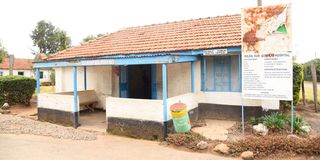
The Regional Centre for Treatment of Cutaneous Leishmania at Gilgil Sub-County Hospital in Nakuru County.

What you need to know:
- A sand-fly bite in 2015 left Charles Ngugi with lifelong facial scars and years of painful treatment for cutaneous leishmaniasis, a neglected tropical disease that carries deep social stigma and forces many patients into isolation.
- Health officials in Nakuru County say cases of cutaneous leishmaniasis have dropped by more than 75 per cent since 2019 because of indoor residual spraying, community sensitisation and improved diagnosis, though Gilgil remains Kenya’s epicentre.
Before 2015, Charles Ngugi freely interacted with friends and family in Eburru Mbaruk. A single bite from a sand-fly, however, changed everything. Since then, his greatest insecurity has been the lesions left on his face by cutaneous leishmaniasis (CL).
Ngugi says he is no longer enthusiastic about visiting home to see relatives. When he does, he limits his visits to his parents and avoids the company of longtime friends, many of whom now believe he is a drunk, bewitched or—what he finds most painful—that the ‘dents’ on his face are signs of HIV/Aids.
At his home, we find him covering shelled maize with thick polythene sheets to protect it from the heavy clouds threatening rain as we sit down to talk. Recalling what he initially dismissed as a mosquito bite, Ngugi says the pimple became inflamed, itchy and steadily increased in size after he scratched it.
“It was in 2015 when this first happened, and while I was so focused on settling down at Kambi Turkana, I had no acquaintances to consult, although I’d heard rumors about people suffering from a disease with similar symptoms to mine,” he says.
Relying on local remedies, the father of two tried crushed torch battery powder, aloe vera, Sodom apple sap, chilli and even cauterising the wound with a heated machete—leaving burn scars on his face. At the time, treatment at a private hospital cost about Sh27,000, which was unaffordable.
“Sometimes we would crush battery cells for powder and apply it to the scratched wound. Sometimes we'd extract plant sap, and in the most extreme cases, we would heat a machete and press it on the lesion. Unfortunately, these remedies created a burning sensation and kept ‘eating’ into the skin, leaving scars," he says, pointing to one along his hairline that he says did not burn completely, allowing the lesion to spread again.
In 2016, a community health promoter informed Ngugi and others that an NGO was offering free treatment at the Kambi Turkana camp. It was then that he learnt he had cutaneous leishmaniasis, a neglected tropical disease that causes skin ulcers, leaves permanent scars and carries deep social stigma—especially when lesions appear on the face.
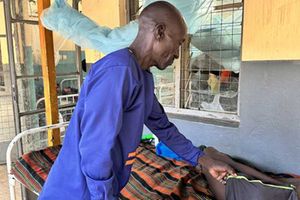
Locally, the disease is known as Útut, named after the Útut forest in Kambi Turkana village, where it is believed to have originated. Ngugi was among more than 300 people who received injections, but he says only a few, including himself, failed to fully recover. They were referred to Gilgil Sub-County Hospital for continued treatment every Thursday—a routine he has maintained for nearly a decade and remains committed to until he fully recovers.
Ngugi admits he has paused treatment several times, delaying his recovery because of financial strain and physical exhaustion. “At one point, it became difficult to commit to treatment. Weekly hospital visits covering nearly 60 kilometres became too expensive, and I had to sell my flock of about 150 sheep just to cover my transport cost, Sh1,000, amounting to about Sh4,000 monthly, even though the treatment itself is free,” he says.
Missing even a single week of treatment can undo months of progress, he explains. Dizziness and pain after injections, long hospital waits and increased vulnerability to other infections have led many patients—including himself—to pause or abandon treatment.
Despite the challenges, Ngugi persists. Owning a motorbike has halved his weekly travel costs. Still, he says losing friends has hurt as much as the physical pain, if not more. “Having been accused of being a drunk and many other things, it hurts my heart because I don't engage in any of that. When I go to my parents' home, I slip in quietly and keep to myself,” he says.
He avoids the village centre, limits time in public spaces and often wears marvins (beanies) to escape scrutiny. Only in Kambi Turkana, where CL is common and understood, does he feel at ease. Ngugi’s story is one of many in Gilgil, the epicentre of CL in Nakuru County.
According to County Director of Public Health Elizabeth Kiptoo, most cases are reported from Eburru, Gitare, Kambi Turkana and surrounding wards. “From our tallied data, Eburru Mbaruk alone accounts for 75 per cent of this year’s cases. So far, the disease remains confined to Gilgil, according to our surveillance system. However, due to several interventions that we’ve put in place, we’ve seen a drastic drop since 2019, when we reported an average of 400 cases per year. The cases have dropped to less than 100 annually, and this year we've recorded just 32 cases so far,” she explains.
She attributes the decline to indoor residual spraying, improved diagnostics, community health education and sustained disease surveillance. Risk factors include living in forest caves, engaging in forest activities such as charcoal burning, beekeeping and hunting, as well as residing in cracked mud houses near forests.
“The trend of CL cases from January to September shows a relatively stable pattern, with an average of seven cases reported in January, followed by a consistent decline of two to three cases per month, and a slight increase to nine cases in September,” Elizabeth says.
She notes that the September rise signals the need to intensify surveillance and prevention. Researchers at the Kenya Medical Research Institute say eight sand-fly species transmit CL in Kenya, thriving in warm, humid conditions and declining in colder weather.
Hotspots
Although concentrated in Gilgil, CL has been reported in at least nine counties, including Nakuru, Baringo, Kakamega, Laikipia, Samburu, Bungoma, Isiolo, Nyandarua and Kajiado. “The vectors are usually more abundant after short rains and dry seasons,” says Dr Damaris Matoke, Kemri’s focal person for leishmaniasis.
She explains that Gilgil’s vulnerability stems from climatic conditions and suitable habitats such as volcanic rock crevices inhabited by rock hyraxes, soil cracks, termite mounds and animal burrows. “We cannot confirm behavioral shifts in the vectors as we haven't conducted comprehensive studies on this, but with the increase in leishmaniasis cases, there's likely something new emerging that requires investigation,” she says.
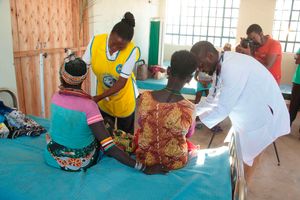
Florence Nyokabi, a nurse and health promoter in Gilgil, recalls encountering the disease in 2012, before it was recognised. “We treated patients as if they had fungal or ordinary skin conditions and offered antifungals because that is how it was presenting. For four years, countless cases were misdiagnosed, but now we are able to do an accurate differential diagnosis between CL and fungal infections,” she explains.
She says CL begins as an itchy pimple that spreads into ulcerated lesions within weeks, leaving permanent scars—especially in people prone to keloids. Facial lesions are common because the face is often uncovered.
Treatment involves weekly injections of sodium stibogluconate around the lesions, which are extremely painful and often lead patients to miss doses. Even after healing, reinfection remains possible.
“Many arrive with septic wounds from traditional remedies requiring antibiotics before CL treatment can begin. Success rates are high, but patients with lower immunity due to other medical conditions heal more slowly,” Nyokabi says.
She notes that women seek care earlier than men, while men frequently miss appointments—a trend echoed nationally. “While the reason remains unclear, we suspect biological factors, such as body odors may attract sand-flies differently,” Dr Matoke speculates.
Beyond physical pain, stigma weighs heavily. “Some people with facial lesions withdraw from public life. The stigma becomes so severe that patients hide at home, avoiding work and social gatherings,” Nyokabi says.
Globally, an estimated 600,000 to one million new CL cases occur annually, though only a fraction are reported. The World Health Organization lists poverty, poor housing, malnutrition and climate change as key risk factors.
In Kenya, CL is considered endemic. According to WHO’s 2024 country profile, Kenya reported 90 new cases in 2022, with only 58 per cent completing treatment. Kenya launched its first National Strategic Plan for Control of Leishmaniasis in 2021, aligned with the WHO’s NTD roadmap.
Recently, the government allocated Sh2.4 billion for neglected tropical diseases, shifting from donor reliance. However, gaps remain. Dr Matoke notes that while the Ministry of Health is developing guidelines, Kenya still lacks dedicated national vector control measures for leishmaniasis.