Doomsday Clock: Why humanity is closer than ever to global catastrophe
A new report released by the European Union Copernicus revealed that January 2025 was the hottest January ever.

What you need to know:
- Since it was invented 78 years ago, this is the closest the Doomsday Clock has ever been to disaster.
Emerging technologies, climate change and emerging and re-emerging infectious diseases are among the leading factors that have seen the world move extremely close to total elimination, scientists have warned.
A new report shows that human beings are officially a second closer to catastrophe.
The Doomsday clock shifted a second closer to midnight (the symbolic point of end of the world) and is currently at 89 seconds to global catastrophe, according to the report released last month. That is one second closer than it was set last year.
The Clock is a symbolic clock that estimates how likely a global catastrophe is. Time on the clock is normally set by the Bulletin of the Atomic Scientists, a US-based organisation.
Since it was invented 78 years ago, this is the closest the Doomsday Clock has ever been to disaster, according to the team of scientists identified as the Bulletin of Atomic Scientists.
“In setting the Clock one second closer to midnight, the Science and Security Board sends a stark signal - because the world is already perilously close to the precipice, a move of even a single second should be taken as an indication of extreme danger and an unmistakable warning that every second of delay in reversing course increases the probability of global disaster,” warned the scientists.
In their report, the scientists cited climate change, biological science misuse, nuclear weapons and emerging technologies, as among the threats escalating the existing predicament in the world.
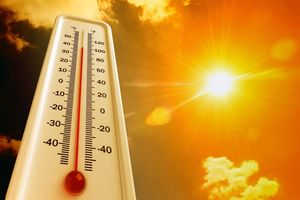
In regards to climate change, the scientists affirmed that the impacts of global warming increased in 2024 even as several indicators such as global surface temperatures and sea level rise ‘surpassed previous records.’
“The global greenhouse gas emissions which drive climate change continued to rise. Extreme weather and other events influenced by climate change such as floods, drought, heat waves, wildfires, and tropical cyclones affected every continent,” the report read.
The experts concluded that “the long-term prognosis for the world’s attempts to deal with climate change remains poor as most governments fail to enact the financing and policy initiatives necessary to halt global warming.
“Growth in solar and wind energy has been impressive but remains insufficient to stabilise the climate. Judging from recent electoral campaigns, climate change is viewed as a low priority in the United States and many other countries.”
A new report released by the European Union Copernicus revealed that January 2025 was the hottest January ever. It surpassed January 2024, which previously held the record.
Average global air temperature shot by 0.79 degrees Celsius (1.42 degrees F) above the average January temperatures between 1991 -2020 to hit 13.23 degrees Celsius (55.81 degrees F).
In January 2024, the average air temperature globally was 13.14 degrees Celsius (55.65 degrees F).
On the issue of biological sciences, the scientists warned that the world’s society, security and economy are under threat due to emerging and re-emerging illnesses, with some striking during the most unlikely times and in regions that previously were not affected.
In particular, scientists have warned about a looming disastrous pandemic through the emergence of a new strain of the deadly bird flu scientifically known as avian influenza (HPAI) that is transmissible to humans.
They noted that it’s spread to farm animals and dairy products, and the occurrence of human cases have combined to create the possibility of a devastating human pandemic.”
“The ability of all influenza viruses to mutate, break apart, and recombine to create new strains makes the emergence of a human-transmissible version of bird flu a serious possibility.”
“Meanwhile, climate change is altering the characteristics of habitats worldwide, with more animals carrying and more insects spreading diseases to each other and to humans,” said the scientists.
They faulted world authorities for ‘aiding’ the possibility of catastrophic pandemics striking through laxity in developing and implementing necessary containment measures and policies for biological sciences and emerging technologies.
Concern is also growing over the continued proliferation of high-containment biological laboratories around the world, indicating scientific interest in high-risk biological research. Such research often underpins advances in biological science, and nations cannot afford to back away from biological research and development that will increase their competitiveness in the global bioeconomy. Yet such research also poses dangers.
Even though the combined threat of biological research and artificial intelligence is widely recognised, the scientists noted that “governments and the relevant scientific communities hesitate to limit or restrict AI involvement in biological research and development, fearing that doing so could cause researchers to miss important scientific breakthroughs.”
“Oversight regimes are not keeping pace, increasing the possibility that pathogens with pandemic potential may escape.Rapid advances in artificial intelligence have increased the risk that terrorists or countries may attain the capability of designing biological weapons for which countermeasures do not exist.”
The experts stated that “the collective experience with Covid-19 has led to increased skepticism about the recommendations of public health officials.”
[email protected] .com