Ebola: Kenya records second death as 65-year-old woman succumbs
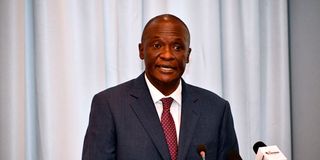
Dr Patrick Amoth, Health Director-General.

Kenya has recorded its second Ebola death. A 65-year-old woman, who was a close family member of the country’s first Ebola patient, died on Friday evening while receiving treatment.
The Ministry of Health Director-General, Dr Patrick Amoth, announced her death in a statement issued at 10pm on October 23.
She was the third confirmed case of the Bundibugyo virus disease in Kenya. The Ministry said she was a direct contact of the first case who died on October 6 and was under quarantine when she developed symptoms on October 13.
She was admitted to the infectious disease unit the same day, where she was receiving supportive care until she died early in the evening.
Also Read: Kenya confirms third case of Ebola
“Sadly, she succumbed to the disease early this evening,” Dr Amoth said. It said the medical teams “did everything possible to save her life.”
“Her death brings the toll to two among nine confirmed cases. The remaining seven patients are in two isolation facilities,” Dr Amoth said.
The Ministry said all cases remain within one cluster of known contacts. It said there is no evidence of community spread.
The Ministry said it is working with the family on what it called a safe and dignified burial. “Trained teams will carry it out under public health protocols; we will respect the family’s wishes and beliefs while protecting the family and the community from further infection.” Dr Amoth said.
The Ministry said her death is a reminder of how the disease behaves.
“Ebola is a serious disease that can be fatal, and patients can change condition suddenly without warning,” he said.
He urged Kenyans to avoid contact with the blood or body fluids of a sick person, and not to touch or handle the body of anyone who has died of a suspected illness. Wash hands regularly with soap and water. Seek help immediately if you develop fever, weakness, muscle pain, vomiting, diarrhoea or unexplained bleeding.
“The public can call 719 free of charge or use the WhatsApp chatbot on 0700 719 719,” he said.
“Let us honour her memory by standing together, supporting affected families with respect, dignity and compassion,” Dr Amoth said.