For every $1 spent protecting nature, we spend $30 to harm it

A cargo train arrives at the Mombasa SGR Miritini Station on October 24, 2025. Though economically significant, the SGR path through wildlife corridors has been criticised for disrupting natural processes and increasing human-elephant conflict, a clear example of how traditional infrastructure spending can inadvertently harm the natural capital we aim to protect.

What you need to know:
- In 2023, $7.3 trillion fuelled deforestation, fossil fuels, and unsustainable farming. Just $220 billion went to restoration.
- The gap is widening, and so are the risks
The global financial system faces a stark contradiction: it continues to fund the destruction of the very natural resources it depends on.
A recent United Nations Environment Programme (Unep) report reveals that for every dollar spent protecting nature (Sh129), USD 30 (Sh3,871) is spent degrading it.
The State of Finance for Nature 2026: Nature in the Red report warns that, in the wake of recent global crises, financial markets are not merely neglecting the environment; they are actively accelerating its decline.
In 2023 alone, an estimated USD7.3 trillion was channeled into activities that actively harm nature. These "nature-negative" investments are deeply embedded in the global economy, propping up industries such as fossil fuels, intensive agriculture, and unsustainable infrastructure development.
By contrast, only USD220 billion flowed into Nature-based Solutions (NbS); interventions that protect, restore, and sustainably manage ecosystems while benefiting both people and biodiversity. This $30-to-$1 spending gap highlights a big disconnect between financial priorities and the urgent need to safeguard the planet's life-support systems.
This imbalance signals a systemic economic risk. By spending 30 times more on destruction than on protection, we are effectively subsidising the collapse of the very ecosystem services — clean water, pollination, flood regulation — that underpin global GDP. For every step taken toward restoration, we take 30 steps toward a future where the cost of living and doing business spirals beyond control, driven by environmental failure.
Inger Andersen, executive director of Unep, delivered a stark warning on these financial trends.
"If you follow the money, you see the size of the challenge ahead of us," she said. Andersen noted that while funding for nature-based solutions is growing slowly, harmful investments and subsidies are accelerating far faster. She urged world leaders to recognise the choice before them: "We can either invest in nature's destruction or power its recovery. There is no middle ground."
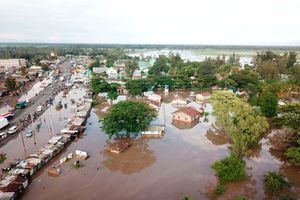
In Kenya, this global funding imbalance is visible in the struggle to balance urban growth with environmental protection. The country's rapidly expanding secondary cities face soaring populations, overstretched infrastructure, and mounting climate risks such as floods, droughts, and intensifying heatwaves. Nature-based Solutions offer a viable path forward. Rather than replicating the destructive financial patterns laid bare in the UN report, Kenya's emerging urban centres have an opportunity to embed NbS from the outset, building resilience and inclusivity into their growth.
Promising models already exist. Mikoko Pamoja in Gazi Bay, the world's first community-led mangrove carbon credit project, has restored hectares of vital coastal forest while using revenues to fund clean water and education for thousands. In the Chyulu Hills, landscape restoration efforts are paired with a national monitoring framework that tracks how ecosystem recovery enhances water regulation for downstream communities; demonstrating that restoration and development can advance together.
However, these green wins often exist in the shadow of far larger, nature-negative expenditures.
While the courts halted the proposed Lamu Coal Plant in late 2025, citing its projected annual emissions of 8.8 million tonnes of CO₂, other major infrastructure projects like the Standard Gauge Railway (SGR) extension continue. Though economically significant, the SGR path through wildlife corridors in Tsavo and wetlands toward Malaba has been criticised for disrupting natural processes and increasing human-elephant conflict, a clear example of how traditional infrastructure spending can inadvertently harm the natural capital we aim to protect.
The UN report highlights a deepening divide in how public and private sectors engage with nature. Governments currently provide nearly 90 per cent of all finance for nature-based solutions; approximately USD 190 billion of the USD 220 billion total. Yet, they simultaneously channel an estimated USD 2.4 trillion into environmentally harmful subsidies for sectors such as transport, water, and energy.
This contradiction echoes in Kenya. National policy frameworks including the Constitution (2010), Kenya Vision 2030, and the Climate Change Act (2016) support nature-based solutions. Yet implementation is frequently undermined by overlapping mandates and weak cross-agency coordination.
Less balanced
The private sector's role is even more less balanced. Of the USD7.3 trillion spent annually on nature-negative activities, USD 4.9 trillion originates from private companies; primarily in utilities and basic materials. Yet, private investment in nature-based solutions stands at just USD 23.4 billion, accounting for a mere 10 per cent of total NbS finance.
In Kenya, meaningful private sector engagement remains elusive. Much of the country's urban expansion occurs outside formal planning frameworks, with limited oversight and weak enforcement. Professional bodies and civil society organisations, though active, often lack the technical and financial capacity to structure bankable green projects.
Globally, the gap is urgent. To meet the targets of the Rio Conventions, annual investment in nature must more than double; reaching USD571 billion by 2030.
Locally, this means better coordination between urban planning, climate, and biodiversity policies. The Kenya Urban Support Program provides cities with the opportunity to adopt resilient solutions, but complex rules and technical requirements often make it difficult for local groups to secure funding. Improving coordination among national ministries, county governments, and cities is key to ensuring funds and grants reach projects that support NbS.
Despite these challenges, there are positive examples in Kenya that show change is possible, with projects demonstrating that external funding from development banks and international partners can be sufficient. Such examples support the UN's call to see nature as an economic opportunity. By adding more green spaces to cities and integrating nature into roads and energy systems, cities can reduce climate risks and support local economies.
Still, the UN report warns that continuing current practices will only make things worse for the economy and the environment. The report introduces the "Nature Transition X-Curve," which guides policymakers toward gradually ending harmful subsidies and increasing nature-friendly investments. For Kenya's secondary cities, this means aiming for more than minor changes, a clear city plan that includes the public. If civil society and local communities are not part of the planning process, the shift to NbS will be weak and may miss the regional needs that make these solutions effective.