From dinner to tourist dollars: How ecotourism is saving Lamu’s endangered sea turtles
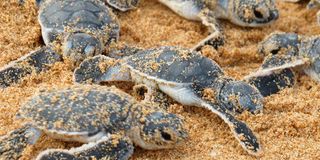
Turtles hatching on Manda Island, Lamu.

What you need to know:
- The coastal county, long celebrated as one of Kenya's premier tourist destinations, has seen conservation groups and communities embrace sustainable tourism as both an environmental imperative and an economic opportunity.
When local fishermen in Lamu accidentally catch a sea turtle in their nets today, they don't see dinner. They see a tourist attraction worth protecting. This shift in mindset, cultivated over three decades of patient conservation work, has helped save more than 185,000 baby turtles and transformed how coastal communities view their marine heritage.
For years, conservationists in Lamu have worked tirelessly to protect the archipelago's fragile marine ecosystems and endangered turtle populations. Now, those efforts are paying dividends as ecotourism transforms conservation into a sustainable economic model that benefits both wildlife and local communities.
The coastal county, long celebrated as one of Kenya's premier tourist destinations, has seen conservation groups and communities embrace sustainable tourism as both an environmental imperative and an economic opportunity.

Lamu Marine Conservation Trust Field Operational Manager Famau Shukry during the interview.
The diversification of tourism products, particularly through the introduction of ecotourism, has become a crucial campaign for locals who recognise that protecting marine life directly enhances the county's appeal to visitors seeking authentic, environmentally conscious experiences.
Ecotourism, a form of sustainable tourism that promotes conservation and environmental protection while offering tourists opportunities to appreciate a destination's rich natural and cultural heritage, has emerged as a powerful tool in Lamu's conservation toolkit.
Three decades of turtle conservation
The Lamu Marine Conservation Trust (LaMCoT) stands at the forefront of these efforts. Over more than 30 years of dedicated work, this non-governmental organisation has helped more than 185,000 turtle hatchlings from 890 nests reach the ocean through comprehensive turtle protection programmes spanning Shella, Takwa, Manda, and Kipungani beaches.
Founded in 1992, LaMCoT has been directly involved in monitoring turtle nests, assisting hatchlings, and implementing community-driven conservation efforts across the Lamu Archipelago. The organisation's work has become instrumental in protecting marine biodiversity in the region.
During an interview with the Nation, LaMCoT Field Operations Manager Famau Shukry provided impressive statistics that underscore the scale of conservation achievements in the area.
Beyond helping hatchlings, the organisation has rescued, tagged, and released at least 5,000 mature turtles that had been accidentally caught in fishing nets. This represents a remarkable collaboration between conservationists and the local fishing community.
Kenya's coastal waters are home to five threatened species of sea turtles, all of which face various degrees of endangerment: the Green turtle, Hawksbill, Olive Ridley,
Leatherback, and Loggerhead. These species are protected under both national legislation and international conservation agreements.
"I am happy to announce that the 33 years of our operation as LaMCoT have borne fruit. There are 185,000 baby turtles that we've so far released to the sea from nests set in various parts of the Lamu Archipelago. We've also rescued another 5,000 turtles caught by fishermen, which we've tagged and released safely back to the ocean," Mr Shukry said.
Turtles as tourism assets
The conservation work is driven by the need to ensure that as many turtles as possible are protected so that turtle tourism in Lamu can be fully embraced and developed.
Globally, the importance and value of sea turtles as tourist attractions and a component of the tourism product of many coastal destinations has been increasing steadily.
Communities and countries that successfully protect turtle populations are finding that these ancient mariners draw environmentally conscious tourists willing to pay for authentic wildlife experiences.
Rather than relying solely on Lamu's famous white sandy beaches and Unesco World Heritage ruins to attract tourists, local environmentalists are demonstrating that protecting endangered turtles creates an additional, compelling attraction for visitors.
The endangered species of turtles that we have in Lamu serve as tourist attractions. With ecotourism and community-based tourism in place, local communities and future generations get to be involved directly, benefiting both the environment and grassroots economies," Mr Shukry explained.
This approach represents a significant shift in conservation thinking. It moves from top-down preservation models to community-based initiatives where locals see direct economic benefits from protecting wildlife.
Community partnership
LaMCoT Coordinator Atwa Salim emphasised that continued education programmes have significantly increased awareness about why turtles must be protected, fundamentally changing community attitudes toward these endangered creatures.
"This has encouraged community members to inform us of any turtle exploitation or poaching activity. Beach patrols have also been intensified with the intention to identify and prevent any illegal poaching of turtle eggs, mark out new nest sites, and monitor them until hatching," Mr Salim said.
The educational campaigns have yielded results in changing behaviour and fostering a conservation ethic among coastal communities.
"People are so enlightened on matters of turtle protection. That's why you'll spot local fishers bringing to us turtles accidentally caught in their nets. We measure them, treat them for any health problems before tagging and releasing them back to the sea," he added.
This transformation, from viewing turtles as potential food sources or nuisances to seeing them as valuable conservation assets, represents one of the programme's most significant achievements.
The organisation has also been undertaking campaigns to preserve and protect coral reefs, ornamental fish, and other marine life that contribute to ecotourism in Lamu. They have also created Joint Co-Managed Areas (JCMAs), which are collaborative, community-centered approaches to protecting important ecosystems that are managed by those who
directly benefit from them.
JCMAs involve members of adjacent Beach Management Units (BMUs) that routinely share common fishing grounds and coordinate fisheries management activities. This collaborative model ensures that conservation efforts are informed by local knowledge and sustained by community buy-in.
Climate threats and plastic pollution
Despite these conservation successes, LaMCoT and its partners face mounting challenges that threaten to undermine decades of progress.
The conservationists' major concern centres on climate change, global warming, and general marine pollution at sea, which continue to pose serious threats to the existence of natural resources in the region.
Rising ocean temperatures, acidification, and changing current patterns all affect turtle nesting patterns and hatchling survival rates. Coastal erosion exacerbated by climate change also threatens traditional nesting beaches.
Plastic waste is also a major threat to marine life. Sea turtles frequently mistake plastic bags for jellyfish, one of their primary food sources, leading to ingestion that can cause blockages, starvation, and death. Discarded fishing gear can also entangle and drown turtles.
To address the plastic pollution crisis, conservationists regularly participate in beach cleanup exercises to remove plastics and other hazardous materials from coastal areas.